
Have you ever wondered why some homes are handed over fully ready to move in, while others take months of coordination, follow-ups, and site visits? Many homeowners who admire traditional interior design often struggle to decide whether to execute it through a turnkey model or a traditional design approach. Especially for homeowners exploring turnkey interiors in Delhi, the decision becomes even more important because it directly affects budget, timelines, and peace of mind.
In this blog, we will clearly break down both approaches, explain what traditional interior design is, and help you decide which model suits your lifestyle and expectations best.
Key Takeaways at a Glance
- Turnkey interior design is a complete “one-stop” solution from concept to handover.
- Traditional interior design involves hiring a designer and separately managing contractors.
- Turnkey offers fixed pricing, faster timelines, and less stress.
- Traditional offers more flexibility and detailed customization.
- Budget overruns are more common in traditional execution.
- Turnkey interiors Delhi projects are ideal for busy professionals.
- Both approaches can beautifully deliver classic interior design styles.
- Your lifestyle, time availability, and involvement preference should guide your choice.
What is Traditional Interior Design?
Before comparing models, let us first understand what traditional interior design is.
Traditional interior design is a style inspired by classic European decor, timeless architecture, and rich detailing. It focuses on elegance, symmetry, warm tones, and refined materials.
It often includes:
- Detailed mouldings and wall panels
- Rich wooden furniture
- Ornate chandeliers
- Neutral and warm color palettes
- Luxurious fabrics like silk and velvet
This style celebrates history and craftsmanship. It creates a sophisticated and welcoming atmosphere.
Understanding Classic Interior Design Styles
Classic interior design styles are rooted in heritage. They draw inspiration from Victorian, Colonial, and European influences.
Here is a quick overview:
| Feature | Classic Style Characteristics |
|---|---|
| Colors | Beige, cream, gold, deep browns |
| Materials | Wood, marble, brass |
| Furniture | Carved, curved, heavy pieces |
| Lighting | Chandeliers, wall sconces |
| Layout | Symmetrical and balanced |
These elements create homes that feel timeless rather than trendy.
What Is Modern Traditional Interior Design?
Many homeowners today prefer a balanced version called modern traditional interior design.
It is a refined approach that blends the charm of classic detailing with the simplicity of contemporary living. We often choose this style when we want our homes to feel elegant and timeless, yet fresh and practical for everyday use.
This style combines:
- Clean lines from modern design
- Warm elegance of traditional elements
- Simplified detailing
- Neutral palettes with statement pieces
For example:
- A classic wall panel design with minimal furniture
- A traditional chandelier in a contemporary living room
- Wooden cabinetry paired with sleek countertops
It is perfect for those who love tradition but want a lighter, more functional home.
What Is Traditional Interior Design Execution?
Now that we understand the style, let us discuss the execution model.
Traditional interior design execution focuses on separating the design phase from the implementation phase. We work closely with a designer for concepts and drawings, but the responsibility of coordinating vendors and managing site work largely stays with us.
In the traditional interior design execution process:
- We hire a designer for concepts and drawings.
- We separately hire contractors.
- We manage carpenters, electricians, plumbers, and vendors.
- We oversee material purchases and site work.
This approach gives us high involvement and control. However, it demands time and consistent supervision.
What Is Turnkey Interior Design?
Turnkey interior design works very differently.
Instead of splitting responsibilities between multiple vendors, we partner with a single firm that takes complete ownership of the project. From planning and budgeting to execution and final styling, everything is handled under one structured system.
In a turnkey model:
- One firm handles design.
- The same firm manages procurement.
- They execute construction.
- They supervise site work.
- They hand over the home fully ready.
It is truly a “move-in-ready” solution.
Turnkey vs Traditional – Major Differences
Let us compare both clearly.
| Factor | Turnkey Interior | Traditional Interior |
|---|---|---|
| Project Management | Single company handles everything | Client manages multiple vendors |
| Budget | Fixed and transparent | Variable and unpredictable |
| Timeline | Faster completion | Can get delayed |
| Stress Level | Low | High |
| Customization | Moderate to high | Very high |
| Accountability | Single point of contact | Multiple responsible parties |
Both models work well, but the experience differs significantly.
Cost Comparison – Which Saves More?
Cost is one of the biggest deciding factors.
When we plan our dream home, we not only think about design but also about financial clarity and long-term value. The way a project is structured directly affects how predictable or flexible the overall expense will be.
Turnkey Model
In a turnkey setup, the pricing is usually discussed in detail at the beginning of the project. We receive a comprehensive estimate that includes design, materials, execution, and finishing. This structured budgeting approach reduces financial surprises during the project.
- Usually offers fixed pricing.
- Reduces unexpected expenses.
- Less chance of cost overruns.
Traditional Model
In the traditional approach, costs are handled in stages because we work with different vendors separately. This gives us the flexibility to compare prices and negotiate better deals.
However, since there is no single point of financial control, the overall budget can fluctuate depending on site changes and coordination gaps.
- You may negotiate with individual vendors.
- However, coordination mistakes can increase costs.
- Changes during execution can affect the budget.
Here is a simple breakdown:
| Cost Factor | Turnkey | Traditional |
|---|---|---|
| Initial Quote | Higher but fixed | Lower but flexible |
| Hidden Costs | Rare | Possible |
| Budget Control | Strong | Depends on client involvement |
If budget predictability is important, turnkey may be safer.
Timeline Comparison
Time matters, especially in metro cities.
When we are planning our home interiors, delays can impact rent, loan EMIs, and even shifting schedules. That is why understanding how each model handles timelines becomes extremely important.
Turnkey Projects
In a turnkey project, the entire workflow is pre-planned and scheduled in phases. Since one team handles design, procurement, and execution, coordination gaps are minimal.
- Streamlined workflow.
- Coordinated teams.
- Faster delivery.
Traditional Projects
In the traditional model, progress depends on how well multiple vendors coordinate with each other. Even a small delay from one contractor can affect the entire schedule.
- Dependent on vendor coordination.
- Delays are common.
- Site supervision is required regularly.
Busy professionals often prefer turnkey interiors Delhi because it reduces site visits, constant follow-ups, and the stress of tracking daily progress.
Classic Interior Design Living Room – Execution Example
Let us take an example of a classic interior design living room.
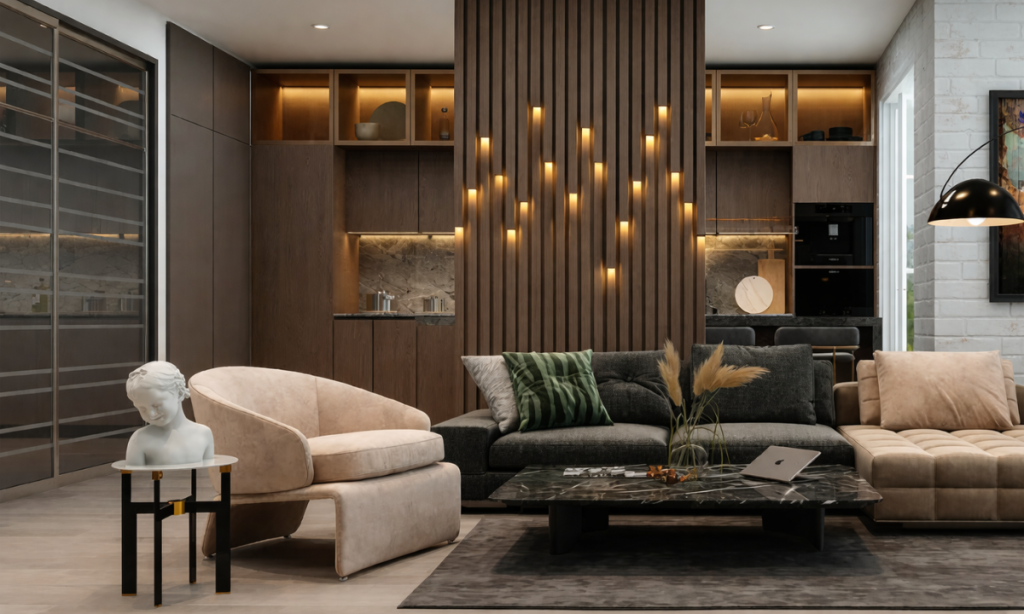
This space usually includes detailed wall mouldings, elegant sofas, a statement chandelier, and rich finishes that reflect timeless charm. While the final look can be equally beautiful in both approaches, the process of getting there changes the overall experience.
Traditional Execution
In the traditional model, we stay closely involved at every stage of execution. Coordination becomes our responsibility to ensure all elements come together perfectly.
- The designer creates a layout.
- A separate carpenter builds furniture.
- Different vendor handles marble.
- Lighting purchased separately.
- Client coordinates everything.
This approach allows flexibility, but it requires regular follow-ups and site supervision.
Turnkey Execution
In a turnkey model, the entire living room is treated as one integrated project. The team ensures that design, materials, and finishing are aligned from the start.
- One team handles wall panelling.
- Same team sources the chandelier.
- Furniture and décor are installed together.
- Final styling done before handover.
The result may look similar, but the journey is far more streamlined and stress-free in a turnkey setup.
Classic Interior Design Bedroom – Execution Example
A classic interior design bedroom typically includes:
- Upholstered headboard
- Wooden side tables
- Decorative ceiling mouldings
- Warm lighting
In a traditional execution, we have to coordinate multiple vendors for furniture, upholstery, and lighting, making sure every piece matches the design concept. This requires regular site visits and careful supervision to maintain quality and consistency.
Under turnkey execution, the firm handles all vendors and finishing details, ensuring that the bedroom is delivered fully styled, cohesive, and ready to move in without constant oversight.
Classic Interior Design Kitchen – Execution Example
A classic interior design kitchen includes:
- Wooden cabinets
- Detailed handles
- Marble countertops
- Elegant backsplash
In the traditional method, we must manage multiple vendors separately, modular kitchen suppliers, countertop fabricators, and hardware providers, ensuring that each element fits the design perfectly. This can be time-consuming and requires careful supervision.
Turnkey execution ensures seamless integration of all elements, from cabinets and countertops to lighting and décor, delivering a fully functional and beautifully styled kitchen without the stress of coordinating multiple contractors.
Who Should Choose Traditional Interior Design Execution?
Traditional execution is ideal for homeowners who enjoy being deeply involved in every aspect of their home’s creation. It allows us to make detailed decisions about materials, finishes, and vendors, giving a hands-on experience throughout the project.
This approach suits those who value control and personalization over convenience.
Traditional execution works well if:
- We have time to supervise.
- We enjoy being deeply involved.
- We want vendor-level customization.
- We understand site processes.
It is ideal for people who treat home building as a hands-on passion project.
Who Should Choose Turnkey Interior Design?
Turnkey works best for homeowners who prefer a hassle-free experience and want their dream home delivered ready to move in. It minimises the stress of managing multiple vendors and site visits, while still ensuring high-quality design and execution.
This approach is perfect for those with busy schedules or limited availability to oversee daily work.
Turnkey works best if:
- We are busy professionals.
- We live away from the project site.
- We want predictable costs.
- We prefer minimal stress.
It is particularly useful in metro markets like Delhi, where project coordination can be complex.
Tips Before Choosing Your Model
Here are some practical tips:
- Evaluate how much time you can realistically dedicate.
- Ask for detailed quotations.
- Check past projects.
- Understand payment schedules.
- Clarify material specifications in writing.
Most importantly, align your choice with your lifestyle.
Final Thoughts
Both approaches can deliver stunning results. The difference lies in how much involvement, time, and stress you are willing to handle.
If you value control and hands-on decision-making, traditional execution may suit you. If you prefer convenience, faster timelines, and predictable budgeting, turnkey interiors Delhi can be the smarter option.
At The KariGhars, we understand that every homeowner is different. Whether you love deeply detailed traditional interior design or prefer a seamless turnkey journey, the right approach should make your home-building experience joyful, not overwhelming.
In the end, the best design model is the one that aligns with your lifestyle, priorities, and vision for your dream home.
Frequently Asked Questions
1. Is traditional interior design outdated?
Traditional interior design is far from outdated. It remains timeless and elegant, with a focus on symmetry, warm tones, and classic materials. With the rise of modern traditional interior design, it has adapted to contemporary lifestyles while preserving its charm.
This means we can enjoy the sophistication of classic decor without compromising on modern functionality or comfort, making it relevant for today’s homes.
2. Does turnkey interior design limit customization?
Turnkey doesn’t necessarily limit customization. While the project is managed by a single firm, we still have the flexibility to choose finishes, furniture styles, color schemes, and decor elements.
Turnkey ensures that all design decisions remain consistent and cohesive, while still allowing our personal preferences to shine. Essentially, customisation is guided and structured, but it’s far from restricted.
3. Which model is more expensive?
The cost depends on how the project is managed. Traditional execution may appear cheaper initially, but unforeseen delays, coordination challenges, and changes during construction can quickly inflate the budget.
Turnkey projects, on the other hand, usually come with fixed and transparent pricing, which reduces financial surprises. For homeowners seeking cost clarity and predictable spending, turnkey often proves to be the safer option in the long run.
4. Can classic interior design styles be done in a turnkey model?
Yes, classic interior design styles can absolutely be executed through a turnkey model. Turnkey firms are capable of delivering elegant classic interior design bedrooms, living rooms, and kitchens while maintaining design consistency across all spaces.
This means we get a fully styled, move-in-ready home that reflects timeless aesthetics, without having to manage multiple vendors or worry about design execution ourselves.
Reference:
1. From Google
3. https://www.saviesahome.com/blog/turnkey-vs-traditional-interiors/