

Quick Answer: Designing a private home theatre requires careful planning of room acoustics, comfortable seating, screen placement and layered lighting. Use sound-absorbing materials, arrange seats at suitable viewing distances, control outside noise and install dimmable lights to create an immersive entertainment experience at home.
Introduction
A private home theatre brings the cinematic experience into your home. It creates a dedicated space where you can enjoy movies, sports, music and gaming without distractions. However, designing a home theatre involves more than installing a large screen and surround sound system. The room must support good acoustics, comfortable seating, proper ventilation and controlled lighting.
Every design decision affects the overall viewing experience. Room dimensions, wall finishes, ceiling treatments and furniture placement must work together to create a functional entertainment space. With thoughtful planning and expert execution, homeowners can create a theatre that combines modern technology with sophisticated interiors.
At The KariGhars, we believe that every part of a home should reflect the homeowner’s lifestyle. A well-designed home theatre is another opportunity to combine personal preferences, practical planning and refined interior design.
1. Choose the Right Space for Your Home Theatre
The first step is selecting a suitable room. A dedicated room with minimal external noise is ideal because it allows better control over sound and lighting. A basement, spare bedroom or enclosed entertainment room can work well, depending on the available space.
Before finalising the layout, consider the following factors:
- Room dimensions: Choose a room that can accommodate the screen, speakers and seating without restricting movement.
- Noise control: Avoid spaces close to busy roads, kitchens or frequently used living areas.
- Natural light: Rooms with fewer windows are easier to darken during movie screenings.
- Electrical planning: Ensure sufficient power points for projectors, speakers, receivers and other entertainment equipment.
- Ventilation: Plan adequate airflow to prevent the room from becoming uncomfortable during extended viewing sessions.
A well-planned layout by luxury interior designers in Bangalore also helps maintain a clean appearance by concealing cables and integrating equipment into custom storage units.
2. Focus on Home Theatre Acoustics
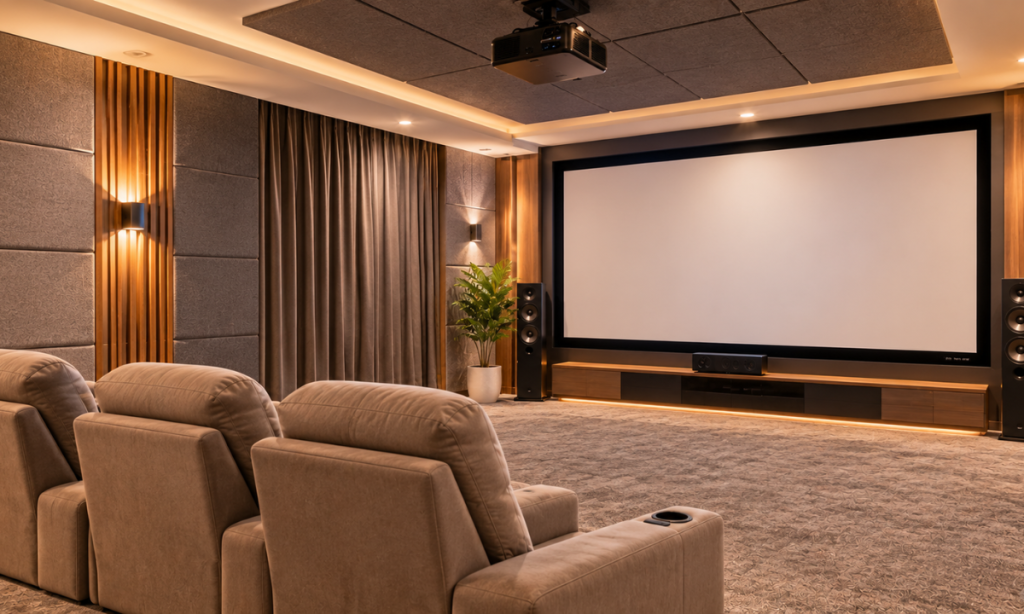
Sound quality is one of the most important elements of a private home theatre. Even an expensive sound system may not perform well in a room with poor acoustics. Hard surfaces such as glass, concrete and bare walls can reflect sound, creating echoes and reducing audio clarity.
The objective is to control sound reflections while maintaining a balanced listening environment.
Use Acoustic Panels on Walls
Acoustic panels help absorb unwanted sound reflections and improve audio clarity. They can be installed on selected wall sections, particularly around the primary listening area.
Fabric-wrapped acoustic panels are a popular choice because they offer sound absorption while allowing different colours and textures to complement the interior design.
Add Carpets and Soft Furnishings
Carpets, upholstered furniture and heavy curtains help reduce sound reflections. These materials also make the room feel warmer and more comfortable.
Consider using wall-to-wall carpeting or a thick area rug to reduce sound reflections from the floor. Heavy curtains can also help control sound entering through windows.
Plan Ceiling and Wall Treatments
The ceiling and walls play an important role in sound distribution. Acoustic ceiling panels, specialised wall treatments and carefully selected finishes can help improve the listening experience.
However, acoustic treatment and soundproofing serve different purposes. Acoustic treatment controls sound within the room, while soundproofing reduces sound transmission between rooms.
For better sound isolation, consider insulated wall assemblies, sealed door gaps and suitable acoustic doors. The design should be planned according to the room structure and sound requirements.
3. Select Comfortable Home Theatre Seating
Seating directly affects how enjoyable the home theatre experience will be. Uncomfortable furniture or poorly positioned seats can make long movie sessions difficult.
Recliner sofas, dedicated cinema chairs and modular seating are suitable options for private theatres.
Consider these factors when selecting home theatre seating:
- Ergonomic support: Choose chairs with proper back support, comfortable cushioning and adjustable headrests.
- Reclining features: Motorised recliners allow viewers to adjust their seating positions.
- Seat spacing: Maintain sufficient space between rows for comfortable movement.
- Upholstery: Select durable, easy-to-maintain fabrics or premium leather finishes.
- Storage features: Cup holders, side tables and hidden compartments improve convenience.
Arrange Seating for Better Viewing
The seating arrangement should provide an unobstructed view of the screen. For larger rooms, tiered seating can help viewers in the rear rows see the screen without obstruction.
The screen size and viewing distance should be planned together. A screen that is too large for a small room can cause viewing discomfort, while a small screen may not create the desired cinematic experience.
For rooms with multiple seating rows, consider a raised platform for the rear seats. Ensure that the platform height and screen position are calculated before construction.
4. Plan the Right Home Theatre Lighting
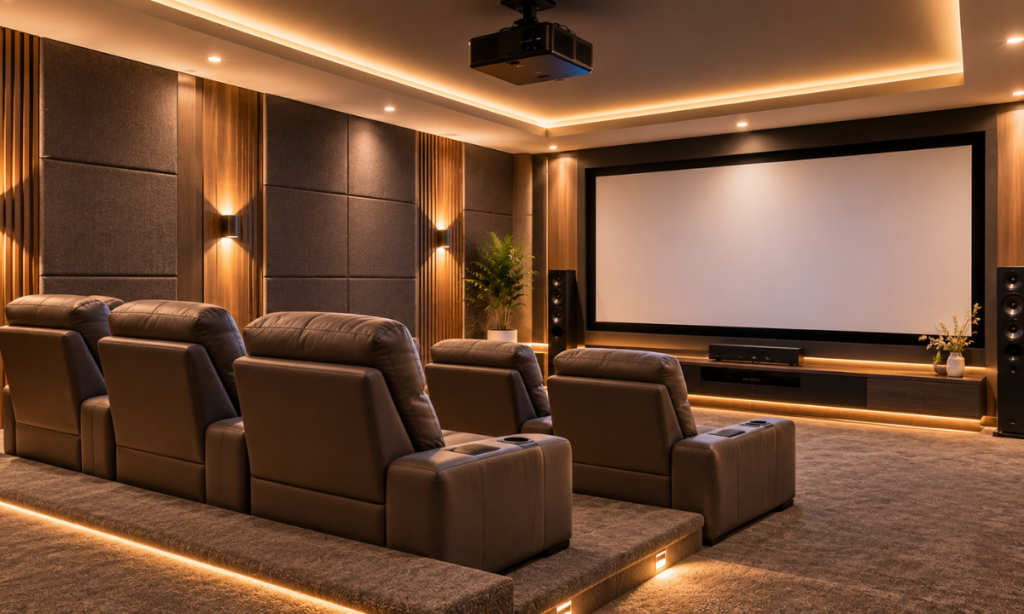
Lighting has a major influence on the atmosphere of a home theatre. Bright overhead lights can cause screen reflections and reduce image quality. A layered lighting arrangement offers better control over brightness and ambience.
Ambient Lighting
Use dimmable ceiling lights to provide general illumination when the room is not being used for movie viewing. Recessed lights and indirect ceiling lighting are suitable options.
Warm lighting creates a comfortable atmosphere without making the room feel too bright.
Cove and LED Strip Lighting
LED strip lights installed along ceiling coves, wall panels or floor edges create a subtle visual effect. They can also help viewers move around the room safely without switching on bright overhead lights.
Choose dimmable fixtures and position them carefully to prevent glare on the screen.
Step and Accent Lighting
For tiered seating, low-level step lights improve visibility and reduce the risk of accidents. Wall-mounted accent lights can highlight architectural details without affecting the viewing experience.
For more inspiration, explore The KariGhars’ guide to lighting design ideas for a modern home.
5. Choose the Right Screen and Audio System
The screen and audio system form the centre of a private home theatre. Their specifications should match the room dimensions, seating arrangement and viewing preferences.
A large television may work well in compact entertainment rooms, while a projector and projection screen can create a more cinematic experience in dedicated spaces.
Consider the following elements:
- Projector placement: Position the projector at a suitable distance based on its specifications and the screen size.
- Screen positioning: Install the screen at a comfortable viewing height to avoid neck strain.
- Surround sound: A multi-speaker configuration creates a more immersive audio experience.
- Subwoofer placement: Test different positions to achieve balanced bass without excessive vibration.
- Equipment storage: Use ventilated cabinets to organise receivers, gaming consoles and media players.
A professional AV specialist can help calculate speaker positions, viewing angles and equipment requirements.
6. Integrate Smart Technology and Storage
Modern home theatres can include smart features that make entertainment more convenient. Automated controls allow homeowners to manage lighting, sound, screens and curtains through a single interface.
Useful smart home theatre features include:
- Automated curtains and blinds.
- Dimmable lighting controls.
- Universal remote systems.
- Smart temperature controls.
- Integrated audio and video systems.
- Concealed cable management.
Storage also requires attention. Custom media cabinets and built-in shelving can keep equipment organised while maintaining a clean interior. Ensure that cabinets provide sufficient ventilation and easy access for maintenance.
7. Create a Cohesive Home Theatre Interior Design
A home theatre should feel like a natural extension of the home’s overall interior design. Dark colour palettes, textured wall finishes, upholstered panels and customised furniture can create a sophisticated atmosphere.
Consider using charcoal, deep brown, navy blue or muted burgundy for selected surfaces. These colours help create a cinema-inspired environment without making the room feel visually overwhelming.
You can also introduce decorative wall panels, concealed storage and customised ceiling designs to give the space a distinctive appearance.
For ideas on coordinating furniture, finishes and lighting, explore The KariGhars’ living room interior design guide.
You can also browse the interior design portfolio for inspiration on customised furniture, TV units and contemporary home interiors.
8. Common Home Theatre Design Mistakes to Avoid
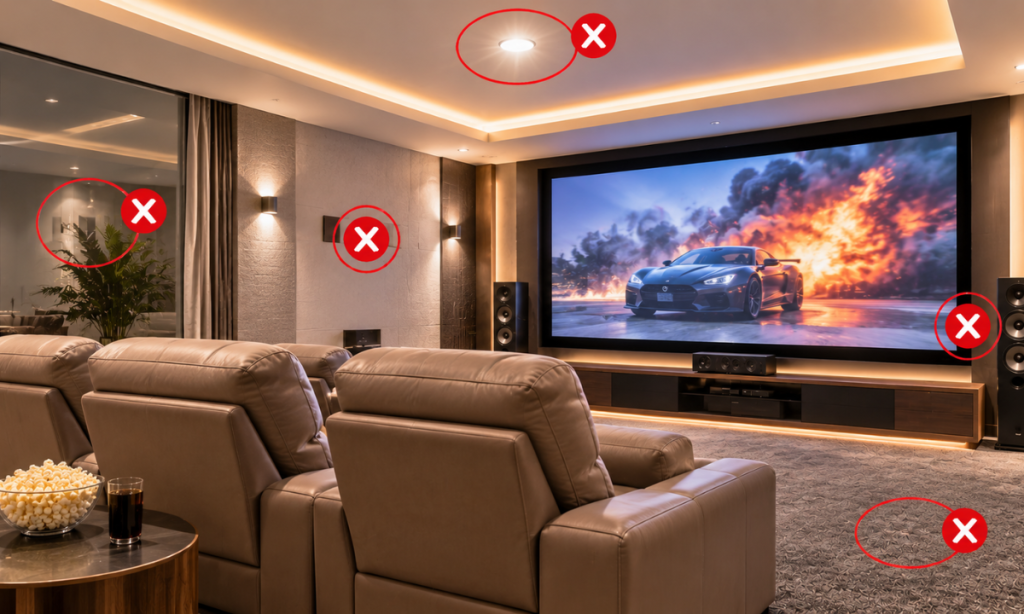
Even well-equipped home theatres can become uncomfortable when basic design considerations are overlooked.
Avoid these common mistakes:
- Ignoring room acoustics: Installing speakers without considering sound reflections can affect audio quality.
- Choosing oversized screens: The screen should match the room dimensions and viewing distance.
- Using excessive lighting: Bright lights and poorly positioned fixtures can cause screen glare.
- Overcrowding the room: Too many seats can restrict movement and affect viewing comfort.
- Ignoring ventilation: Projectors, receivers and other equipment generate heat and require adequate airflow.
- Leaving cables exposed: Poor cable management can make the room look cluttered and create safety concerns.
- Skipping professional planning: Incorrect speaker placement, electrical layouts and seating arrangements can lead to expensive changes later.
Planning these details before execution helps avoid unnecessary modifications and improves the overall experience.
Conclusion
Designing a private home theatre requires a balance of acoustics, seating, lighting, technology and interior aesthetics. From sound-absorbing wall treatments and ergonomic recliners to dimmable lighting and concealed equipment storage, every element contributes to a comfortable entertainment environment.
The key is to plan the space around your room dimensions, viewing preferences and lifestyle. A thoughtfully designed home theatre can become one of the most enjoyable spaces in your home while maintaining the overall character of your interiors.
At The KariGhars, we bring together space planning, customised furniture, premium finishes and detailed execution to create homes that reflect individual lifestyles. If you are planning a dedicated entertainment space or a complete home transformation, connect with our interior design team to discuss your requirements.
Frequently Asked Questions
1. What is the ideal room size for a private home theatre?
The ideal room size depends on the screen, seating capacity, speaker configuration and available space. A dedicated room with sufficient depth and width allows better seating arrangements and sound management.
2. How can I improve sound quality in a home theatre?
Use acoustic panels, carpets, upholstered furniture and suitable ceiling treatments to control sound reflections. Professional speaker positioning and acoustic calibration can further improve audio performance.
3. Which lighting is best for a home theatre?
Dimmable recessed lights, indirect cove lighting, LED strips and low-level step lights are suitable options. They provide visibility while reducing glare during movie screenings.
4. Is a projector better than a large television for a home theatre?
A projector can provide a larger cinematic display in a dedicated room with controlled lighting. A large television offers better brightness and is generally easier to use in rooms with some ambient light.
5. Can a small room be converted into a home theatre?
Yes. A small room can accommodate a home theatre with compact seating, a suitably sized screen, carefully positioned speakers and effective acoustic treatments. Smart storage and concealed wiring can also help maximise available space.