

Bookmatched marble in interiors creates a striking visual feature by arranging adjacent stone slabs so their natural veins mirror each other. This technique adds symmetry, depth and character to walls, floors and feature panels. Careful slab selection, design planning, precise installation and suitable maintenance help preserve its beauty over time.
Natural stone can become a defining feature of a luxury home when it is selected and installed with care. For homeowners exploring bespoke finishes, The KariGhars brings together material selection, thoughtful design and detailed execution to create personalised living spaces.
What Is a Bookmatched Marble?
Bookmatched marble is created by placing two or more adjacent stone slabs next to each other so their natural veining forms a mirrored pattern. The slabs are usually cut from the same block and arranged in sequence to create a symmetrical design.
The effect resembles an open book, which is where the term bookmatching comes from. Depending on the marble’s natural pattern, the finished surface may resemble butterfly wings, flowing branches, abstract artwork or geometric shapes.
Bookmatching is particularly effective with marble that has bold, visible veins. Stones with contrasting veins against a lighter background can create a dramatic focal point, while softer patterns offer a more subtle and refined finish.
Unlike ordinary marble installation, bookmatching requires careful planning before the slabs are fixed. The designer and installer must consider the vein direction, slab sequence, overall composition and placement of joints to achieve the intended result.
Why Choose Bookmatched Marble for Luxury Interiors?
Bookmatched marble combines the natural beauty of stone with a planned visual composition. It can make a surface feel more intentional and distinctive than a conventional marble finish.
1. Creates a Natural Statement Feature
The mirrored veins create a focal point without requiring additional patterns or decorative elements. A bookmatched marble wall can become the main visual feature in a living room, foyer or dining area.
This works particularly well in spaces with simple furniture, neutral colours and restrained accessories. The stone provides visual interest while the surrounding elements maintain balance.
2. Adds Symmetry and Visual Balance
The mirrored pattern creates a sense of order across a large surface. It can complement symmetrical furniture arrangements, centred lighting and carefully planned architectural details.
However, the pattern should suit the proportions of the space. Strong, dramatic veins may feel overwhelming on a small wall if combined with too many competing finishes.
3. Highlights Natural Stone Patterns
Every marble slab has its own veining, colour variation and mineral markings. Bookmatching uses these natural features as part of the design instead of treating them as random details.
This makes the finished surface distinctive. Even when the same marble variety is used in different homes, the resulting pattern can vary depending on the selected slabs.
4. Works with Different Interior Styles
Bookmatched marble can complement modern, contemporary and classic interiors. White marble with grey veins suits understated spaces, while darker stone with contrasting veins can create a richer, more dramatic appearance.
The final effect depends on the stone, its finish, the surrounding materials and the lighting plan.
Where Can Bookmatched Marble Be Used?
Bookmatched marble can be used across several areas of a home. The right application depends on the stone’s pattern, the size of the surface, practical requirements and the overall design concept.
1. Living room feature walls
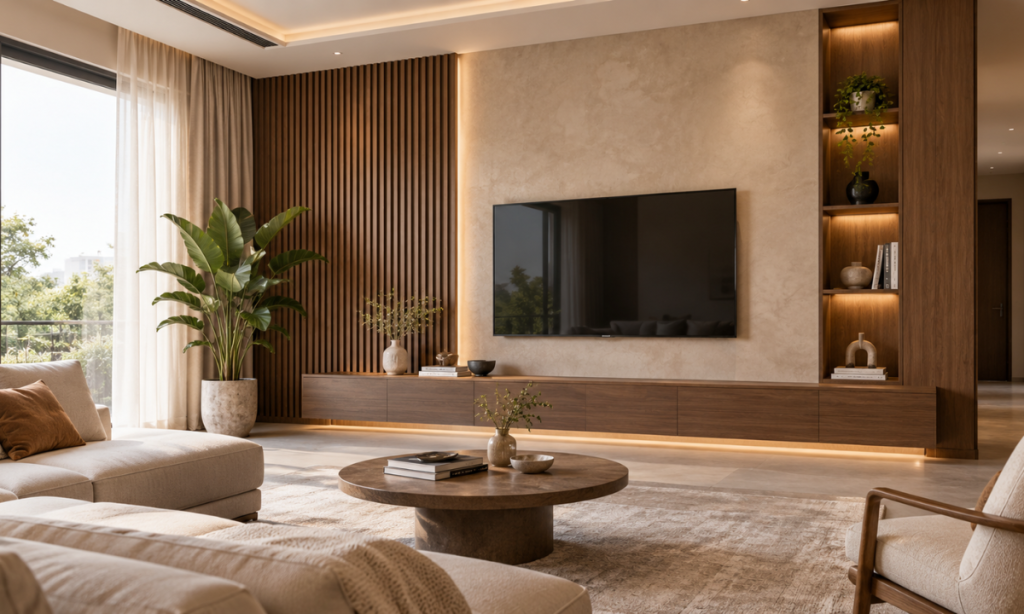
A bookmatched marble feature wall can create a striking backdrop behind a sofa or in the main seating area. Large panels allow the mirrored veins to remain visible and uninterrupted.
Consider the position of furniture, wall-mounted fixtures and electrical points before finalising the slab layout. Keep decorative accessories limited so the marble remains the main feature.
Explore living room interior design services for ideas on coordinating feature walls, furniture and lighting.
2. Entrance foyers
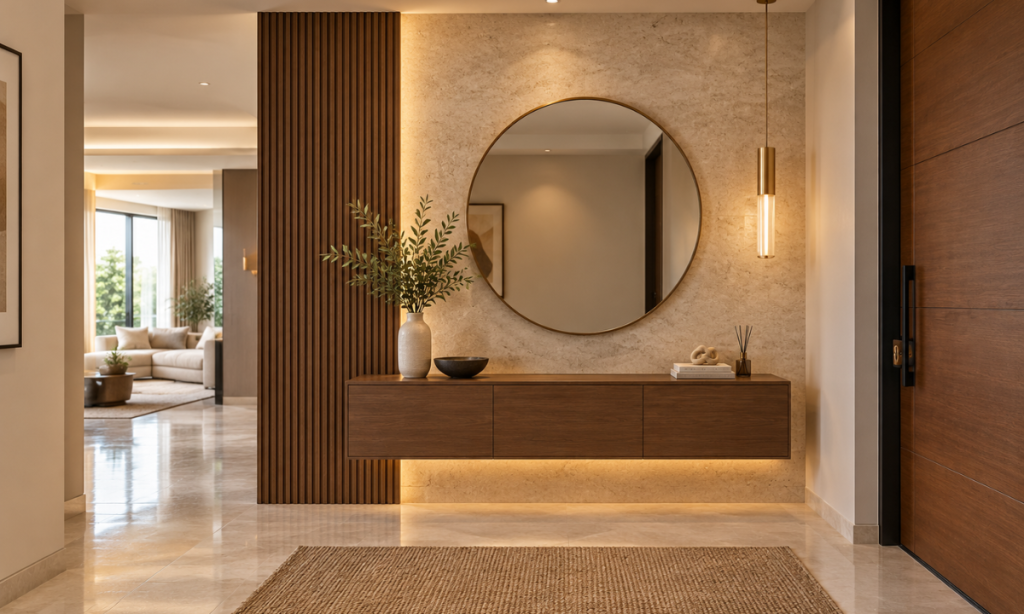
The foyer offers an opportunity to introduce bookmatched marble as a prominent design element. It can be installed behind a console, along a feature wall or within a larger entrance composition.
Select a pattern that complements the entrance dimensions and flooring. Adequate lighting can reveal the stone’s natural details without creating excessive glare.
3. Bedroom feature panels

In a master bedroom, bookmatched marble can be used behind the bed or within a carefully proportioned decorative panel. Pairing it with upholstered furniture, timber finishes and warm lighting helps balance the stone’s visual weight.
Consider the room’s acoustics and comfort as well. Marble is a hard surface, so combining it with soft furnishings can help create a more comfortable environment.
4. Bathroom walls and vanity backdrops
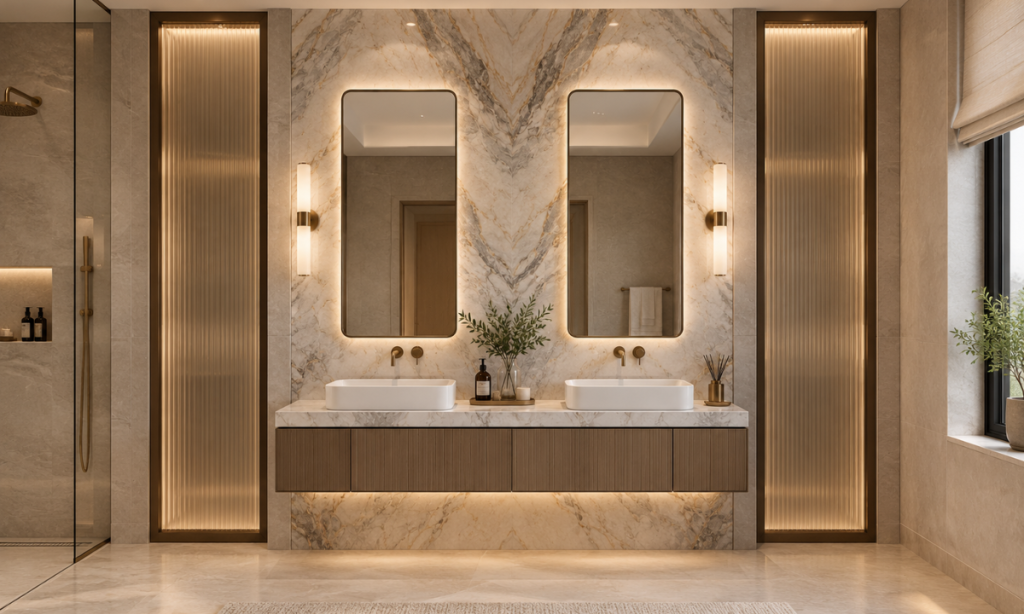
Bookmatched marble can bring visual continuity to a bathroom feature wall or vanity backdrop. The stone should be selected with attention to moisture exposure, surface finish, cleaning requirements and compatibility with the installation system.
Natural marble is sensitive to certain acids and cleaning products. Appropriate sealing, where recommended, and regular maintenance are important in bathroom applications.
5. Dining areas and entertainment spaces
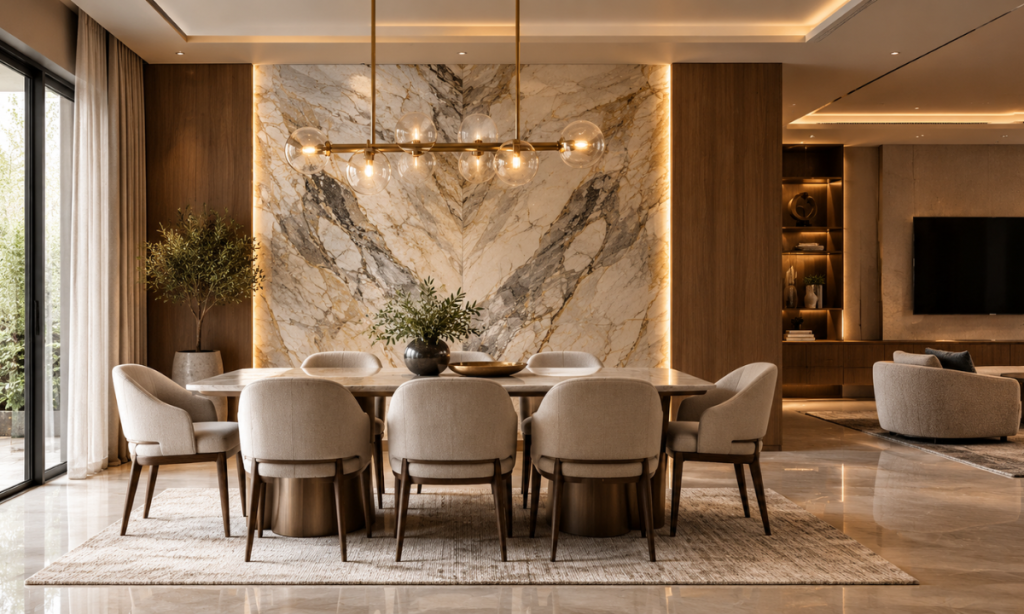
A bookmatched marble wall can provide a strong backdrop for a dining table, display cabinet or home bar. The pattern can help define the space, particularly in an open-plan home.
Coordinate the stone with the table finish, pendant lights and surrounding wall treatments. Avoid placing too many bold patterns close together.
How to Select the Right Marble for Bookmatching
Choosing suitable slabs is one of the most important steps in achieving a successful bookmatched design. The quality of the final pattern depends on the stone’s natural characteristics and how the slabs are arranged.
Consider the veining pattern
Inspect the slabs together rather than selecting each one independently. Look for veins that create an appealing mirrored pattern when adjacent slabs are reversed.
Bold, continuous veins work well for dramatic feature walls. Fine, subtle veining is better suited to understated interiors.
Check colour consistency
Natural marble can vary in background colour, mineral markings and vein intensity, even within the same batch. Review all slabs under suitable lighting before approving the final selection.
Small variations may be part of the stone’s natural character. The objective is to achieve a balanced composition, not to make natural stone look completely uniform.
Select the right finish
The finish affects both the appearance and practical performance of the stone.
- Polished marble: Offers a reflective surface that highlights colour and veining. It can also show reflections and surface marks more clearly.
- Honed marble: Has a softer, matte appearance that suits understated interiors. It may still require sealing and careful maintenance.
- Textured finishes: May suit selected applications, but their suitability depends on the stone, cleaning requirements and intended use.
The finish should be selected according to the location, expected use and desired appearance.
Match the slab size to the design
Larger slabs can create a more continuous pattern with fewer visible joints, but their weight, handling requirements, access routes and installation conditions must be assessed.
For smaller areas, the designer can plan a more compact composition that retains the mirrored effect without unnecessary material waste.
Installation Considerations for Bookmatched Marble
Bookmatched marble requires detailed coordination between design, stone fabrication and on-site installation. Even carefully selected slabs can lose their intended effect if the sequence or alignment is incorrect.
1. Plan the layout before cutting
Measure the installation area and prepare a slab layout showing the direction of the veins, panel dimensions, joints, openings and edge details. This drawing helps the team understand how the finished pattern should appear.
2. Confirm the slab sequence
Mark the slabs in their intended order and orientation. A dry layout, where the pieces are positioned for inspection before permanent fixing, helps identify mismatched veins, colour changes and alignment issues.
3. Check the substrate and support
The installation surface must be suitable for the stone’s weight and fixing method. Large or heavy panels may require specialist anchoring or mechanical support, depending on the application. Follow the relevant engineering and installation specifications.
4. Align the veins and joints
The installer must maintain the approved orientation and carefully manage joint width, level and panel alignment. Natural veins will not always connect perfectly, so the expected result should be agreed upon before installation.
5. Coordinate lighting and electrical fittings
Plan concealed lighting, switches, sockets and other fittings before fabrication. Cutting openings after installation can increase the risk of damage and disrupt the pattern. Lighting should reveal the stone’s texture without creating distracting glare.
6. Inspect before final handover
Check the pattern, surface finish, joints, edges, lippage, fixing quality and any visible damage. Confirm that sealing and cleaning have been completed according to the stone and installation-system requirements.
For a broader view of how premium finishes fit into a complete project, explore The KariGhars’ residential interior design portfolio.
Common Mistakes to Avoid
Bookmatched marble requires careful attention to detail. The following mistakes can affect the final appearance, installation quality and long-term maintenance of the stone.
- Selecting slabs separately: Choosing slabs without reviewing them side by side can result in an unbalanced mirrored pattern.
- Ignoring the full layout: Focusing on individual panels without considering the entire wall or floor can lead to awkward joints and interrupted veins.
- Using marble in unsuitable locations: Not all marble finishes are appropriate for wet floors, heavily used surfaces or areas exposed to staining.
- Overlooking lighting conditions: Poorly positioned lighting can create glare or make natural colour variations more noticeable than intended.
- Skipping a dry layout: Installing the slabs without checking their sequence first increases the risk of alignment errors.
- Using unsuitable cleaning products: Acidic cleaners can etch marble and damage its polished appearance.
- Ignoring material wastage: Bookmatching may require specific slab orientations and additional material to achieve the desired composition. Plan the quantity before finalising the budget.
What Affects the Cost of Bookmatched Marble?
The cost of bookmatched marble varies based on the stone selected, the area covered and the complexity of the installation. The following factors should be considered when preparing an estimate.
| Cost factor | How it affects the budget |
| Marble variety and origin | Rare varieties and selected imported stones may cost more than readily available alternatives. |
| Slab quality and size | Larger, well-matched slabs may involve higher material and handling costs. |
| Pattern selection | Strong vein alignment may require more careful slab selection and additional material. |
| Fabrication | Precision cutting, edge finishing, openings and custom detailing add to the work involved. |
| Installation | Heavy panels, specialised support systems and difficult site access can increase labour costs. |
| Surface finishing and sealing | Finishing, polishing, sealing and other specified treatments add to the overall cost. |
| Wastage and replacements | The estimate should account for cutting losses and the availability of matching replacement slabs. |
Rather than comparing marble prices alone, request a detailed quotation covering material supply, slab selection, fabrication, transport, installation, finishing and applicable taxes. This helps clarify the actual project cost.
How to Maintain Bookmatched Marble
Proper care helps preserve the natural appearance of marble and reduces the risk of staining or surface damage.
- Clean regularly: Use a soft cloth or mop with a pH-neutral cleaner suitable for natural stone.
- Wipe spills promptly: Coffee, wine, citrus juice and other acidic substances can stain or etch marble.
- Avoid harsh chemicals: Do not use acidic cleaners, abrasive pads or products that are not approved for the stone.
- Use suitable sealers: Ask the stone supplier or installer whether sealing is recommended and how often it should be renewed. Sealing can reduce absorption but does not make marble stain-proof.
- Inspect joints and edges: Check for damage, loose sections or deteriorating sealant, especially in bathrooms and other moisture-prone areas.
- Follow finish-specific care: Polished and honed marble may respond differently to cleaning and surface treatments.
Regular maintenance is particularly important for large feature walls and high-visibility surfaces, where marks and damage can affect the overall appearance.
Frequently Asked Questions
1. What is bookmatched marble in interiors?
Bookmatched marble in interiors refers to adjacent stone slabs arranged so their natural veins mirror each other. It creates a symmetrical pattern that can be used on feature walls, floors, vanity backdrops and other decorative surfaces.
2. Which marble is best for bookmatching?
Marble with clearly defined, contrasting veins is often suitable for bookmatching. Calacatta and Statuario are popular choices for light backgrounds with prominent veining. The best option depends on the desired pattern, slab availability, budget and intended application.
3. Is bookmatched marble suitable for small rooms?
Yes. A carefully proportioned bookmatched panel can work in a small room or entrance. Choose a pattern that suits the available surface and avoid combining it with too many competing design elements.
4. Can bookmatched marble be used on floors?
Yes. Bookmatched marble can be installed on floors where the stone, finish and installation system are suitable for the intended use. The design must account for slip resistance, wear, maintenance, joints and the condition of the supporting surface.
5. Is bookmatched marble expensive?
It can cost more than a standard marble installation because it may require selected slabs, careful matching, precision fabrication and specialised installation. The final cost depends on the stone, project size and level of detailing.
6. Does bookmatched marble require special maintenance?
It generally requires the same basic care as other natural marble, including suitable cleaning products, prompt spill removal and periodic assessment of sealing requirements. The mirrored pattern does not change the stone’s natural sensitivity to acids and staining.
7. Can bookmatched marble be combined with wood and metal?
Yes. Wood can soften the appearance of marble, while brass, bronze and other metal finishes can introduce contrast. The materials should be coordinated in terms of colour, finish and proportion to keep the design balanced.
Conclusion
Bookmatched marble brings together natural stone patterns, symmetry and detailed craftsmanship to create distinctive surfaces in luxury homes. From living room feature walls and entrance foyers to bedroom panels and bathroom backdrops, it can become a defining design element when the application suits the space.
The final result depends on more than choosing an attractive marble variety. Slab selection, layout planning, precise fabrication, suitable installation methods and regular maintenance all play an important role.
For homeowners planning bespoke interiors, The KariGhars offers luxury home interior design services in Bangalore, helping coordinate materials, finishes and design details as part of a cohesive home interior.