

Summary
Choosing long-lasting furniture involves more than selecting an attractive design. The frame material, joinery, cushioning, upholstery and overall construction determine how well a piece performs over time. By understanding these factors, measuring your space and choosing furniture suited to your lifestyle, you can make practical investments that offer lasting comfort, functionality and value. Whether you live in a compact apartment, spacious villa, studio or farmhouse, the right furniture choices can keep your home comfortable and stylish for years.
Introduction
Furniture is an important part of any home. From sofas and coffee tables to storage cabinets and accent chairs, every piece contributes to the comfort and functionality of your space. However, furniture that looks good in a showroom may not always withstand years of everyday use.
Choosing durable furniture requires attention to materials, construction quality, maintenance and functionality. It is equally important to consider your available space and daily requirements before making a purchase.
At The KariGhars, we believe that good interior design combines aesthetics, quality materials and thoughtful planning. In this guide, we explain how to choose long-lasting furniture, compare commonly used materials, understand furniture construction and select suitable pieces for different home layouts.
Why Does Furniture Lifespan Matter?
Furniture is a long-term investment. A sofa, dining table or storage unit that loses its shape or strength within a few years may require frequent repairs or replacement.
Choosing durable furniture offers several benefits:
- Better long-term value: Quality furniture may cost more initially but can reduce replacement and repair expenses.
- Everyday comfort: Well-constructed furniture provides better support and maintains its functionality with regular use.
- Reduced maintenance: Durable materials and quality finishes are generally easier to maintain.
- Less waste: Keeping furniture for longer reduces the need for frequent replacements.
- Timeless appeal: Simple designs and quality materials can remain relevant even when interior trends change.
The key is to evaluate furniture based on its construction and expected use rather than price or appearance alone.
Construction Details That Determine Furniture Durability
The quality of furniture depends largely on how it is made. Before purchasing a sofa, chair or wooden furniture piece, check the following construction details.
1. Frame Material
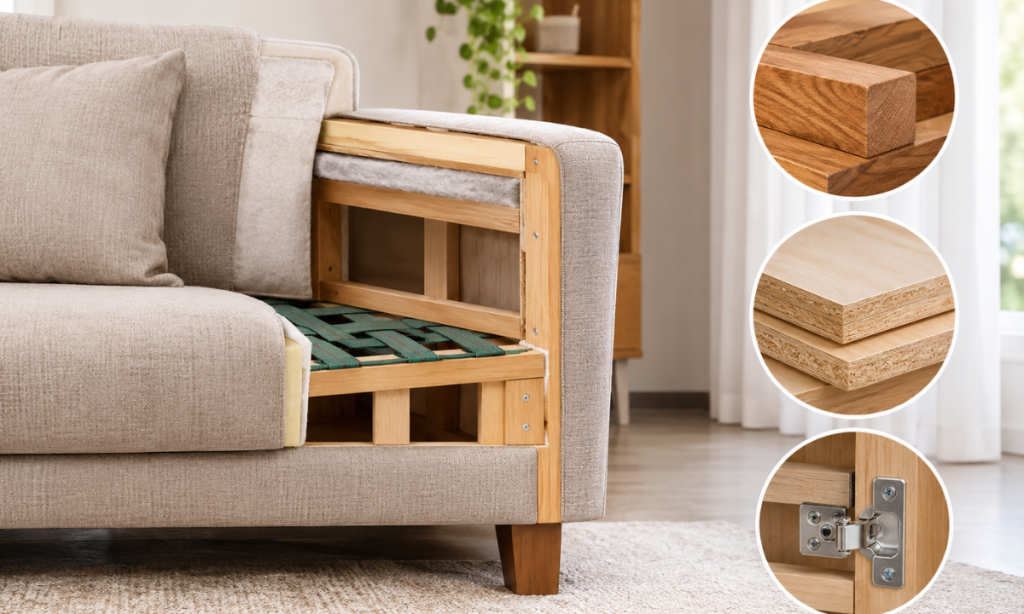
The frame provides structural support for most upholstered furniture. A strong frame helps a sofa or chair retain its shape and withstand regular use.
Hardwoods such as teak and sheesham are popular choices for furniture because of their strength and natural grain patterns. However, their durability also depends on proper seasoning, moisture content, construction quality and maintenance.
For furniture with engineered wood components, check the board grade, thickness, edge sealing and hardware quality.
Avoid choosing furniture based only on descriptions such as “solid wood” or “premium wood”. Ask the manufacturer about the actual material used in the frame.
2. Joinery and Construction
The way different furniture components are connected affects their stability.
Look for construction methods such as:
- Mortise-and-tenon joints for strong wooden connections.
- Dowels and reinforced corner blocks for additional support.
- Quality screws and bolts for secure assembly.
- Proper adhesive bonding where required.
Staples and nails may be used in certain parts of furniture, but they should not be the only support holding important structural joints together.
Check whether the furniture feels stable when you apply gentle pressure. Loose joints, unusual movement and creaking sounds may indicate poor construction.
3. Suspension System
The suspension system supports the seating area and distributes body weight.
Common sofa suspension systems include:
- Eight-way hand-tied springs: A traditional system designed to provide distributed support and flexibility.
- Sinuous springs: S-shaped metal springs that offer consistent support and are commonly used in modern sofas.
- Webbing systems: Elastic or woven straps that support the seating base. Their durability depends on the material, spacing and installation quality.
There is no single suspension system suitable for every sofa. The quality of the materials and workmanship matters more than the name of the system.
4. Cushion and Foam Quality
Cushion quality directly affects seating comfort and how well a sofa retains its shape.
High-density foam is generally better suited to frequently used seating because it offers more resistance to compression. However, density and firmness are different measurements. A firm cushion is not necessarily a durable one.
Before purchasing a sofa, ask about:
- Foam density and quality.
- Cushion thickness.
- Expected shape retention.
- Foam replacement options.
- Whether the cushions have additional fibre or other comfort layers.
Test the sofa by sitting on it for a few minutes. The cushions should provide adequate support without feeling excessively hard or sinking too deeply.
5. Upholstery and Fabric Quality
Upholstery affects both the appearance and lifespan of furniture. The right fabric depends on how frequently the furniture is used and the maintenance it requires.
Consider these options:
- Performance fabrics: Suitable for frequently used furniture because many options offer better resistance to stains and everyday wear.
- Microfibre: Relatively easy to maintain and useful for households that prefer practical upholstery.
- Cotton and linen blends: Comfortable and breathable, although some varieties require more careful maintenance.
- Leather: Offers a distinctive appearance and can age well with proper care, but requires suitable cleaning and conditioning.
For fabric upholstery, ask about abrasion resistance and the testing method used. Martindale and Wyzenbeek are two commonly used testing methods, but their ratings use different systems and should not be compared directly.
Higher abrasion ratings generally indicate better resistance to surface wear within the same testing method. However, fabric construction, usage and maintenance also influence durability.
Furniture Buying Checklist: What Should You Check Before Purchasing?
Before finalising your furniture purchase, use this checklist to evaluate its quality and long-term suitability.
- Frame material: Check whether the furniture uses quality hardwood or appropriately graded engineered wood.
- Joint construction: Inspect joints, corner blocks, screws and other structural connections.
- Suspension system: Ask about the spring or webbing system used in upholstered furniture.
- Cushion quality: Check foam density, comfort, support and replacement options.
- Upholstery: Review fabric quality, abrasion resistance and cleaning requirements.
- Finishing: Inspect edges, surface coatings, stitching and overall workmanship.
- Warranty: Understand what the warranty covers and its duration.
- Maintenance: Check whether the furniture requires special cleaning or periodic treatment.
- Dimensions: Confirm that the furniture fits your room and can pass through doorways and staircases.
Taking time to evaluate these factors can help you avoid unnecessary repairs and replacements.
How to Choose Long-Lasting Furniture: A Step-by-Step Guide
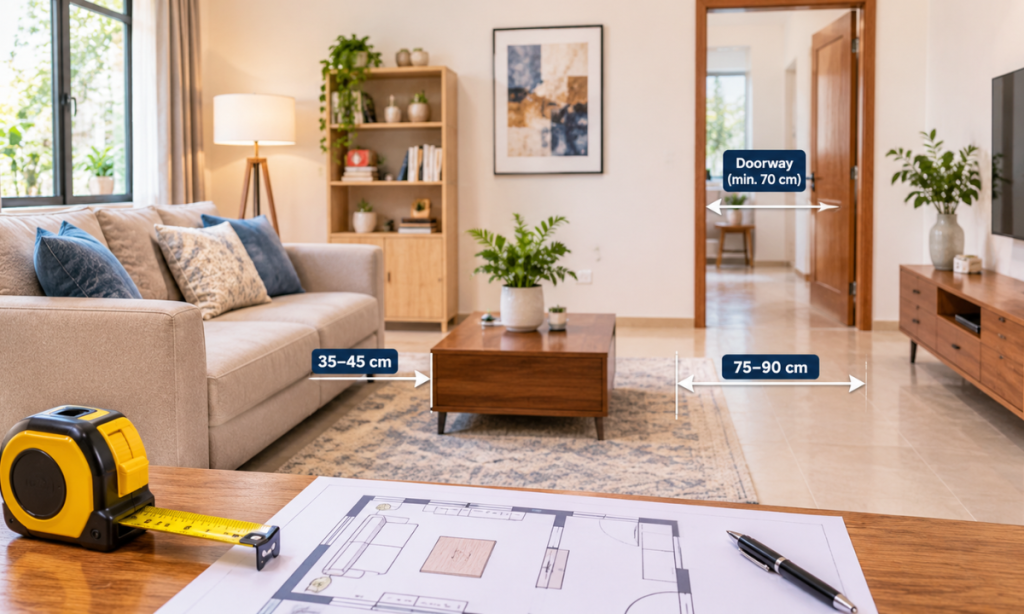
Once you understand furniture construction, the next step is selecting pieces that suit your home and daily requirements.
1. Measure Your Space Before Buying
Start by measuring the room before looking at furniture designs. Note the length and width of the room, doorway dimensions, window positions, electrical points and fixed architectural features.
Also consider how much space you need for comfortable movement.
As a general planning guide:
- Maintain approximately 75–90 cm of walking space along major circulation paths.
- Leave around 35–45 cm between a sofa and coffee table.
- Check whether furniture can pass through doorways, corridors and staircases.
These measurements are approximate recommendations rather than fixed standards. Adjust them according to your room dimensions and furniture design.
Proper measurements help prevent overcrowding and ensure that every piece fits comfortably.
For more planning ideas, explore our guide to living room interior design for Indian homes.
2. Identify Your Furniture Requirements
Think about how you use each room before selecting individual pieces.
For example:
- Conversation-focused spaces: Choose seating arrangements that allow people to face one another.
- TV-focused spaces: Select sofas and chairs that provide comfortable viewing angles.
- Multi-purpose living rooms: Consider modular seating, storage ottomans and flexible furniture arrangements.
Your furniture should support your daily activities rather than simply follow current design trends.
3. Invest in Quality Seating
Sofas and lounge chairs are among the most frequently used pieces of furniture in a home. Therefore, they deserve particular attention.
Some practical options include:
- L-shaped sofas: Suitable for larger living rooms and family seating areas.
- Wooden sofa sets: Offer a sturdy frame and a timeless appearance. Removable cushion covers can make maintenance easier.
- Modular sofas: Allow different seating configurations and can adapt to changing requirements.
- Leather sofas: Provide a distinctive finish and can develop character over time with proper care.
When selecting a sofa, consider its dimensions, seating comfort, frame construction and upholstery. Choose a design that complements your room layout and everyday requirements.
You can also explore the ultimate guide to choosing furniture for interior design for additional furniture selection ideas.
4. Select Supporting Furniture Carefully
Coffee tables, side tables, accent chairs and bookshelves complete a living room. However, their dimensions should complement the main seating arrangement.
A coffee table measuring approximately two-thirds of the sofa’s length is a useful starting point. Its height should generally be close to or slightly below the sofa seat height.
Side tables should be easy to reach when seated. Similarly, accent chairs should provide enough clearance for comfortable movement.
Choose supporting furniture that complements the main pieces without making the room feel crowded.
5. Plan Storage Along With Furniture Selection
Storage should be considered during the initial furniture-planning stage.
TV consoles, display cabinets, bookshelves and storage-integrated seating can help organise everyday belongings. They also reduce visible clutter and make the room easier to maintain.
Consider the following options:
- Wall-mounted TV consoles.
- Closed storage cabinets.
- Open display shelves.
- Coffee tables with storage compartments.
- Seating with built-in storage.
The right combination depends on your available space and storage requirements.
For more ideas, explore living room design and its balance of comfort and aesthetics.
6. Choose Materials and Colours That Work Together
Furniture should complement the overall interior theme of your home.
Instead of introducing too many materials, select a few complementary finishes and repeat them across different pieces.
For example, teak furniture can work well with neutral upholstery, warm lighting and natural textures. Similarly, walnut finishes can complement contemporary interiors with muted colours and subtle metal accents.
Neutral shades and simple furniture designs are generally easier to adapt when you update your home decor.
You can find more inspiration in these living room interior design ideas.
7. Inspect Furniture Before Making the Purchase
Photographs and showroom displays do not always reveal construction quality.
Before finalising your purchase:
- Sit on sofas and chairs to assess comfort.
- Check whether the frame feels stable.
- Inspect joints, edges and finishing.
- Ask about the materials used.
- Check cushion quality and upholstery specifications.
- Understand the warranty and maintenance requirements.
- Confirm whether replacement parts and upholstery services are available.
A detailed inspection helps you make a more informed purchase.
Comparing Furniture Materials for Long-Term Use
Different furniture materials have different strengths, maintenance requirements and applications. Understanding these differences helps you select the right material for each room.
| Material | Key Benefits | Suitable Applications | Maintenance Considerations |
| Teak wood | Strong and naturally durable, with attractive grain patterns | Sofa frames, tables and selected outdoor furniture | Periodic cleaning and suitable wood care |
| Sheesham wood | Durable hardwood with distinctive natural grain | Beds, tables, cabinets and sofa frames | Protect from prolonged moisture and direct heat |
| Plywood | Stable when good-quality, properly graded boards are used | Wardrobes, cabinets and storage units | Protect exposed edges from water |
| MDF | Smooth surface suitable for painted and decorative finishes | Decorative panels, cabinet components and furniture fronts | Avoid prolonged exposure to moisture |
| Metal | Strong and suitable for structural components | Furniture frames, chairs and table bases | Check protective coatings and signs of corrosion |
| Natural leather | Distinctive appearance and ability to develop a natural patina | Sofas, lounge chairs and upholstered seating | Regular cleaning and appropriate conditioning |
| Performance fabric | Practical for frequently used upholstered furniture | Sofas, chairs and upholstered headboards | Follow the manufacturer’s cleaning instructions |
The performance of engineered wood depends on its grade and intended application. Choose moisture-resistant grades where required and ensure that exposed edges are properly sealed. Not all plywood or MDF products offer the same level of moisture resistance.
The best material depends on the furniture’s purpose, location, construction and expected usage. For example, solid hardwood may be suitable for a sofa frame, while quality plywood can work well for storage cabinets.
Rather than choosing one material for the entire home, consider where each material performs best.
Choosing Furniture for Different Types of Homes
Furniture requirements change according to the size, layout and functionality of your home.
1. Apartments and Compact Living Rooms
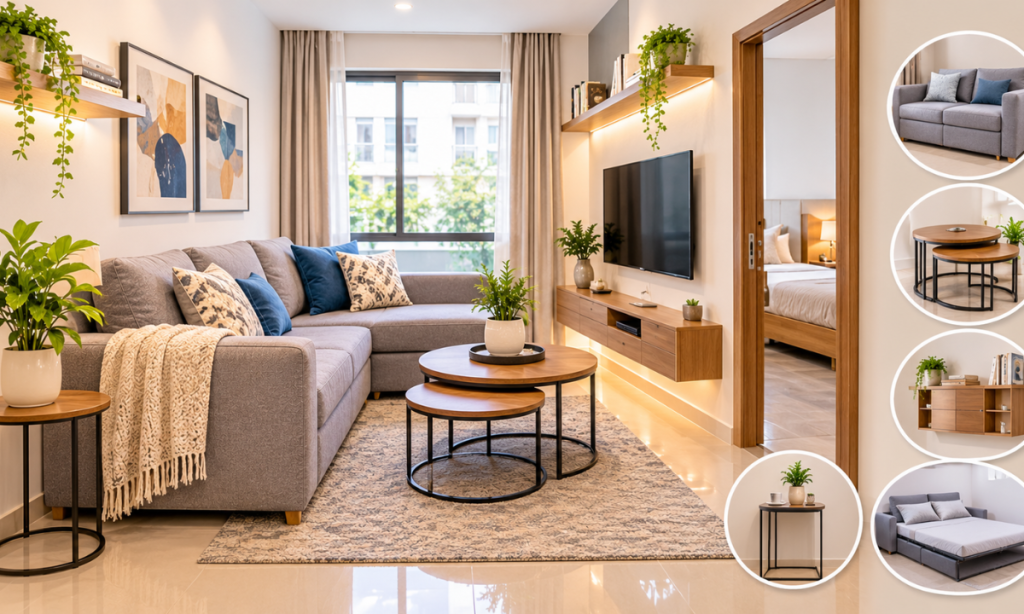
Apartments often have limited floor space and fixed furniture placements. Choose compact, multi-functional furniture that makes efficient use of available space.
Consider:
- Compact L-shaped or two-seater sofas.
- Nesting coffee tables.
- Wall-mounted storage units.
- Slim side tables.
- Sofa-cum-beds for additional sleeping arrangements.
Furniture with exposed legs and lighter visual profiles can also make smaller rooms feel more open.
2. Independent Houses and Villas
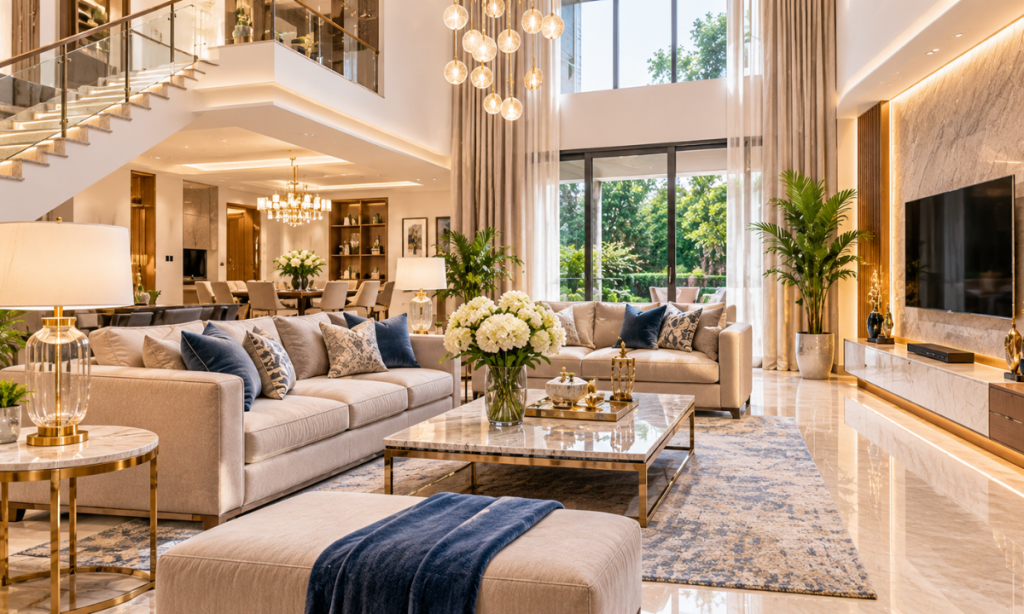
Larger homes offer more flexibility in furniture selection. However, the furniture should remain proportionate to the room.
Consider larger sectional sofas, substantial coffee tables and spacious storage units. Solid wood, quality upholstery and carefully selected finishes can help create a refined and comfortable setting.
Avoid leaving furniture scattered around the room. Instead, create seating arrangements that define different functional areas.
3. Studio Apartments and 1BHK Homes
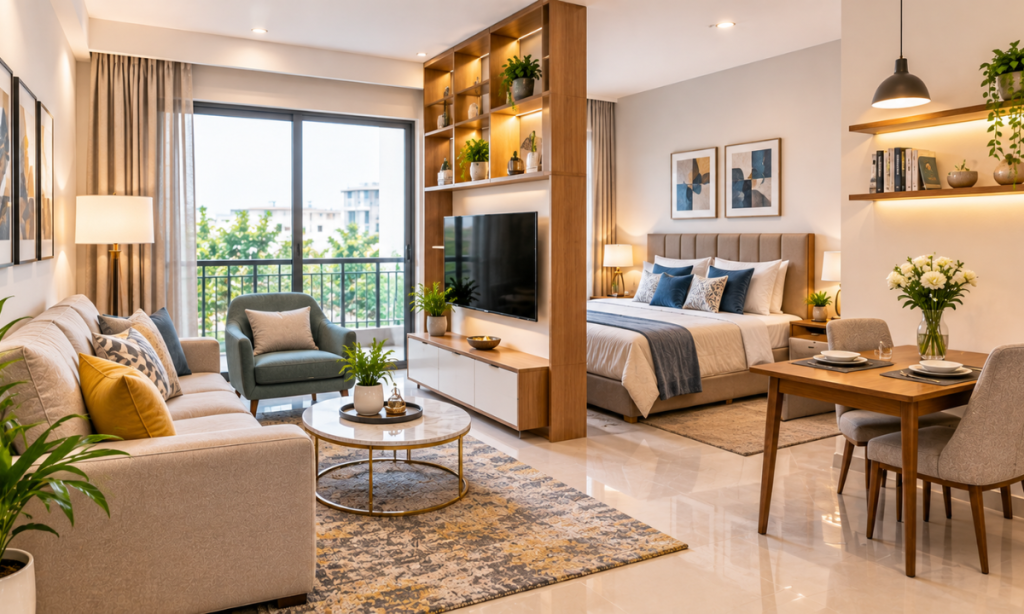
In studio apartments and smaller 1BHK homes, furniture often needs to serve multiple purposes.
A compact sofa, foldable desk, storage ottoman or nesting table can help maximise functionality without occupying too much floor space.
You can also use furniture placement to separate the living area from the sleeping or dining zone without introducing physical partitions.
4. Duplex and Multi-Level Homes
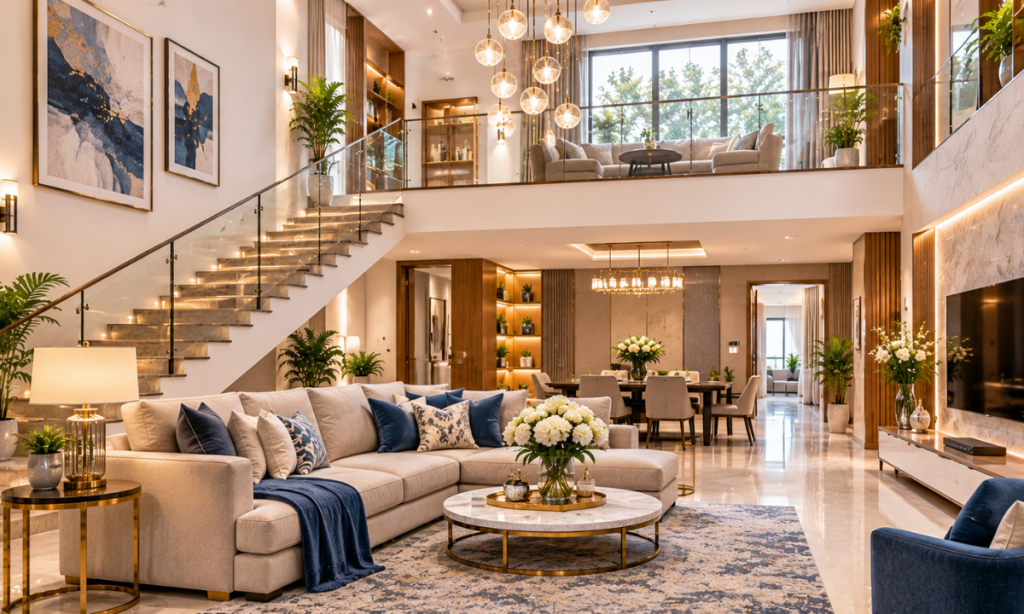
Duplex homes often feature double-height living rooms, staircases and open layouts. Furniture should complement the room’s proportions and architectural features.
Choose appropriately sized sofas, statement seating and larger furniture pieces where space permits.
Vertical elements such as bookshelves, floor lamps and wall art can help balance the height of the room.
5. Farmhouses and Homes With Outdoor Access
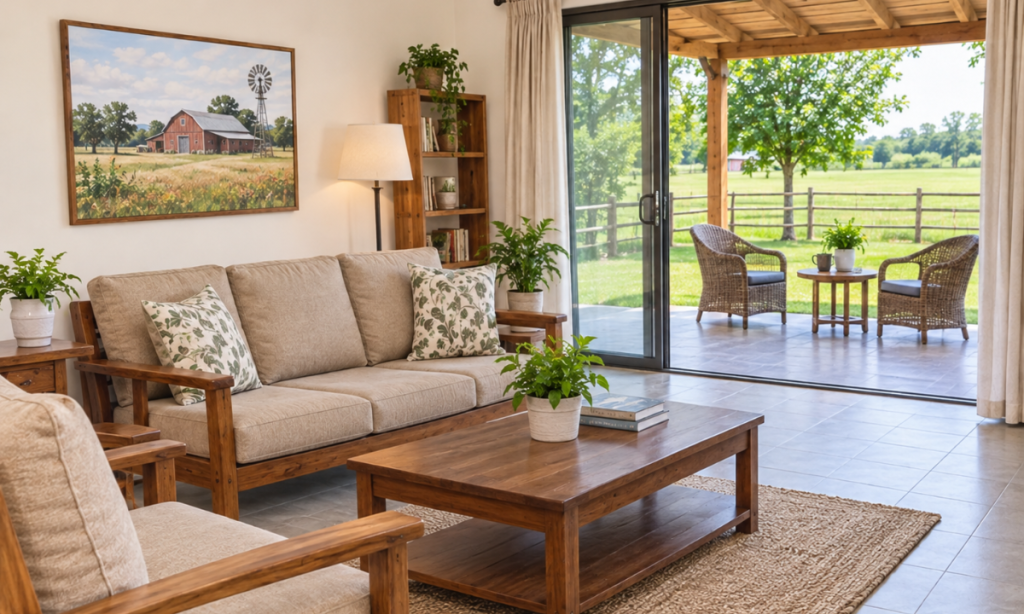
Farmhouses and independent homes with verandas or large windows may experience greater exposure to sunlight, moisture and temperature changes.
Choose materials and finishes suited to their location. Teak, treated wood, cane and weather-resistant upholstery can be useful options for transitional or semi-outdoor spaces.
For outdoor furniture, always check whether the material and protective finish are specifically designed for outdoor conditions.
How to Maintain Furniture and Extend Its Lifespan
Even well-constructed furniture needs regular maintenance. Simple care practices can help preserve its appearance and functionality.
Wooden furniture
- Dust surfaces regularly with a soft cloth.
- Avoid prolonged exposure to moisture and direct sunlight.
- Use suitable wood-cleaning products.
- Address loose fittings and minor damage promptly.
Upholstered furniture
- Vacuum fabric surfaces regularly.
- Clean spills according to the manufacturer’s instructions.
- Rotate removable cushions where recommended.
- Avoid placing furniture in areas with excessive direct sunlight.
Leather furniture
- Wipe surfaces with a suitable soft cloth.
- Use leather-specific cleaning products.
- Follow recommended conditioning schedules.
- Keep leather away from prolonged direct sunlight and heat.
Metal furniture
- Clean surfaces regularly.
- Check joints and fasteners.
- Address chipped protective coatings to reduce the risk of corrosion.
Regular maintenance helps prevent small problems from developing into expensive repairs.
How to Calculate Whether Furniture Is Worth the Price
A higher purchase price does not automatically guarantee better durability. A more useful approach is to compare the purchase cost with the expected years of use.
You can use this simple formula:
Cost per year = Purchase price ÷ Expected lifespan in years
For example:
- Sofa A costs ₹1,80,000 and is expected to last 18 years.
- Sofa B costs ₹35,000 and is expected to last 3 years.
| Furniture | Purchase Price | Expected Lifespan | Annual Cost |
| Sofa A | ₹1,80,000 | 18 years | ₹10,000 |
| Sofa B | ₹35,000 | 3 years | ₹11,667 |
Although Sofa A requires a higher initial investment, it offers a lower estimated annual cost.
These figures are illustrative. Actual furniture lifespan depends on construction quality, usage, maintenance and repair requirements.
Frequently Asked Questions
1. How do I choose long-lasting furniture for my home?
Start by checking the frame material, joinery, cushioning, upholstery and overall construction. Measure your space, consider your daily requirements and select furniture with suitable materials and finishes. Also, review the warranty and maintenance requirements before purchasing.
2. What is the average lifespan of furniture?
Well-made furniture can last for many years, and some solid wood pieces can remain usable for decades. Upholstered furniture generally requires more attention to cushion, fabric and frame condition. Actual lifespan depends on construction, frequency of use, maintenance and repair.
3. Which wood is best for long-lasting furniture in India?
Teak and sheesham are popular hardwood choices for furniture because of their strength and natural grain patterns. However, proper seasoning, moisture content, construction quality and maintenance also influence how long wooden furniture lasts.
4. What should I check before buying a sofa?
Check the frame material, joint construction, suspension system, foam quality and upholstery. Sit on the sofa to evaluate comfort and ask about the warranty, cushion replacement and maintenance requirements.
5. Is solid wood furniture better than engineered wood furniture?
Solid wood is a durable choice for many furniture applications, particularly when properly seasoned and constructed. However, quality plywood and other engineered boards can also perform well in cabinets and storage furniture. The right choice depends on the application and material grade.
6. Is expensive furniture always more durable?
No. Price alone does not determine furniture quality. Check the materials, construction, workmanship, warranty and expected lifespan. Comparing the estimated cost per year can help you understand its long-term value.
7. How can I make my furniture last longer?
Clean furniture regularly, protect it from excessive moisture and direct sunlight, follow recommended maintenance practices and address loose joints or damaged finishes early. Using furniture according to its intended purpose also helps extend its lifespan.
8. Is removable upholstery better for long-term furniture use?
Removable upholstery can make furniture easier to maintain because covers can be cleaned or replaced when needed. However, check the fabric quality, stitching, fastening system and availability of replacement covers before purchasing.
Final Thoughts
Choosing long-lasting furniture requires attention to material quality, construction, comfort and functionality. Instead of focusing only on appearance or current trends, consider how each piece will perform with regular use and how easily it can be maintained.
Whether you are furnishing a compact apartment or a spacious villa, thoughtful selection can help you create a home that remains comfortable, practical and visually appealing for years.
At The KariGhars, we bring together space planning, material selection, custom design and detailed execution to create interiors that reflect individual lifestyles. Our approach focuses on combining quality craftsmanship with functional design, helping homeowners make considered choices for their spaces.
Explore our home interior design services in Bangalore to discover how thoughtful planning and personalised interior solutions can transform your home.
Last updated, 4 Nov 2026