

Quick Answer: Natural stone inlay is a decorative technique that combines different types of stone to create patterns, borders and artistic details in interior spaces. Materials such as marble, granite, onyx and semi-precious stones add texture, colour and character to luxury homes. They are commonly used in flooring, walls, tabletops and feature designs.
Introduction
Luxury home interiors are defined by thoughtful details, quality materials and distinctive design elements. While furniture, lighting and finishes contribute to the overall look, decorative stonework can add a unique character to a space. Natural stone inlay is one such design technique that brings together craftsmanship and natural materials to create elegant patterns.
From geometric floor designs to floral motifs and detailed wall features, stone inlay can make ordinary surfaces more visually interesting. Each design uses carefully selected pieces of stone arranged to form a pattern or composition. The natural variations in colour, texture and veining also make every installation distinctive.
For homeowners exploring refined interior concepts, The KariGhars offers inspiration for creating personalised luxury spaces where materials, finishes and detailing work together.
This guide explores natural stone inlay, the materials used, popular patterns, design applications and important considerations when incorporating it into luxury homes.
What Is Natural Stone Inlay?
Natural stone inlay is a decorative technique in which small, precisely cut pieces of stone are fitted into a larger stone surface to create patterns, motifs or images. The pieces are selected by premium interior designers in Bangalore based on their colour, texture and natural markings to form a planned design.
The technique involves cutting grooves or sections into a base material and fitting contrasting stone pieces into them. The joints are then filled and the surface is polished to create a smooth, integrated finish.
Stone inlay is also associated with traditional craftsmanship, particularly the pietra dura technique, which uses carefully shaped pieces of coloured stone to create intricate decorative compositions. Today, this craft is used in both traditional and contemporary residential interiors.
Unlike printed patterns or surface coatings, natural stone inlay uses actual stone pieces. This gives the finished design depth, texture and natural colour variations.
Popular Materials Used in Natural Stone Inlay
The choice of stone influences the appearance, durability and detailing of an inlay design. Different materials can be combined to create subtle contrasts or elaborate decorative patterns.
1. Marble
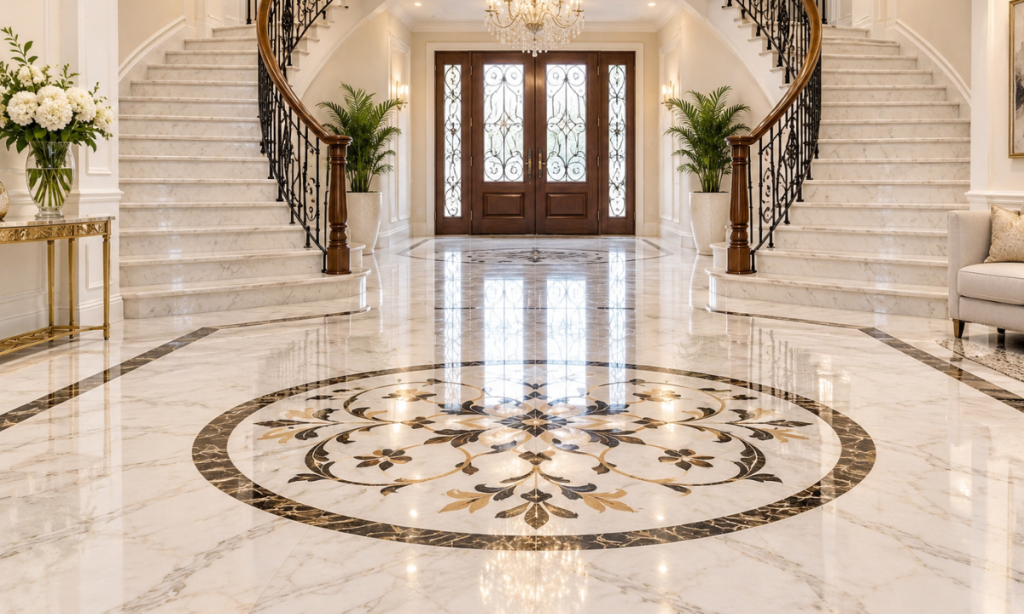
Marble is one of the most popular materials for decorative stone inlay. Its smooth surface, varied colours and natural veining make it suitable for both traditional and modern designs.
White, black, green, beige and pink marble can be combined to create floral motifs, borders and geometric patterns. Contrasting marble pieces can also be used to create decorative medallions in entrance foyers and living rooms.
Marble inlay works particularly well in spaces where the flooring or wall design needs to become a visual feature.
2. Granite
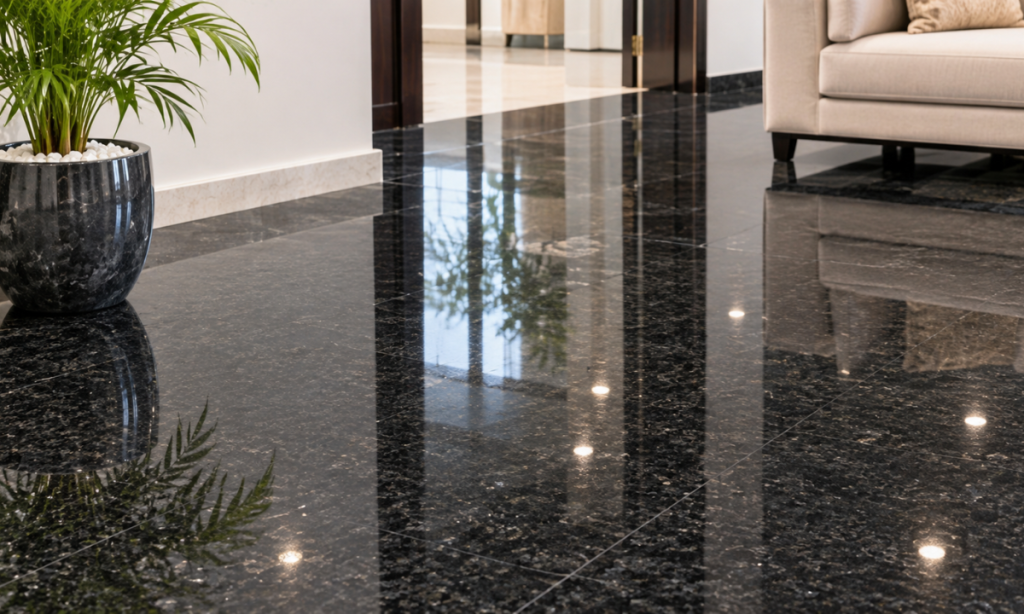
Granite is known for its hardness and resistance to everyday wear. It is a practical option for decorative inlay in areas that experience regular foot traffic.
Its darker shades, including black, grey and brown, can create a strong contrast with lighter stones. Granite can be used for geometric borders, floor accents and selected decorative panels.
However, its hardness requires suitable cutting equipment and skilled fabrication for precise inlay work.
3. Onyx
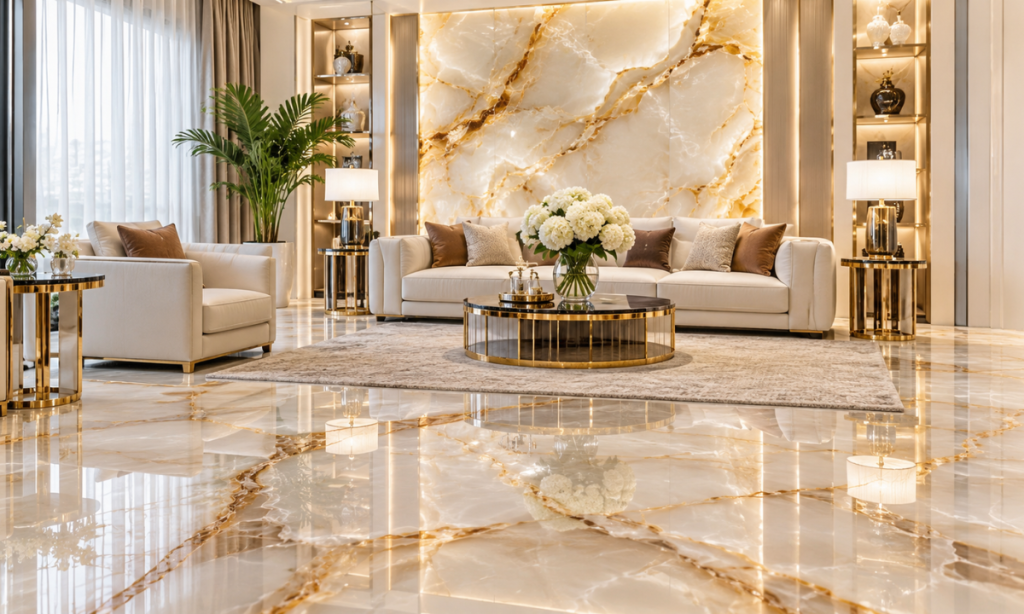
Onyx is valued for its distinctive colour variations, layered appearance and natural translucency. It is available in shades of cream, honey, green, pink and brown.
Its visual character makes it suitable for decorative wall panels, tabletops and selected feature installations. When combined with other stones, onyx can introduce colour and depth to an otherwise understated composition.
Since onyx is generally more delicate than granite, it requires careful placement and maintenance. It is better suited to decorative applications than heavily used surfaces.
4. Semi-Precious Stones
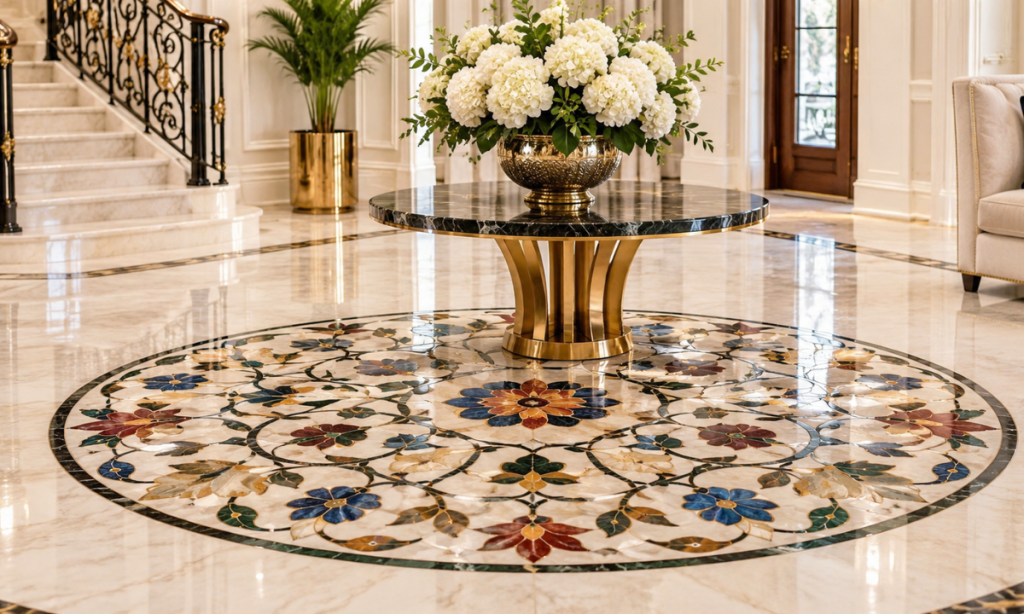
Semi-precious stones such as lapis lazuli, malachite, agate and turquoise are used in high-end decorative inlay work.
These materials offer distinctive colours and patterns that are difficult to replicate with ordinary stone. They are often used to create floral compositions, intricate motifs, decorative tabletops and statement wall panels.
Because these stones can be expensive and require detailed craftsmanship, they are usually reserved for selected areas rather than large surfaces.
5. Mother-of-Pearl
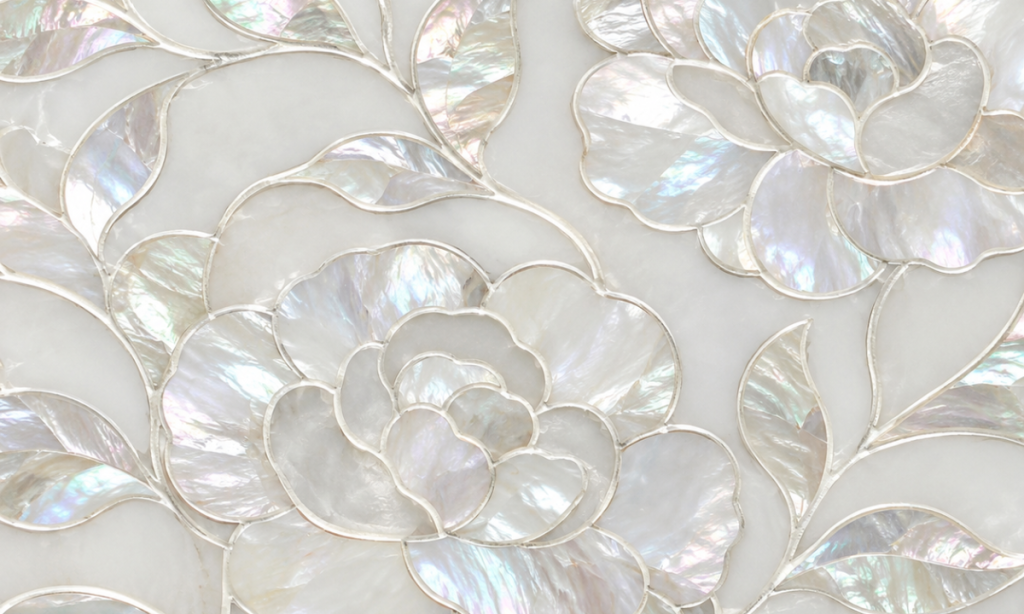
Mother-of-pearl is not a natural stone, but it is commonly used alongside stone inlay materials in decorative craftsmanship. Its iridescent surface creates a subtle shine that changes with the angle of light.
It can be combined with marble, granite and darker stone backgrounds to create floral patterns, borders and intricate decorative details.
Mother-of-pearl is particularly suitable for pooja room backdrops, furniture accents and decorative wall panels.
6. Limestone and Travertine
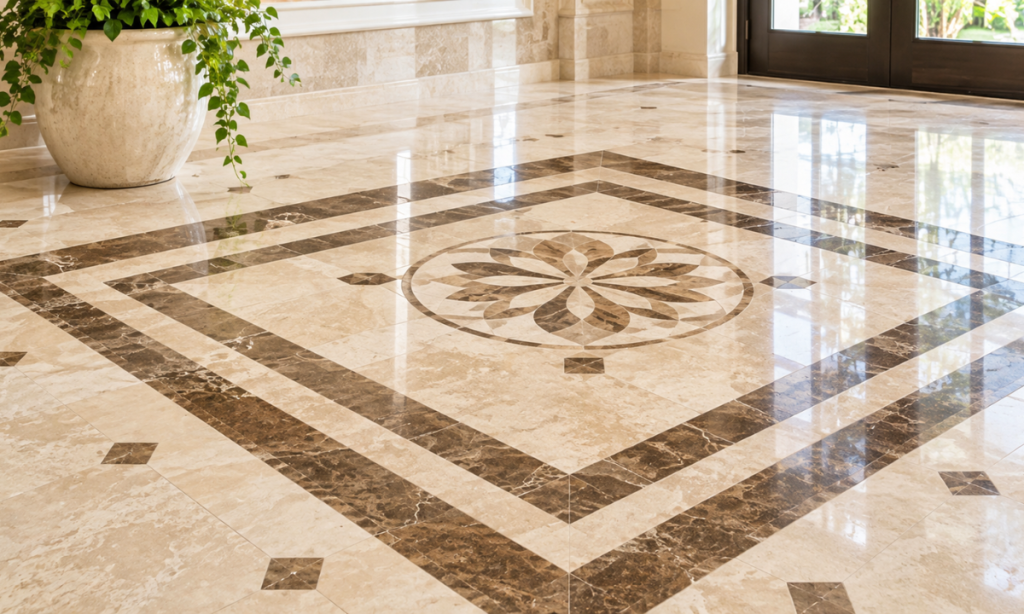
Limestone and travertine offer softer colours and understated textures. Their natural beige, cream and earthy tones work well in homes that follow warm, neutral design palettes.
They can be used as base materials for decorative inlay or combined with darker stones to create subtle patterns. These materials are suitable for interiors that require a natural, understated appearance.
Their porosity and surface characteristics should be considered when selecting finishes and installation methods.
Popular Natural Stone Inlay Patterns for Luxury Homes
The pattern determines how stone inlay interacts with the surrounding interior design. While some designs create a strong focal point, others introduce decorative details without making the space feel crowded.
1. Floral and Botanical Patterns
Floral stone inlay designs feature leaves, flowers, vines and other nature-inspired elements. Different coloured stones are cut into small pieces and arranged to create detailed compositions.
These patterns are suitable for entrance foyers, pooja rooms and decorative floor sections. Traditional floral motifs can also be adapted into simpler designs for contemporary homes.
2. Geometric Patterns
Geometric stone inlay uses shapes such as squares, diamonds, circles, triangles and interlocking lines.
The designs create a structured appearance and work well in modern interiors. They can be used as floor borders, central floor motifs or decorative sections within larger marble surfaces.
For a balanced result, the pattern should follow the room’s proportions and furniture layout.
3. Circular Medallion Patterns
Circular medallions are among the most recognisable applications of decorative stone inlay. They usually feature a central motif surrounded by multiple layers of contrasting stone.
They are commonly placed in entrance foyers, formal living rooms and spacious hallways. The circular composition can help define a central area without requiring additional partitions.
4. Border and Frame Patterns
Border inlays use contrasting stone pieces to create decorative outlines around a floor, wall or furniture surface.
They are suitable for homes where a complete patterned floor may feel too elaborate. A simple marble floor with a darker stone border can create a refined appearance while maintaining visual balance.
5. Abstract and Contemporary Patterns
Contemporary stone inlay moves beyond traditional floral and symmetrical designs. It uses irregular shapes, flowing lines and contrasting colours to create artistic compositions.
These patterns work well in modern luxury homes, particularly on feature walls, tabletops and selected flooring sections.
The design can be customised to complement the home’s colour palette, furniture and architectural details.
Where Can You Use Natural Stone Inlay in Luxury Homes?
Natural stone inlay can be incorporated into several areas of a residence. The right application depends on the design objective, available space and expected usage.
1. Entrance Foyers
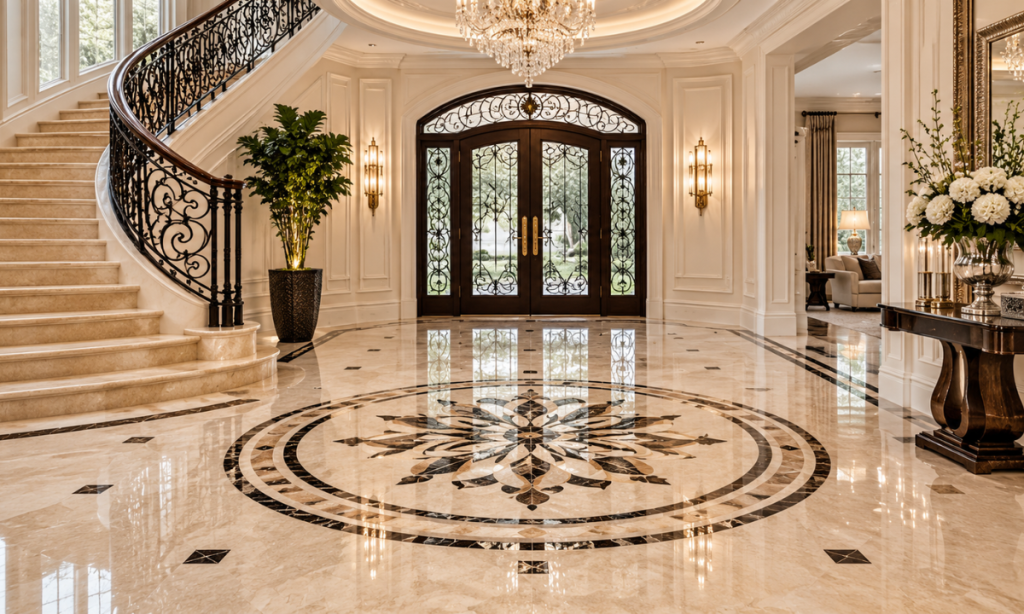
The entrance foyer creates the first impression of a home. A decorative marble medallion or geometric stone inlay can make this area feel more distinctive.
A central pattern surrounded by a simple stone floor works particularly well in spacious entrances. The design can be coordinated with the entrance console, wall finishes and lighting fixtures.
For smaller foyers, a narrow stone inlay border or a compact motif can introduce decorative detail without making the space look crowded.
2. Living Room Flooring
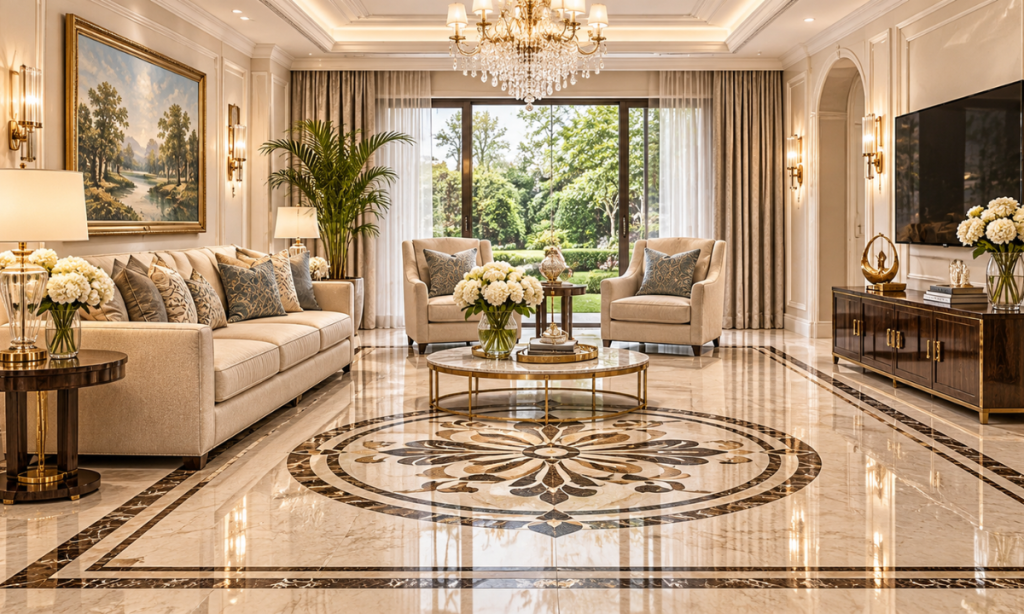
Living rooms offer opportunities for larger stone inlay designs. A central medallion, symmetrical border or subtle geometric pattern can help define the seating area.
The inlay should complement the furniture arrangement rather than compete with it. Neutral furniture and simple wall finishes allow detailed flooring to remain the main feature.
Homeowners considering different premium flooring options can also explore popular flooring designs for luxury residences.
3. Pooja Room Designs
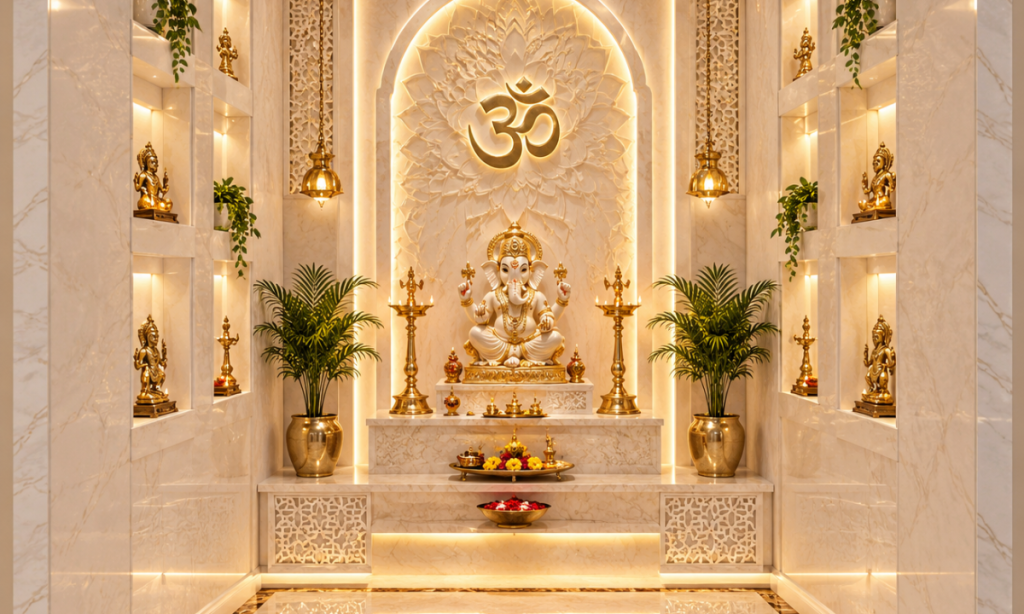
Stone inlay can introduce traditional detailing into a modern pooja room. Floral motifs, lotus patterns and geometric borders can be incorporated into the flooring, backdrop or mandir platform.
Marble combined with mother-of-pearl or contrasting coloured stones can create a detailed decorative surface. The pattern should complement the mandir structure and maintain a calm atmosphere.
For more design inspiration, explore pooja room interior design ideas.
4. Dining Areas
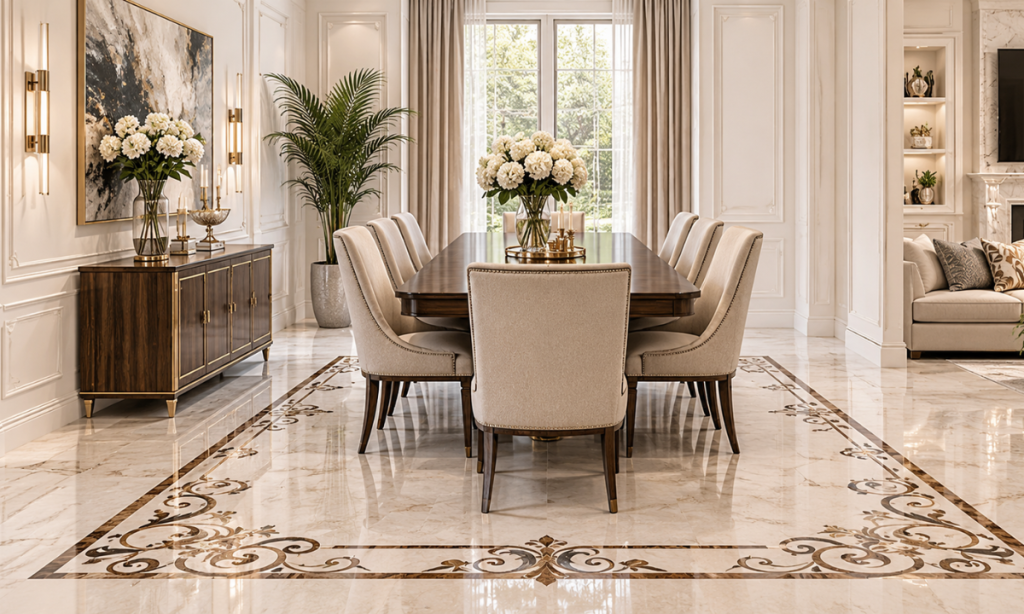
Stone inlay can help distinguish the dining area in an open-plan home. A rectangular border or central geometric pattern can visually define the dining zone without using physical partitions.
The design should align with the dining table and pendant lighting. Avoid elaborate patterns directly beneath furniture if they will remain mostly hidden.
5. Wall Panels and Feature Walls
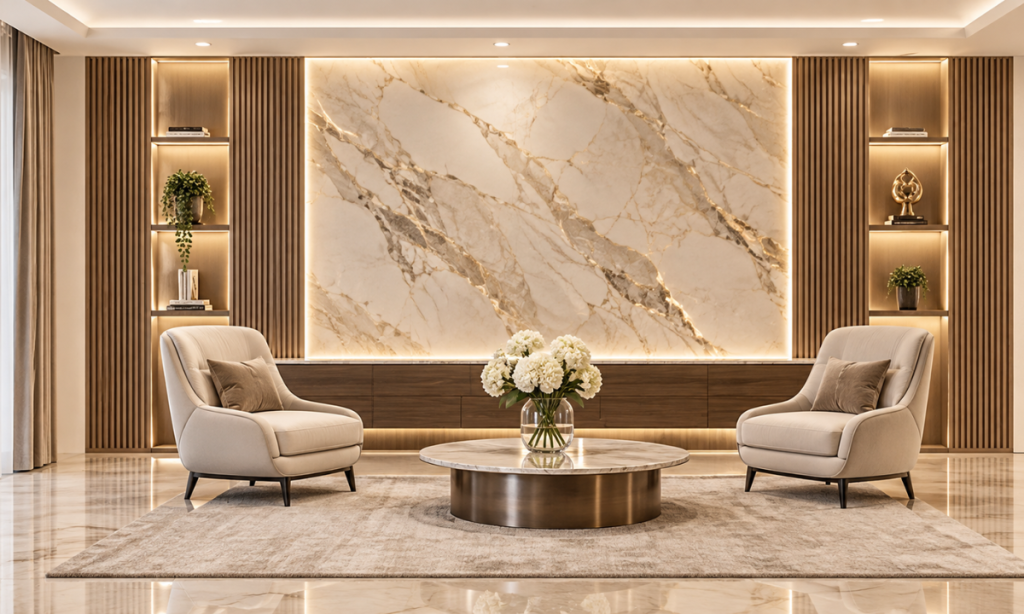
Stone inlay is not limited to flooring. It can also be used on selected wall panels to introduce artistic detailing.
A decorative panel behind a console, in a living room or within an entrance can serve as a focal point. Combining contrasting marble pieces with subtle metal accents can add further definition.
For homeowners exploring different surface treatments, natural stone and other premium interior materials offer useful design references.
6. Tabletops and Custom Furniture
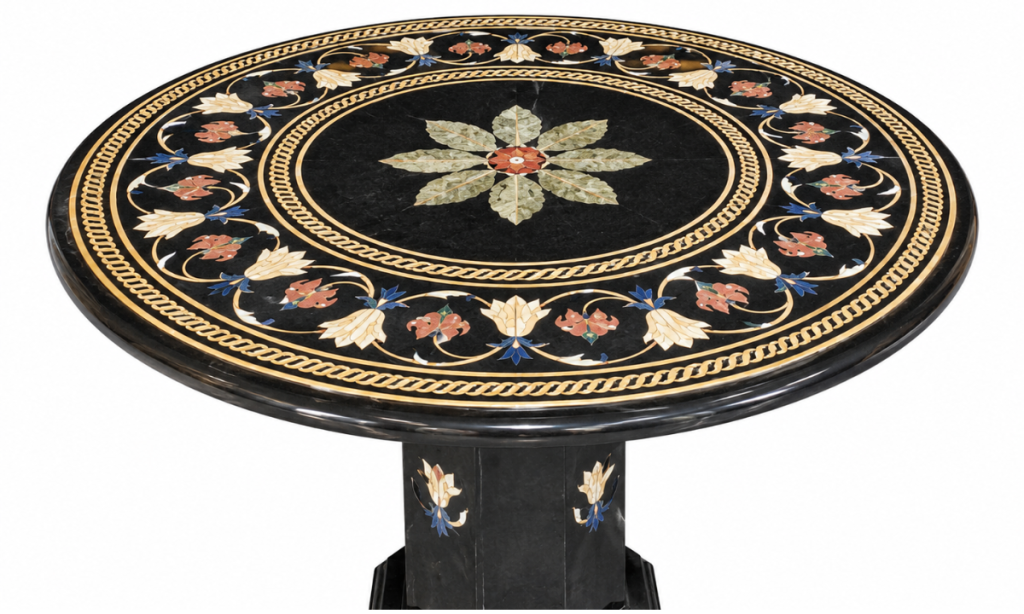
Decorative stone inlay can transform coffee tables, side tables, consoles and custom furniture into distinctive design elements.
Small floral patterns, geometric compositions and contrasting stone borders can be incorporated into tabletops. These applications allow homeowners to introduce intricate craftsmanship without committing to a large installation.
Natural Stone Inlay vs Bookmatched Marble
Natural stone inlay and bookmatched marble both highlight the beauty of natural stone, but they use different design techniques.
| Design aspect | Natural stone inlay | Bookmatched marble |
| Technique | Small stone pieces fitted into a base surface | Adjacent slabs arranged to mirror their veins |
| Design | Floral, geometric and decorative motifs | Symmetrical natural veining |
| Materials | Multiple contrasting stones and decorative materials | Usually slabs from the same stone block |
| Applications | Floors, panels, tabletops and borders | Walls, floors and large feature surfaces |
| Visual effect | Detailed and artistic | Continuous and symmetrical |
Natural stone inlay is suitable when the objective is to create a customised pattern. Bookmatching is more appropriate when the natural veining of a stone is intended to become the main visual feature.
Read more about bookmatched marble in luxury interiors to understand its design applications and installation considerations.
Important Factors to Consider Before Installing Stone Inlay
Natural stone inlay requires careful planning because the final appearance depends on material selection, fabrication and installation quality.
1. Select Materials That Complement Each Other
Choose stones based on their colour, texture and natural patterns. Contrasting materials can make a design stand out, but too many colours may create visual clutter.
A limited combination of two or three complementary stones is often sufficient for contemporary interiors.
2. Match the Pattern to the Available Space
The size and complexity of the design should suit the dimensions of the installation area. Large medallions may work in spacious foyers, while smaller geometric details are more suitable for compact rooms.
3. Check the Stone Quality
Inspect the selected stone for cracks, natural fissures, surface defects and colour variations. The thickness and condition of each piece should also be suitable for the intended application.
4. Ensure Precision in Cutting and Installation
Stone inlay requires accurate cutting so that individual pieces fit together properly. Uneven edges, inconsistent joints and poor alignment can affect the final appearance.
Experienced fabricators and installers are important for achieving a clean finish.
5. Consider Lighting and Surrounding Finishes
Lighting can highlight the colours and textures of natural stone. Plan the placement of ceiling lights, wall lights and accent lighting to reveal the design without creating excessive reflections.
The surrounding flooring, wall colours, furniture and metal finishes should also complement the inlay.
6. Plan for Maintenance
Different stones have different maintenance requirements. Marble and limestone can react to acidic substances, while porous materials may require suitable sealing.
Use cleaning products recommended for the selected stone and avoid harsh chemicals. For flooring, consider slip resistance and surface finish, particularly in areas exposed to moisture.
7. Establish the Budget Before Fabrication
The cost of stone inlay depends on the materials, pattern complexity, number of stone pieces, cutting method and installation requirements.
Semi-precious stones and intricate handcrafted designs generally require a higher investment. Planning the design and material selection early helps manage the overall budget.
Common Mistakes to Avoid in Natural Stone Inlay Design
Even premium materials may not deliver the desired result if the design is poorly planned. Some common mistakes include:
- Using too many colours: Excessive colour combinations can make the pattern look busy and reduce visual balance.
- Ignoring room proportions: Large and detailed motifs may overwhelm smaller spaces.
- Choosing materials only for appearance: Stone durability, porosity and maintenance requirements should also influence the selection.
- Overusing decorative patterns: Installing elaborate inlay across every surface can make the interior feel visually crowded.
- Neglecting installation quality: Poor cutting, uneven joints and incorrect alignment can affect the finished surface.
- Overlooking furniture placement: Large furniture pieces may conceal important sections of a floor pattern.
A well-planned design uses stone inlay selectively, allowing the craftsmanship to stand out while maintaining harmony with the rest of the interior.
Frequently Asked Questions
1. What is natural stone inlay used for?
Natural stone inlay is used to create decorative patterns on floors, walls, tabletops, furniture and architectural features. It is commonly found in luxury homes, hotels and heritage-inspired interiors.
2. Which stone is best for inlay work?
Marble is a popular choice because of its range of colours and workability. Granite is suitable for applications that require greater hardness, while onyx and semi-precious stones are often selected for decorative features.
3. Is natural stone inlay suitable for modern homes?
Yes. Natural stone inlay can complement modern interiors through simple geometric patterns, subtle borders and abstract compositions. The design can be customised to suit minimalist, contemporary and traditional spaces.
4. Is stone inlay flooring durable?
Stone inlay flooring can be durable when suitable materials are selected and installed correctly. Its performance depends on the stone type, surface finish, installation method, foot traffic and maintenance.
5. Is natural stone inlay expensive?
The cost varies according to the stone selection, pattern complexity, fabrication process and installation area. Intricate designs using semi-precious stones generally cost more than simple marble inlay patterns.
6. How do you maintain natural stone inlay?
Clean the surface using a pH-neutral cleaner recommended for the stone. Avoid acidic cleaning products, remove spills promptly and follow suitable sealing and maintenance recommendations.
7. Can natural stone inlay be customised?
Yes. Patterns, colours, shapes and material combinations can be customised to suit the home’s architecture, interior theme and personal preferences.
Conclusion
Natural stone inlay brings together material selection, artistic detailing and skilled craftsmanship. Whether used for a decorative foyer floor, an elegant pooja room, a living room feature or a customised tabletop, it adds a distinctive element to luxury home interiors.
The success of the design depends on choosing suitable materials, selecting patterns that complement the space and ensuring precision during fabrication and installation. Rather than using decorative inlay everywhere, incorporating it into selected areas can create a stronger visual impact.
At The KariGhars, thoughtful material selection and detailed design planning help create interiors that balance visual appeal, functionality and individual preferences.