

Summary
Choosing the right living room furniture is about more than appearance—it’s about durability, comfort, functionality and long-term value. From selecting strong hardwood frames and quality suspension to choosing the right furniture size and layout, every detail can affect how well your furniture performs over time. The ideal choices also depend on your home type, whether it’s a compact apartment, spacious villa, studio, duplex or farmhouse. By prioritizing quality construction, smart storage, proper proportions and a cohesive design, you can create a living room that remains comfortable, practical and stylish for years to come.
Living room furniture forms the heart of your home, and when chosen right, it becomes a lifetime companion, elegant, functional, and resilient.
At KariGhars, we understand how transforming your space with long-lasting pieces sets up not just a beautiful but truly sustainable lifestyle. In this blog, we’ll unpack what makes furniture durable, explore sofa design for hall options, discuss simple wooden furniture for the living room, survey new style furniture trends, elevate your space into an aesthetic living room, and show why the best interior designers in Bangalore can help you make choices that last.
Read on to discover insights that might just help you pick your next favourite piece with confidence.
Why Living Room Furniture Lifespan Matters More Than You Think
Walk into most furniture showrooms and the conversation is almost entirely about looks: the color of the fabric, the shape of the arm, whether the wood tone matches your floors. Lifespan rarely comes up, yet it’s arguably the single most important factor in whether a piece of furniture turns out to be a good purchase. A sofa that looks perfect on day one but sags by year two hasn’t saved you money — it’s cost you a second purchase, a disposal problem, and a lot of quiet frustration.
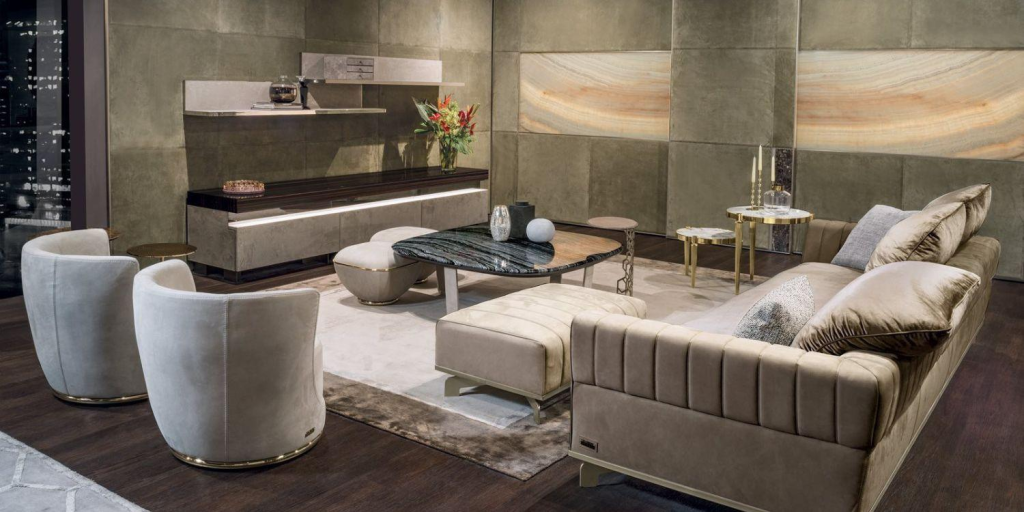
Construction Details That Actually Predict Lifespan
Lifespan isn’t random — it’s determined by a small number of specific construction choices, and you can check for most of them before buying:
- Frame wood. Kiln-dried hardwood (oak, maple, birch) resists warping and holds screws and joints tightly for decades. Softwood or particleboard frames — common in low-cost furniture — swell, crack, and loosen within a few years of normal use.
- Joinery method. Corner blocks, dowels, and glued mortise-and-tenon joints distribute stress and stay tight. Staples and nails alone work loose under repeated weight shifts.
- Suspension system. Eight-way hand-tied springs are the gold standard for seating longevity; sinuous (S-shaped) springs are a solid mid-tier option. Cheap webbing-only support sags noticeably within one to two years of daily sitting.
- Foam density. Cushion foam is rated in pounds per cubic foot (PCF). Foam under 1.8 PCF flattens permanently fast; 2.5 PCF or higher holds shape for many years, especially when paired with a fiber or down wrap.
- Fabric abrasion rating. Upholstery durability is tested in “double rubs.” Anything below 15,000 wears thin under daily household use; 30,000+ is considered heavy-duty and suited to high-traffic pieces like a main sofa.
Checking even two or three of these — frame wood and spring type, for instance — tells you more about how a piece will hold up than any showroom impression will
How to Choose Living Room Furniture: A Complete Guide
The living room is the one space in a home that has to do almost everything — host guests, hold family movie nights, and still feel calm on an ordinary Tuesday evening. Choosing furniture for it isn’t just about picking pieces you like; it’s about building a room that works for how you actually live, and holds up while doing it.
Here’s a full walkthrough of how to approach it.
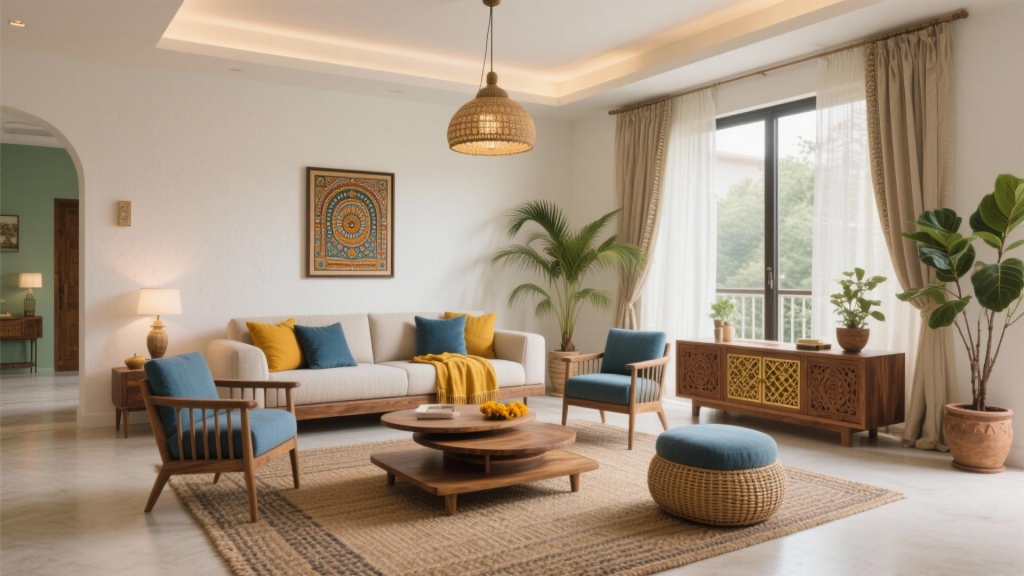
1. Start With the Room, Not the Furniture
Before browsing catalogs, measure the room properly: length, width, door and hallway widths (so pieces can actually get in), window and switchboard placements, and any fixed elements like a chimney or bay window. Sketch a rough floor plan, even a simple one on paper.
A good rule of thumb is to leave at least 75–90 cm of walking space around your main seating, and 35–45 cm of clearance between a sofa and coffee table. Skipping this step is the single biggest reason people end up with a sofa that’s technically beautiful but makes the room feel like an obstacle course.
2. Decide How the Room Will Actually Be Used
Living rooms tend to fall into a few patterns:
- Conversation-first — seating arranged facing each other, ideal for households that entertain often
- TV-first — seating angled toward a media wall, common in most Indian homes
- Hybrid — a flexible layout using a sectional or modular seating that can be reconfigured
Pick the pattern that matches your daily life before choosing individual pieces. A stunning accent chair placed where it blocks TV sightlines will get used a lot less than one placed thoughtfully.
3. Choose Your Seating — the Room’s Centerpiece
The sofa or sectional is usually where the most money and thought should go, since it’s the piece used daily for years. A few durable, popular styles:
L-Shaped Sectionals work well for larger halls, offering maximum seating without crowding the room. Look for a solid wood frame (sheesham or teak) and either 8-way hand-tied or sinuous springs.
Chesterfield or Tufted Leather Sofas age gracefully rather than wearing out — genuine or high-quality PU leather develops a patina instead of pilling. The deep tufting also keeps cushion filling from shifting unevenly over time.
Solid Wood Sofa Sets with Removable Cushion Covers are a strong practical choice for Indian conditions — resistant to humidity-related warping, and the washable, replaceable covers extend the sofa’s usable life significantly.
Whatever style you choose, check these four things before buying: frame wood (kiln-dried hardwood, not particleboard), spring type (8-way tied or sinuous, not just webbing), foam density (2.5 PCF or higher holds shape longest), and fabric rating (15,000+ double rubs for daily use).
4. Add Supporting Pieces With Proportion in Mind
A coffee table should generally be about two-thirds the length of your sofa, with its top roughly level with or slightly lower than the seat cushions. Side tables work best at arm height when seated, placed within easy reach of each seat.
Don’t treat these as afterthoughts — an oversized coffee table or oddly scaled side table can throw off an otherwise well-planned room more than people expect.
5. Solve for Storage Before Clutter Becomes the Problem
A TV console, a low-profile cabinet, or an open bookshelf does double duty: it holds daily items (remotes, chargers, books) and keeps the room visually calm. Clutter is one of the fastest ways to make even a well-furnished living room feel smaller and less finished, so it’s worth planning storage as part of the furniture selection, not adding it in later as a fix.
6. Build a Cohesive Palette
Pick two to three dominant materials — a wood tone, a metal finish, a fabric texture — and let them repeat across the room’s pieces. This is what makes a room feel curated rather than assembled from separate purchases. Rugs and cushions are the easiest, lowest-commitment way to tie colors together, and they’re simple to update later if your taste shifts.
7. Test Before You Commit
Photos and showroom lighting can be deceiving. Sit on any sofa or chair for at least a minute, not a few seconds — comfort that seems fine briefly can reveal itself as inadequate support after longer use. Check joints for wobble, ask what the frame material actually is (not just “wood,” but which wood), and always ask about warranty length, since manufacturers who stand behind their construction usually offer longer coverage.
From Studios to Villas: Choosing Living Room Furniture That Fits Your Space
1. Apartments (Compact Layouts)
Apartments usually mean fixed wall placements, lower ceilings, and less flexibility to rearrange. Prioritize multi-functional and space-saving pieces: a sofa-cum-bed, nesting coffee tables, and wall-mounted storage instead of bulky standalone units. Light-colored, slim-legged furniture also makes a compact room feel larger, since it doesn’t visually “sit” heavily on the floor.
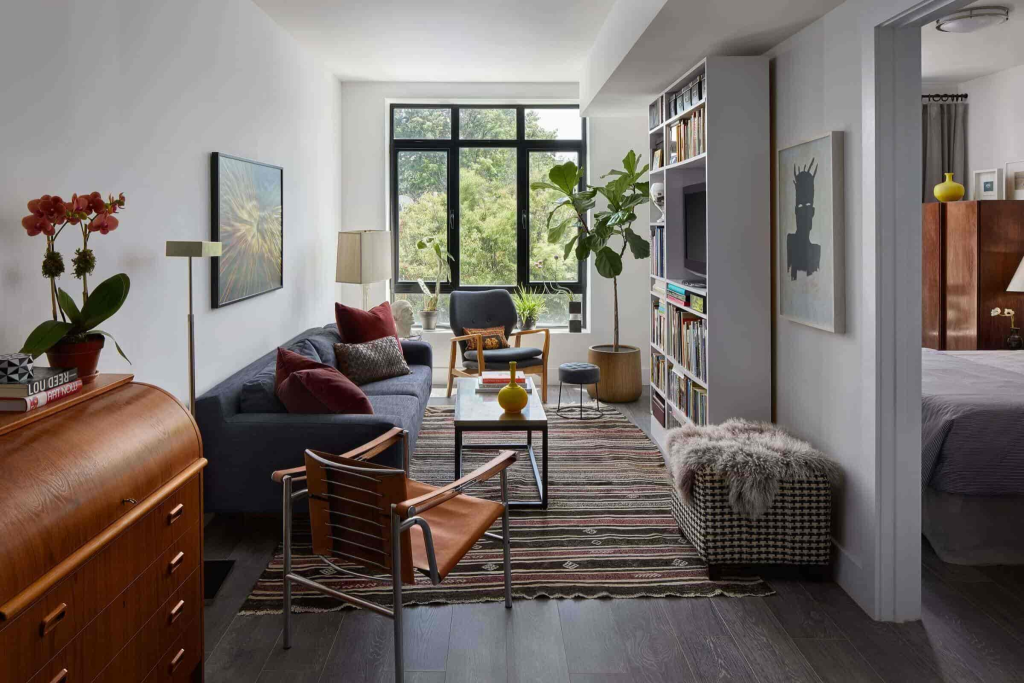
Tip: In Indian apartments especially, an L-shaped sectional against two walls often works better than a straight sofa plus separate chairs, since it uses corners efficiently.
2. Independent Houses / Villas (Larger, Open Layouts)
Villas typically have more square footage and higher ceilings, which changes the furniture math — undersized furniture can look lost in a large room. Go bigger and more substantial: larger sectionals, statement coffee tables, and taller storage units. This is also where investing in premium materials (solid teak, genuine leather, higher-end fabric) pays off most, since the room can visually support it.
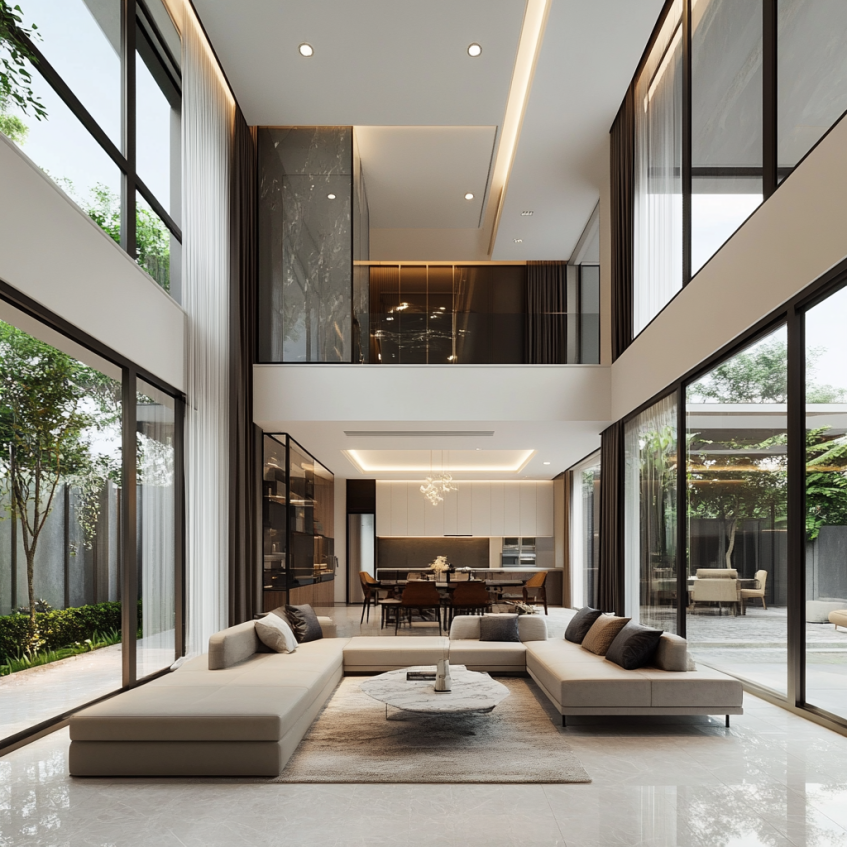
Tip: With more floor area, don’t push all furniture against the walls — floating a sectional or seating cluster in the middle of the room, with a rug anchoring it, makes large villa living rooms feel intentional rather than empty.
3. Studio Apartments / 1BHK
When the living room shares space with a bedroom or kitchen, furniture needs to do double duty and stay visually light. A daybed or a compact 2-seater with a fold-out ottoman works better than a full 3+1+1 sofa set. Modular or foldable pieces (a nesting table, a fold-down desk) help the same square footage serve multiple functions across the day.
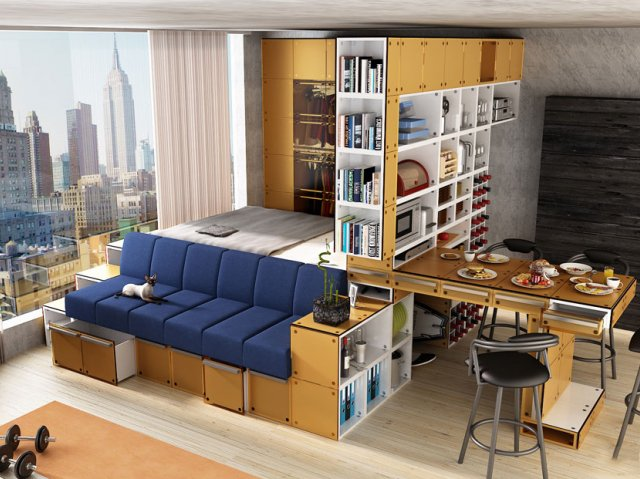
Tip: Use furniture itself to define zones — a sofa placed perpendicular to a wall (instead of against it) can visually separate the “living” area from the rest of the studio without needing a physical partition.
4. Duplex / Multi-Level Homes
If the living room is a double-height space or opens onto a staircase, scale and sightlines matter more than in a single-level home. Furniture should feel proportionate when viewed from both the ground floor and from above, so avoid pieces that look fine at eye level but oddly small or large from a stair landing. A sectional with a slightly higher backrest tends to work better in these spaces.
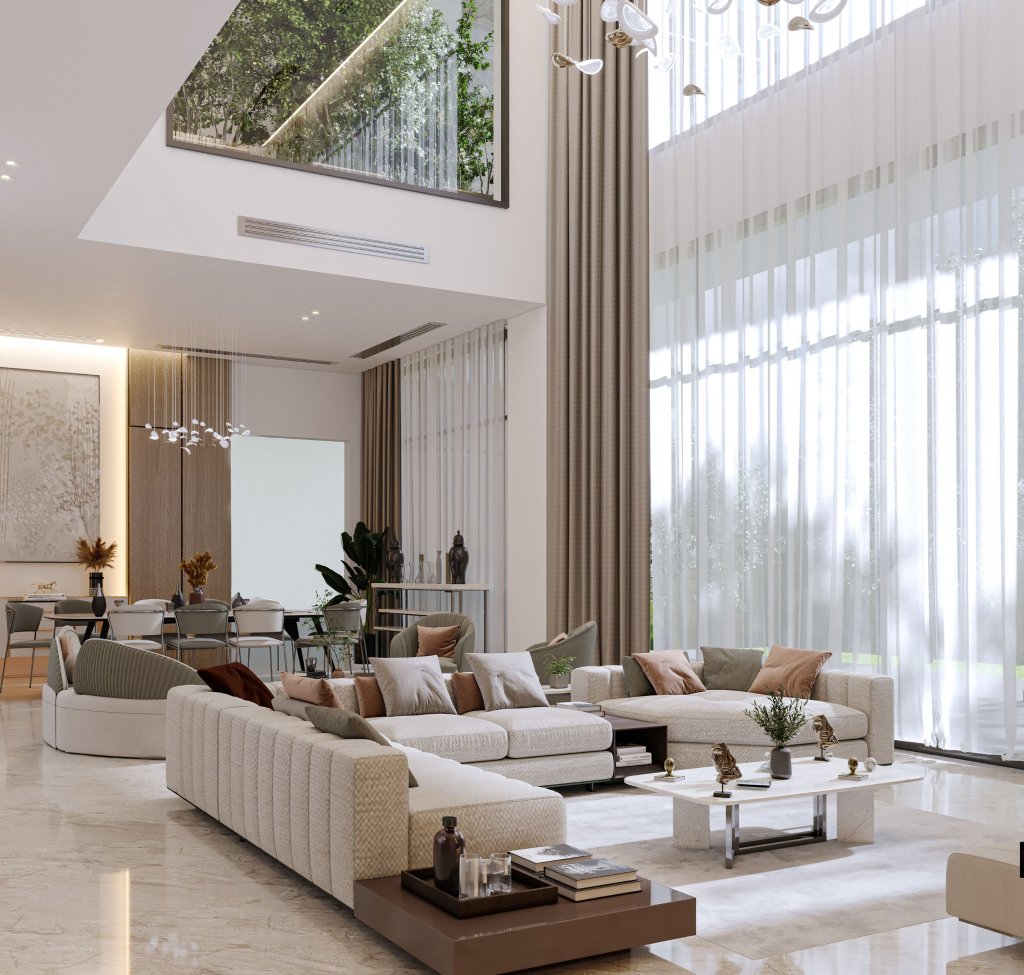
Tip: Vertical elements — a tall bookshelf, a floor lamp, or a large piece of wall art near the seating — help balance the height of the space so the furniture doesn’t look dwarfed.
5. Farmhouses / Independent Homes with Outdoor Access
Farmhouses often blur indoor-outdoor living, so furniture near open verandas or large windows should hold up to more light and humidity exposure. Solid wood (teak holds up especially well outdoors and in transitional spaces) and performance fabrics (treated for moisture and fading) are worth prioritizing over delicate upholstery.
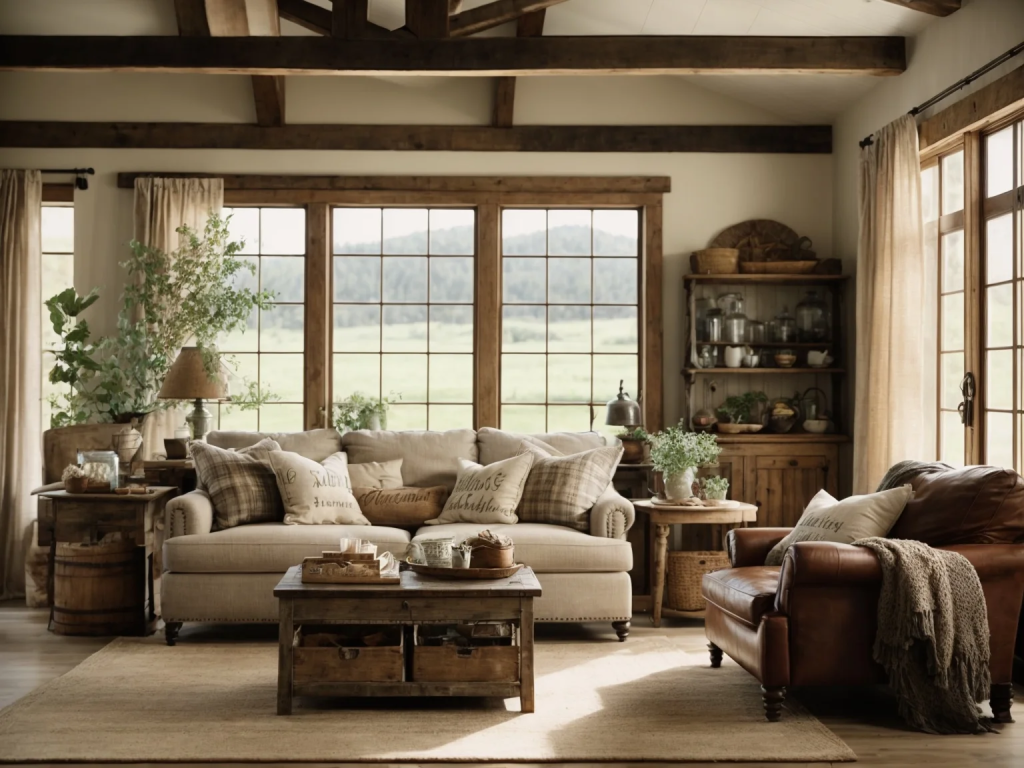
Tip: Rattan, cane, or teak pieces suit farmhouse-style rooms well and also happen to be more forgiving of humidity swings than fully upholstered furniture.
FAQ’s:
Q: How do I choose the right furniture for my living room?
A: Start by measuring the room and deciding its main function (conversation, TV viewing, or both). Choose seating first, since it’s the centerpiece, then add a coffee table sized to about two-thirds the sofa’s length, followed by storage and accent pieces. Prioritize frame material and build quality over style alone.
Q: What is the average lifespan of living room furniture?
A: Well-built sofas with solid wood frames and quality springs typically last 15–20 years, while budget furniture with particleboard frames and basic foam often needs replacing within 3–5 years.
Q: How much space should I leave around living room furniture?
A: Leave at least 75–90 cm of walking space around main seating and 35–45 cm of clearance between a sofa and coffee table for comfortable movement.
Q: What makes a sofa durable?
A: A durable sofa has a kiln-dried hardwood frame, 8-way hand-tied or sinuous springs, high-density foam (2.5 PCF or higher), and upholstery fabric rated at 15,000+ double rubs for daily use.
Q: Is leather or fabric better for a durable sofa?
A: Genuine or high-quality PU leather tends to outlast fabric for daily-use sofas since it develops a patina instead of pilling or fraying, though well-rated fabric (15,000+ double rubs) is a durable and often more affordable option.
Q: What wood is best for long-lasting sofas in India?
A: Sheesham and teak are the most commonly recommended hardwoods for Indian conditions, since they resist warping from humidity better than softwood or particleboard frames.
Q: Do removable sofa covers actually help with durability?
A: Yes — removable, washable cushion covers significantly extend a sofa’s usable life by preventing permanent staining and wear on the base upholstery.
Q: Is expensive furniture always more durable?
A: Not always, but price often correlates with construction quality. The better way to judge value is cost-per-year of use — a costlier sofa that lasts 15+ years is frequently cheaper long-term than a budget one replaced every few years.
Q: How do I calculate if furniture is worth the price?
A: Divide the price by the expected lifespan in years. A ₹1,80,000 sofa lasting 18 years costs about ₹10,000/year, often cheaper than a ₹35,000 sofa needing replacement every 3 years (~₹11,700/year).