

Blog Summary
- A statement piece earns presence through silhouette, material, and craft. Price alone does not qualify it.
- Design from the architecture outward. Ceiling height, light, and room flow dictate scale and material.
- Living rooms need three layers. An anchor, a counterweight, and a single focal piece.
- The TV unit is now a joinery statement. Panelled walls, floating stone consoles, and concealed screens lead the way.
- Kitchens reward restraint. Three materials, honest finishes, and one standout pendant beat busy palettes.
- Dining rooms need one strong gesture. Either the table or the lighting leads, never both.
- Bedrooms suit quiet grandeur. Full-width headboards, antique chests, and matched but not identical side tables.
- Entryways benefit from one memorable piece. A console, a mirror, a pendant, and nothing more.
- Choose materials that age well. Timber, stone, aged metals, and natural fibres outlive trends.
- Leave breathing room. At least thirty per cent of a room should feel visually empty.
- Commission for anchor pieces. Custom work matches proportions, material, and detailing better than catalogue buys.
A home that feels considered rarely shouts. It leans on a few well-chosen pieces that quietly hold the room together. The right approach to furniture decoration is less about filling space and more about editing it. A single hand-finished console, a sculpted dining chair, a sofa with the correct silhouette, and the room begins to tell a story. This guide walks through how to work with statement pieces across the living room, kitchen, and media wall, and how to make each one feel like it has always belonged.
What Makes a Piece a Statement Piece
Not every expensive item qualifies. A statement piece earns its place by presence, not price.
It usually carries one or more of these qualities:
- A distinctive silhouette that holds attention from across the room
- A material or finish that invites a second look, such as burl walnut, travertine, or hand-brushed brass
- A sense of weight and craftsmanship that reads even in photographs
- The ability to anchor the room’s layout without crowding it
When a piece is right, the rest of the room naturally arranges itself around it. When it is not, no amount of accessorising will save the composition.
Begin with the Architecture, Not the Catalogue
Great interiors are planned from the shell outward. Ceiling height, window placement, the quality of natural light, and the flow between rooms all shape what the furniture needs to do.
A tall drawing room with generous light can carry a sculptural chandelier and a long low sofa. A narrow apartment with limited daylight asks for lighter frames, pale upholstery, and reflective surfaces. The piece that commands a bungalow in Jayanagar may overwhelm a tower apartment on Old Airport Road.
This is where the eye of experienced best interior designers in Bangalore matters. They read a space before they style it, so the pieces chosen feel inevitable rather than imposed.
Living Room Furniture: Composing a Centrepiece
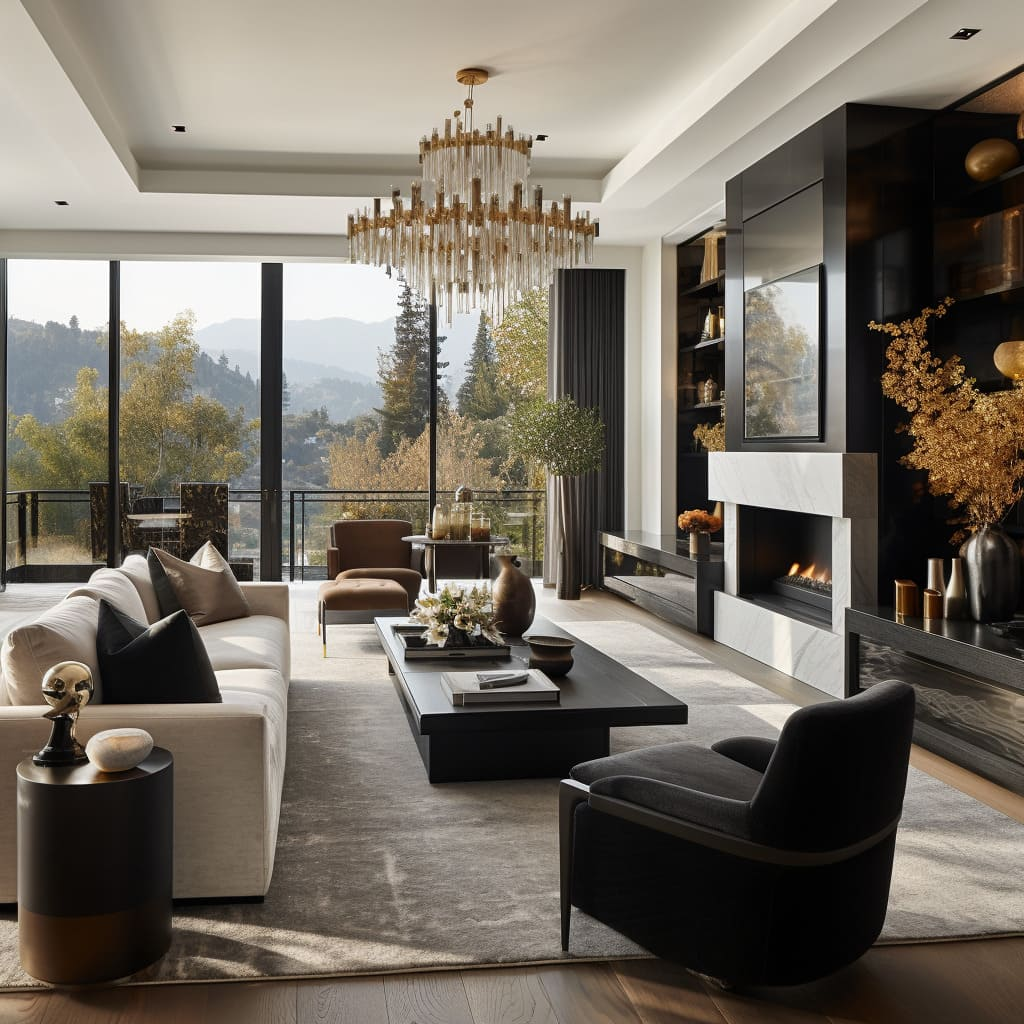
The living room sets the tone for the entire home. Guests form their first impression within seconds of entering it.
Build the composition in three layers:
- The anchor. Usually the sofa. Choose a quiet, well-proportioned silhouette in a timeless fabric such as boucle, linen, or fine mohair. Avoid trend-led shapes that date quickly.
- The counterweight. A pair of lounge chairs or a sculptural armchair placed opposite the sofa to balance the conversation area. Mix materials, not styles.
- The focal piece. A hand-crafted coffee table, a vintage credenza, or a signed artwork. One is enough. Two competing hero items will cancel each other out.
Thoughtfully chosen living room furniture earns its presence by sitting still. Restraint is often what separates a styled room from a decorated one.
The TV Unit as a Design Statement
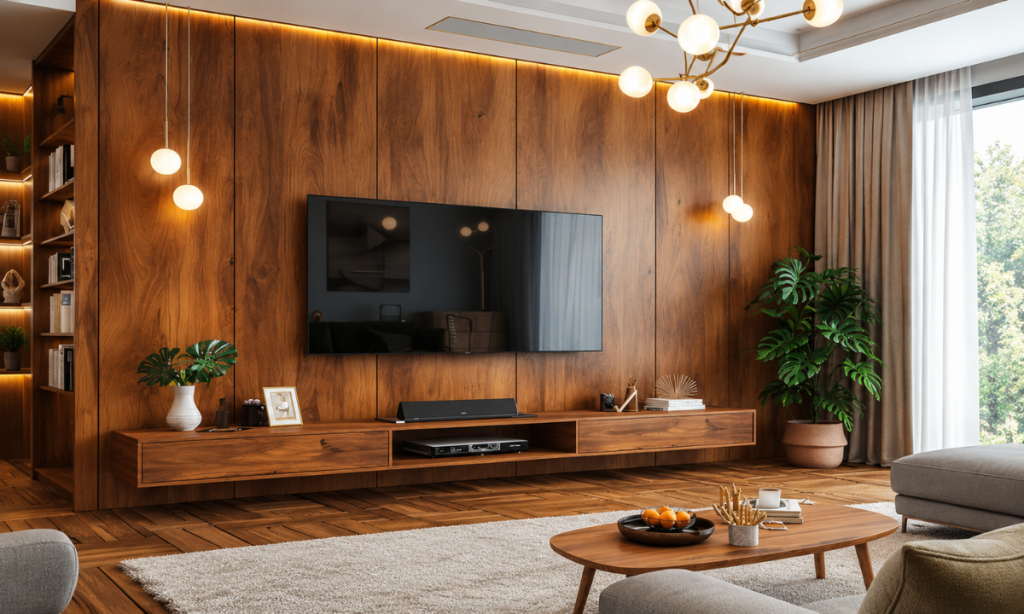
For years the television dominated the living room by default. Modern tv unit design has quietly reversed that hierarchy. The unit is now a joinery statement in its own right, and the screen becomes almost incidental.
Approaches worth considering:
- Full-wall panelling in fluted oak or walnut veneer with the screen set into a recessed niche
- Floating consoles in natural stone paired with hidden cable management for a clean floor line
- Gallery walls where the television sits among framed art, almost disappearing into the composition
- Pivot or sliding panels that conceal the screen when it is not in use
The best units are built, not bought. Bespoke carpentry allows the proportions to match the exact wall, the materials to echo the flooring, and the hardware to be chosen rather than compromised.
Furniture Design for Kitchen: Where Craft Meets Everyday Use
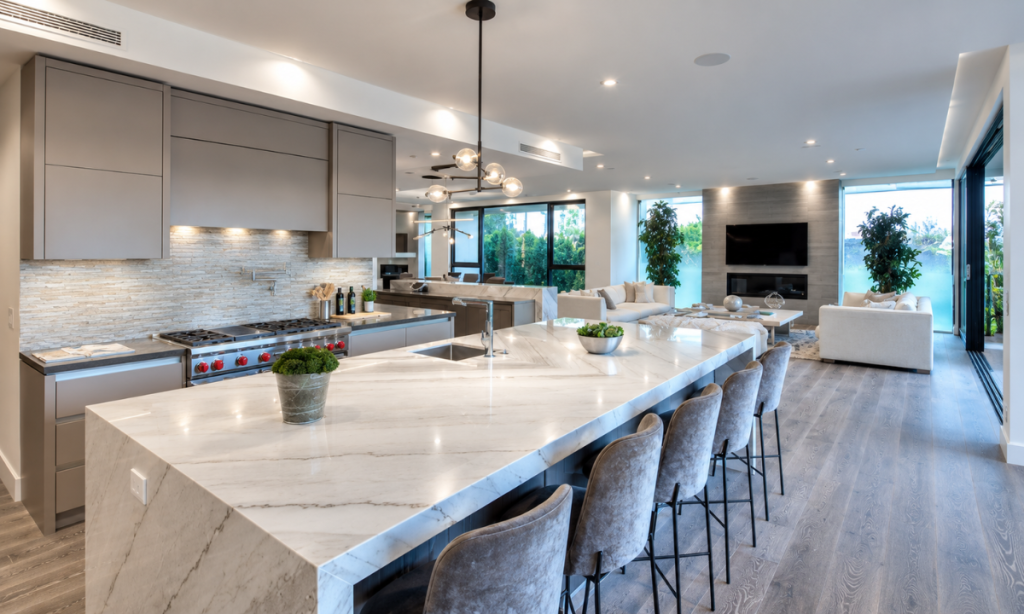
The kitchen is where sculptural ambition meets daily life. Pieces here must be beautiful at six in the morning and forgiving at ten at night.
Considered furniture design for kitchen spaces often includes:
- A solid-stone island with a honed finish that improves with time
- Tall pantry columns in a quiet matte lacquer, with push-to-open doors
- Woven cane or rattan on upper cabinets to soften the room
- Bar stools with sculpted backs and leather seats worth sitting on for hours
- A single statement pendant above the island rather than a trio of ordinary ones
Resist the temptation to over-colour the kitchen. A tight palette of three materials, chosen with discipline, outlives any trend. The warmth of real wood, the depth of natural stone, and the restraint of a single metal finish will still feel current a decade from now.
The Dining Room: One Table, One Idea
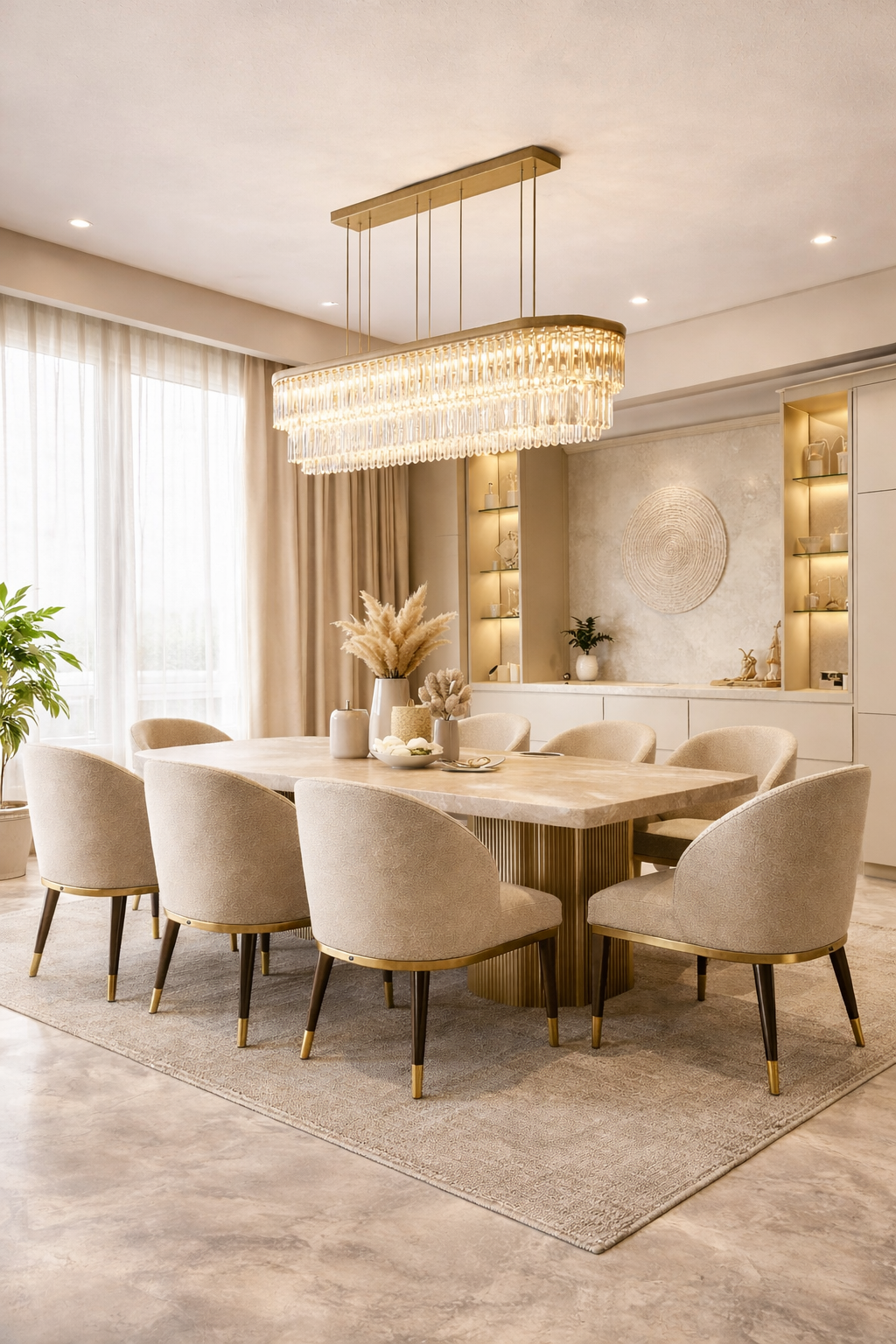
A dining room needs one strong gesture. Either the table or the lighting above it, rarely both.
If the table carries the room, choose a slab of marble, a solid walnut plank, or a hand-crafted base in blackened steel. Keep the pendant quiet in response. If the lighting leads, let the table recede in a honest matte finish and allow a sculptural chandelier to hold the ceiling plane.
Dining chairs are where comfort should never be compromised for silhouette. Sit in the chair before you buy it. A beautiful chair that fatigues a guest after thirty minutes has failed its purpose.
The Bedroom: Quiet Grandeur
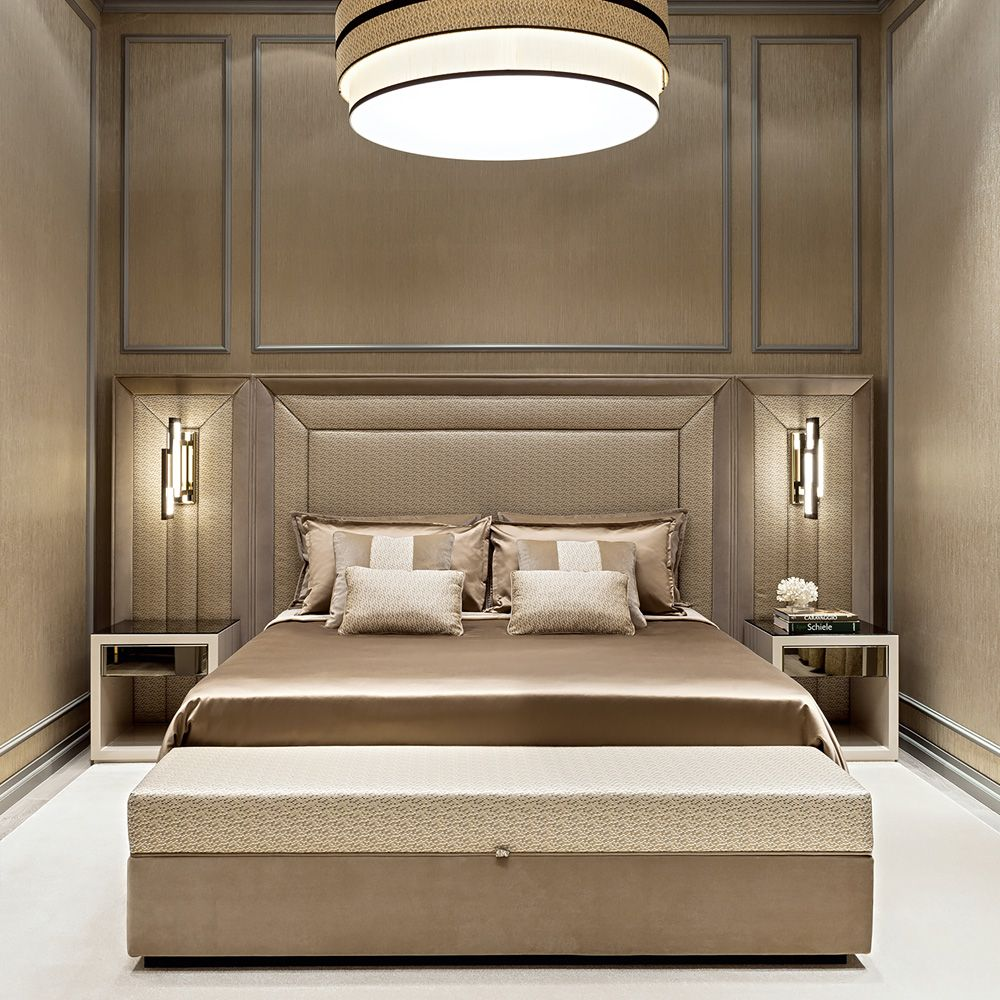
Statement pieces in the bedroom work best when they frame rest rather than compete with it.
Elements to consider:
- An upholstered headboard that stretches the full width of the wall
- A single antique chest at the foot of the bed in place of a modern bench
- A reading chair in a quiet corner with a sculptural floor lamp
- Side tables in matched materials, never identical in design
The bedroom should feel calm the moment you cross the threshold. Reserve bold moves for the public rooms of the home.
Hallways and Entryways: The First Impression
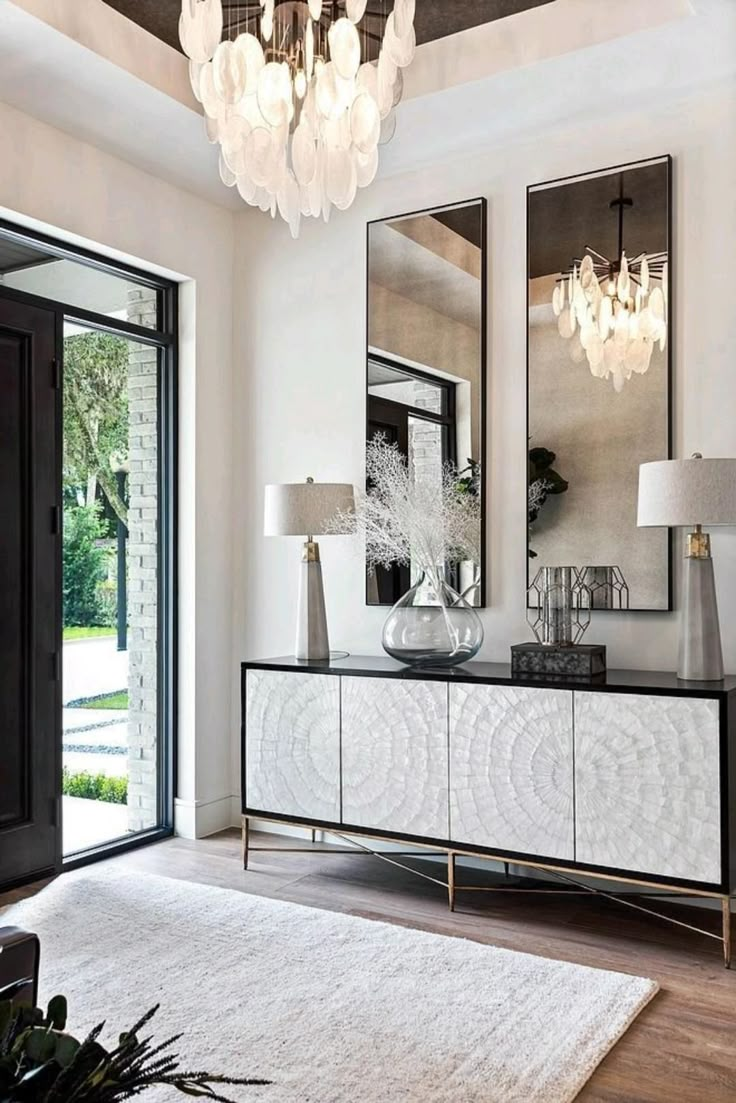
The entry sets expectations. A single hand-crafted console, a round antique mirror, a sculptural pendant above, and a stone or stained-wood floor underneath. That is often enough.
Avoid clutter near the door. One beautiful piece, lit well, is more memorable than a wall of family photographs or shelving crammed with objects. The restraint earns attention.
Materials That Reward Patience
The materials you choose decide how a home ages. Trend-led finishes look tired within three years. Honest materials improve.
Choices that reward time:
- Solid timber in walnut, oak, teak, and burl veneers
- Natural stone such as travertine, Breccia, Calacatta, and local Jaisalmer
- Hand-brushed brass, aged bronze, and blackened steel
- Full-grain leather in natural tan, cognac, and oxblood
- Linen, mohair, boucle, and raw silk for upholstery
Avoid high-gloss laminates, chromed plastics, and loud veneer prints. They cost less at the showroom and more over the years.
Scale, Negative Space, and the Discipline of Restraint
The most common mistake in high-end homes is adding one piece too many. A room needs breathing space to let the hero pieces speak.
Three principles help:
- Leave at least thirty per cent of a room visually empty
- Allow a tall statement piece to stand without a tall neighbour next to it
- Use plinths, pedestals, and nooks to isolate single sculptural objects
A home with silence between its pieces feels composed. One without it feels catalogued.
When to Commission Rather Than Buy
Shelf-bought furniture suits early homes and starter spaces. Commissioned pieces suit homes that are meant to last.
Commissioning allows the proportions to match the room, the materials to be sourced from the right mill, and the detailing to reflect the family that will use the piece. For clients who want this depth, working with luxury interior designers in Bangalore who have an in-house atelier removes the usual guesswork around vendors, timelines, and quality control.
Conclusion
Furniture decoration at its best is the art of restraint. A few deliberate pieces, placed with care, in materials that age gracefully, will quietly outperform any room filled to its edges. Start with the architecture, choose each hero piece with intent, and give it room to be seen. The home that follows will feel composed, timeless, and unmistakably yours.
FAQs
How many statement pieces should a living room have?
One or two is ideal. A sofa or a signature coffee table can anchor the room, with a sculptural artwork or lighting piece supporting it. More than that competes for attention.
What is the best material for a kitchen island?
Natural stone such as quartzite, honed Calacatta marble, or granite handles daily use beautifully. Each develops a soft patina over time that engineered surfaces cannot match.
How do I choose between a wall-mounted TV unit and a floor console?
Wall-mounted panelling suits tall rooms where you want the screen integrated into joinery. Floor consoles suit rooms where you want visual weight at ground level and flexibility for display pieces.
Is it worth commissioning custom furniture?
Yes, especially for anchor pieces like beds, dining tables, TV units, and kitchen islands. Commissioned pieces match the exact dimensions of the space and allow material choices that catalogue furniture rarely offers.
How often should I change my living room furniture?
Well-chosen pieces in honest materials should last fifteen to twenty years. Refresh the softer layers, such as cushions, rugs, and artwork, every five to seven years to keep the room feeling current.
The KariGhars: A Journey of Design Excellence and Recognition
Founded in 2009 by Aashita Chadha and Abhishek Chadha, The KariGhars has grown into a leading name in luxury interior design, known for thoughtful design, skilled craftsmanship and homes that reflect the people who live in them. The firm’s work has earned it the Best Luxury Villa Interior Design award at the Luxury Lifestyle Awards 2022 and the Brand Achievers Award for Best Interior Designing Firm in Bengaluru. Its design philosophy has also been featured in Vogue India and The New Indian Express, cementing its reputation as one of Bangalore’s foremost luxury design studios.