
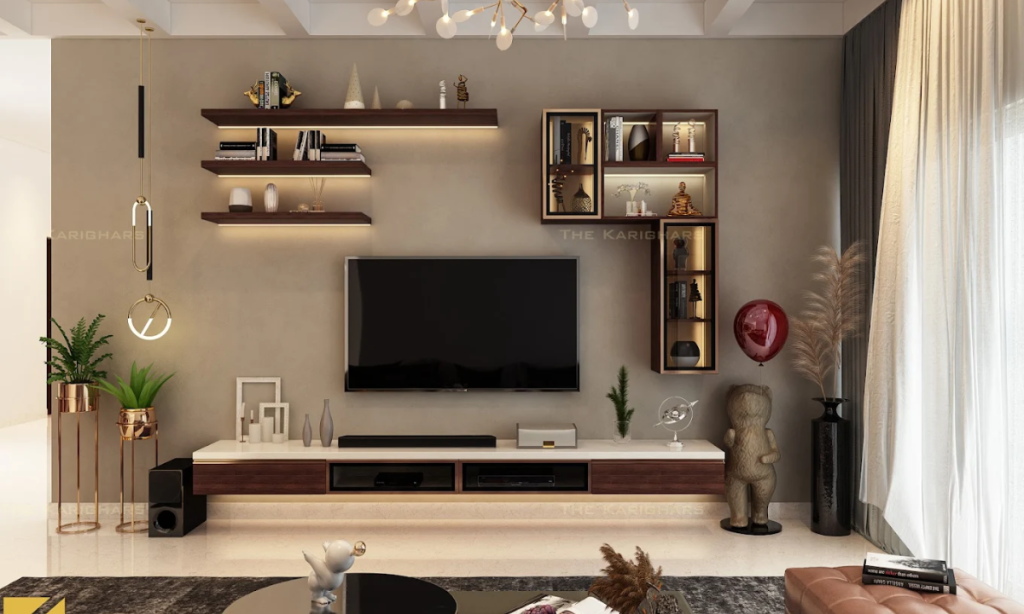
The living room is the heart of any home, and the TV unit is often its focal point. Yet it’s one of the most underrated pieces of furniture when it comes to interior planning. A well-chosen TV unit doesn’t just hold your television — it ties the whole room together, adds storage, and sets the tone for your home’s overall style.
Why Choosing the Right TV Unit Is Important
1. It Anchors the Room’s Design
The TV unit is usually the first thing people notice when they walk into a living room. Its color, material, and shape influence how the entire space feels — whether that’s minimal and airy or warm and cozy.
2. It Maximizes Storage and Reduces Clutter
A good TV unit does more than hold a screen. It organizes remotes, set-top boxes, gaming consoles, books, and décor items, keeping your living room neat and functional.
3. It Affects Viewing Comfort
The height and placement of your TV unit directly impact viewing angles and neck strain. Choosing the right size and design ensures a comfortable watching experience for everyone in the room.
4. It Complements Your Furniture and Space
A mismatched TV unit can make even a well-designed room look disjointed. The right unit works with your sofa, wall color, and flooring to create visual harmony.
5. It Adds Long-Term Value
Good quality TV units, especially those made from durable materials like engineered wood or metal, last for years and can adapt to changing decor trends without needing replacement.
6. It Helps Hide Wiring and Tech Clutter
Modern TV units are designed with cable management systems, so all those messy wires from your TV, soundbar, and gaming devices stay out of sight.
10 Modern TV Unit Ideas Trending in 2026
1. Floating TV Unit with a Clean Architectural Backdrop
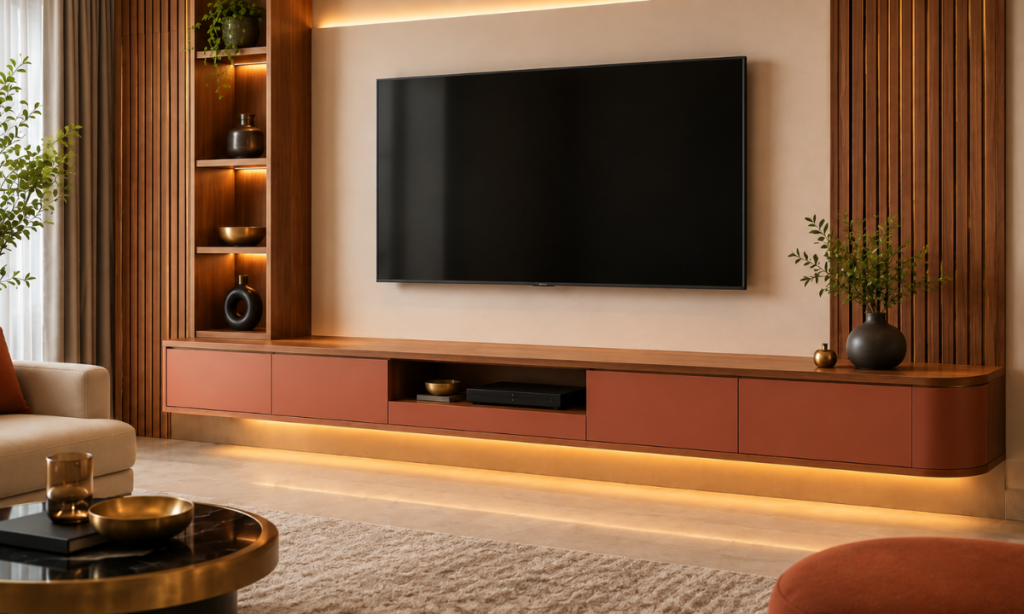
A floating TV unit is one of the most effective solutions for creating a visually light and contemporary living room.
Instead of allowing the cabinet to sit directly on the floor, the console is mounted on the wall, creating a small visual gap underneath. This makes the floor appear more continuous and can make compact living rooms feel more spacious.
Interior design approach
For a sophisticated look, pair a floating console with a full-height or partial-height wall treatment.
You could combine:
- Walnut veneer cabinetry
- Beige or textured wall panels
- Warm LED lighting
- Concealed drawers
- Minimal open shelving
The floating cabinet should also be proportionate to the television and the wall. A console that is too narrow can make the TV appear oversized, while an excessively wide cabinet can overpower a smaller room.
Best suited for
Small apartments, contemporary homes and minimalist living rooms.
2. Warm Wooden TV Unit for a Sophisticated Living Room
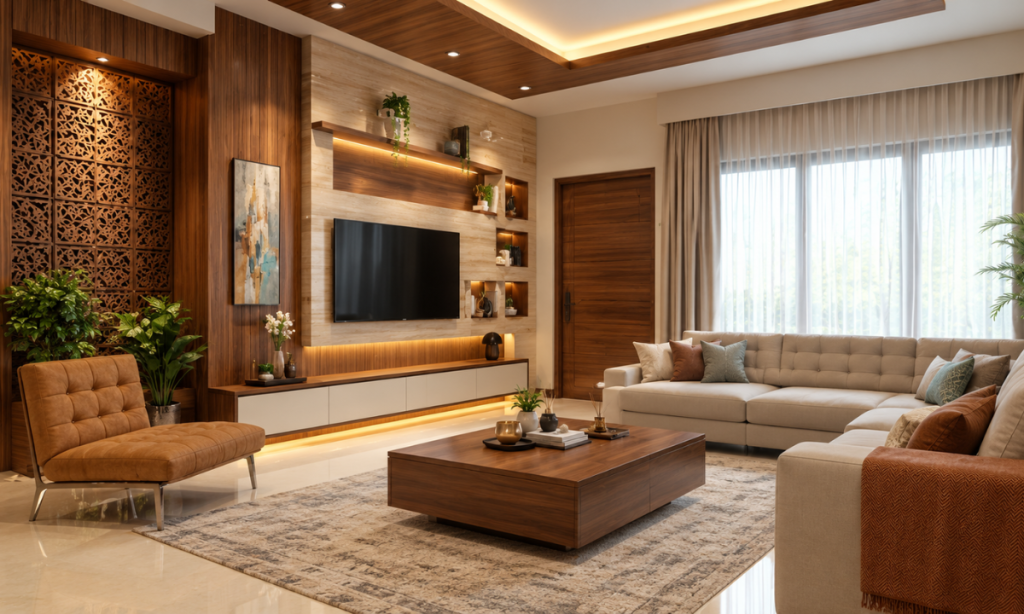
Why choose a wooden TV unit?
Wood brings warmth into a living room and prevents the TV wall from feeling too cold or purely functional. It works particularly well when the rest of the room features neutral upholstery, natural flooring or soft lighting.
For a sophisticated interior, rather than covering the entire wall in wood, designers can use wood as an accent material and balance it with painted surfaces, stone, textured panels or open niches.
Interior design perspective
The key is selecting the right wood tone and proportion.
For a warm contemporary living room, walnut, smoked oak and medium-toned wood can create depth. Lighter oak and natural wood work better when the intention is to make the room feel airy.
A wooden TV unit can also visually connect with:
- Wooden flooring
- Coffee tables
- Side tables
- Wooden doors
- Ceiling details
- Other built-in furniture
3. Fluted Panel TV Wall with a Floating Console
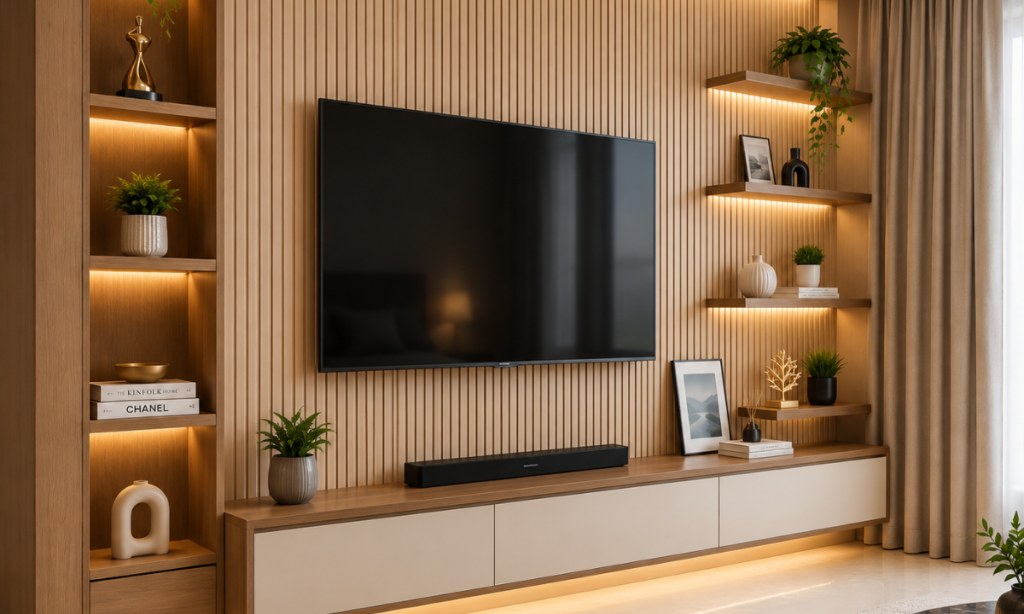
Fluted panels are an excellent way to introduce vertical rhythm and texture to a TV wall.
The vertical lines can make the wall appear taller while adding detail without relying on excessive decoration.
Interior design perspective
Fluted detailing works especially well when the TV itself has a simple black or dark frame.
The designer can create contrast by combining:
Fluted wood + plain wall finish + floating cabinet
or
Fluted wood + stone panel + concealed lighting
The fluted surface should generally remain the dominant decorative element. Adding too many shelves, artwork and accessories can make the wall feel busy.
Best suited for
- Contemporary homes
- Modern apartments
- Luxury residences
- Minimalist interiors
- Transitional interiors
4. Marble and Wood TV Wall for a Luxury Interior
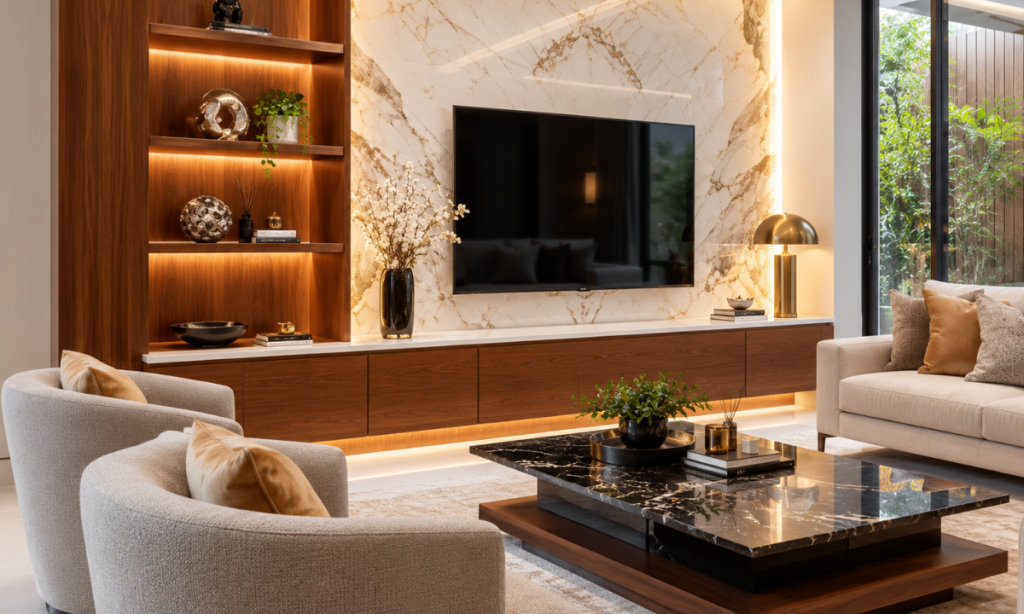
Marble and wood create a beautiful balance between cool sophistication and natural warmth.
A marble-effect panel behind the television can establish a strong focal point, while wood cabinetry prevents the wall from feeling overly formal.
Interior design perspective
Instead of using marble across the entire wall, consider using it selectively behind the TV.
For example:
Marble centre panel + wooden side storage
This creates hierarchy and prevents the stone finish from overwhelming the room.
For a softer luxury appearance, warm beige or ivory stone tones work beautifully with walnut.
For a more dramatic room, white stone with darker wood creates stronger contrast.
5. Minimalist TV Wall with Concealed Storage
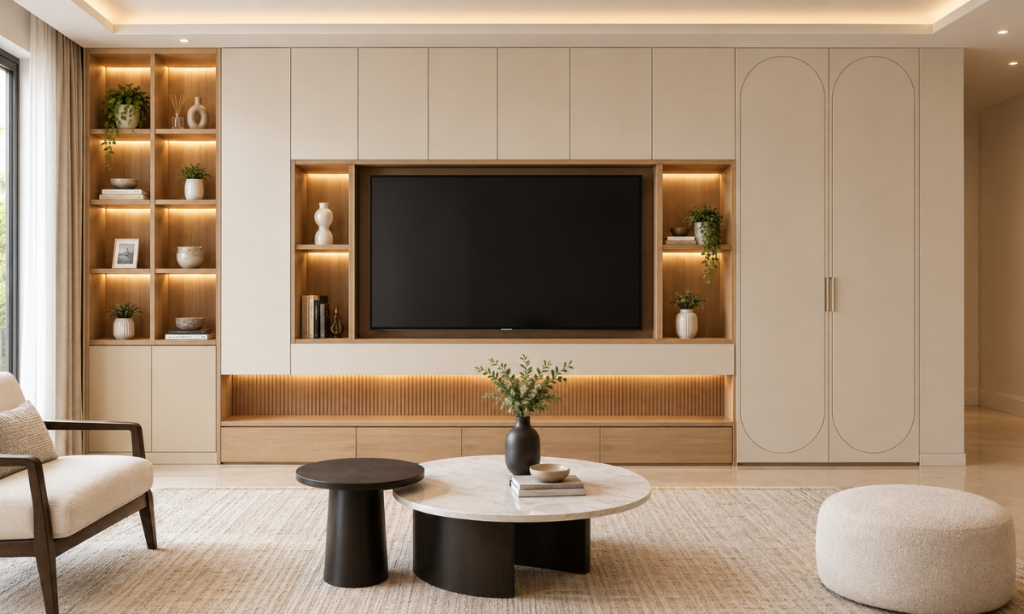
A modern TV wall does not always need to look like a traditional entertainment centre.
For minimalist interiors, the cabinetry can almost disappear into the architecture.
Interior design perspective
This approach is about visual calm.
Instead of displaying everything, use closed cabinetry for objects that don’t need to remain visible.
The TV wall can incorporate:
- Hidden drawers
- Push-to-open cabinets
- Concealed electrical points
- Integrated soundbar
- Router storage
- Media equipment storage
The result is a wall where the television becomes part of the architecture rather than looking like a separate appliance.
6. TV Unit with Integrated Ambient Lighting
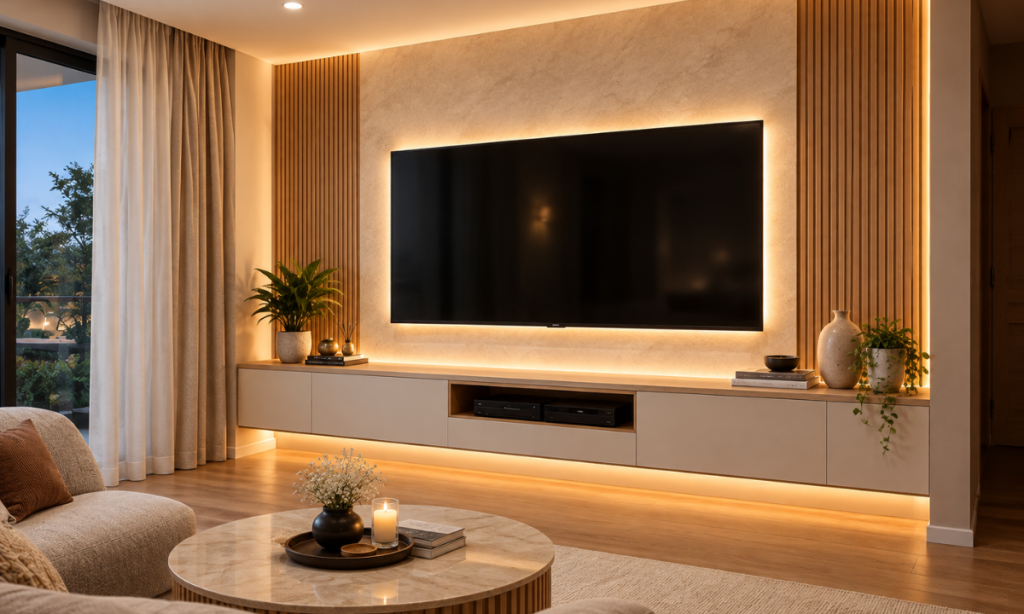
Lighting can completely change the appearance of a TV wall, especially in the evening.
Rather than using bright decorative LEDs everywhere, integrate lighting into architectural details.
Interior design perspective
Good TV-wall lighting should create layers.
Consider:
- Backlighting behind the TV panel
- LED strips beneath floating cabinets
- Lighting inside display niches
- Vertical wall washers
- Concealed cove lighting
Warm white lighting is generally more comfortable for an evening living environment.
Important consideration
Avoid placing a strong light directly behind or opposite the screen because reflections can affect viewing comfort.
7. Full-Height TV Unit for Maximum Storage
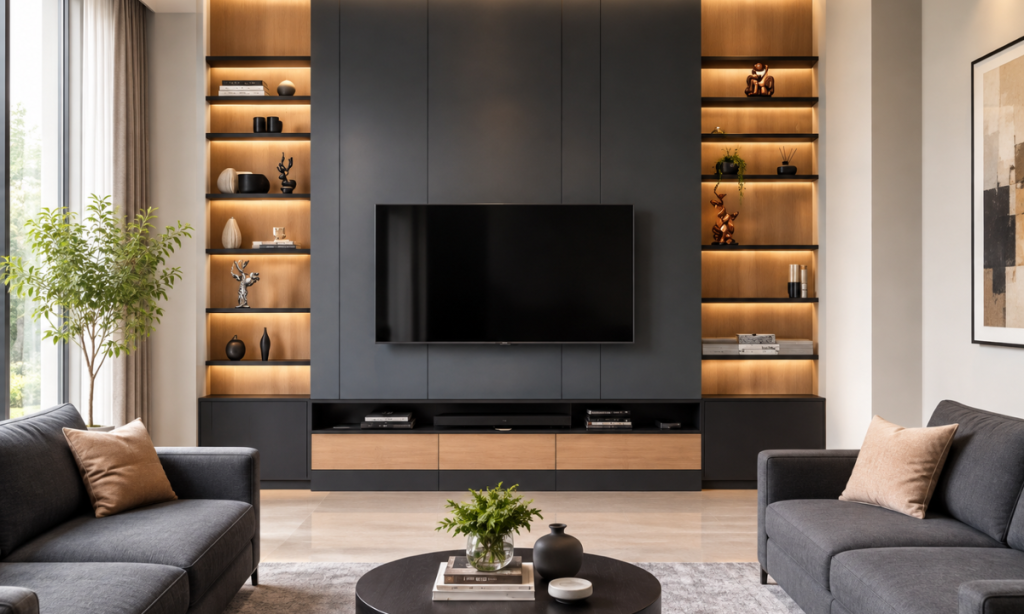
A full-height TV unit transforms an entire wall into a multifunctional storage and display zone.
Rather than stopping the cabinetry at the height of the television, the design continues toward the ceiling.
Interior design perspective
This approach works particularly well when the living room has:
- A large blank wall
- High ceilings
- Limited storage
- An open-plan layout
A good full-height unit should not be one continuous block of cabinetry.
Break the composition using:
Closed storage + open niches + TV zone + decorative elements
This gives the wall breathing space.
8. Stone or Textured TV Wall for an Architectural Look
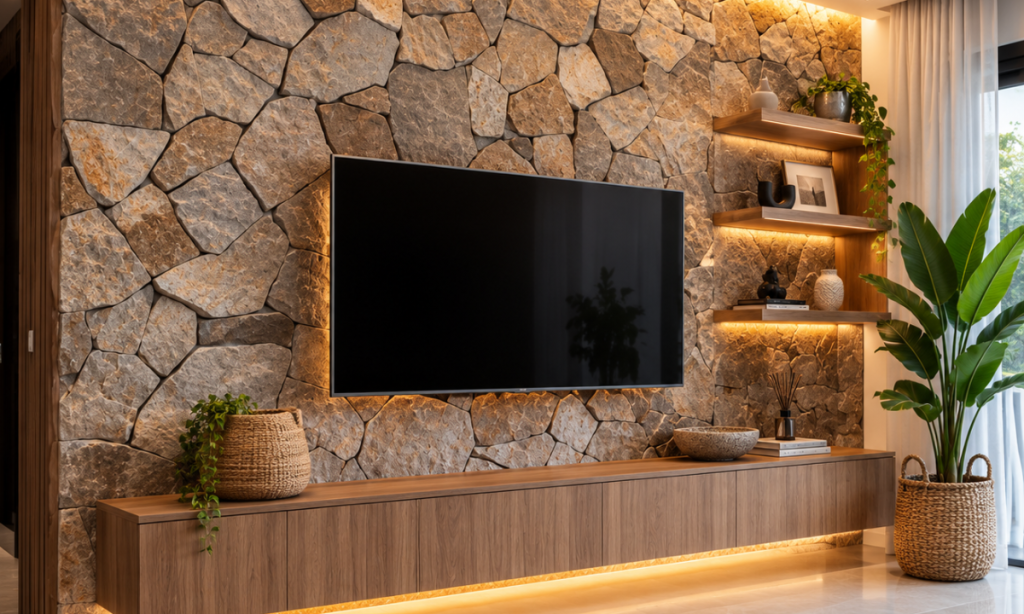
If you prefer a TV unit that feels architectural rather than furniture-like, consider a textured wall finish.
Natural and tactile materials can give a simple TV wall considerably more depth.
Materials to consider
- Travertine-inspired surfaces
- Natural stone
- Marble
- Microcement
- Limewash
- Textured plaster
- Stone-effect porcelain slabs
Interior design perspective
The texture should support the architecture of the room rather than compete with it.
For example, a textured beige stone wall can work beautifully with:
- Curved sofas
- Natural wood
- Neutral rugs
- Soft curtains
- Warm lighting
This creates a cohesive and calming environment.
9. TV Unit with Open Display Niches
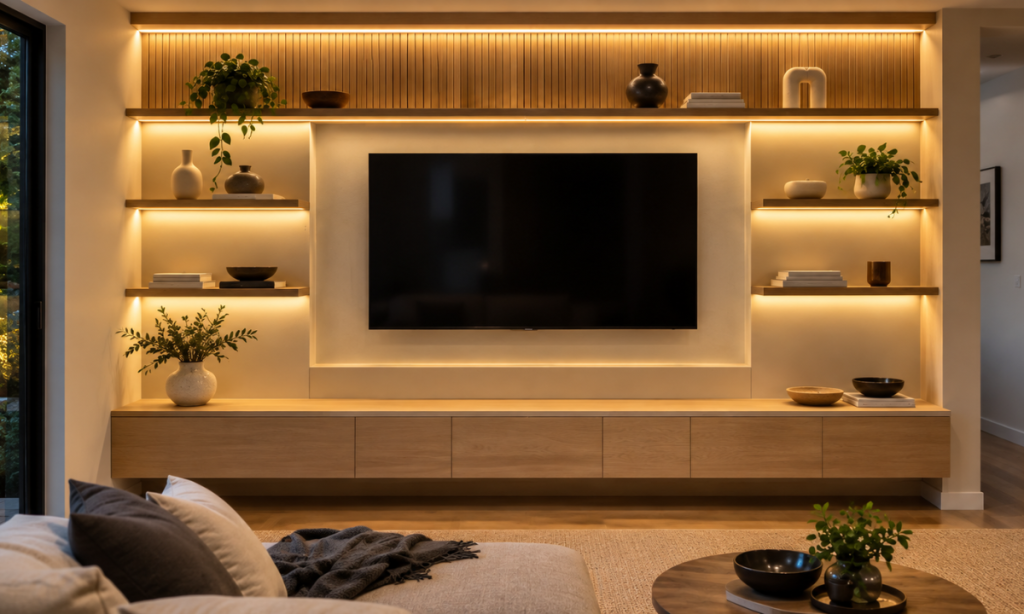
Open niches can prevent a large TV wall from looking like a solid block of cabinetry.
They provide space to introduce personality through carefully selected objects.
What can you display?
- Sculptures
- Books
- Ceramic objects
- Small plants
- Artwork
- Travel pieces
- Decorative lighting
Interior design perspective
The secret is negative space.
You don’t need to fill every niche.
Leaving some compartments empty allows the wall to breathe and makes the objects that you do display more noticeable.
A combination of 70–80% concealed storage and a smaller amount of open display space can work well for many contemporary homes.
10. Curved TV Console for a Softer Contemporary Interior
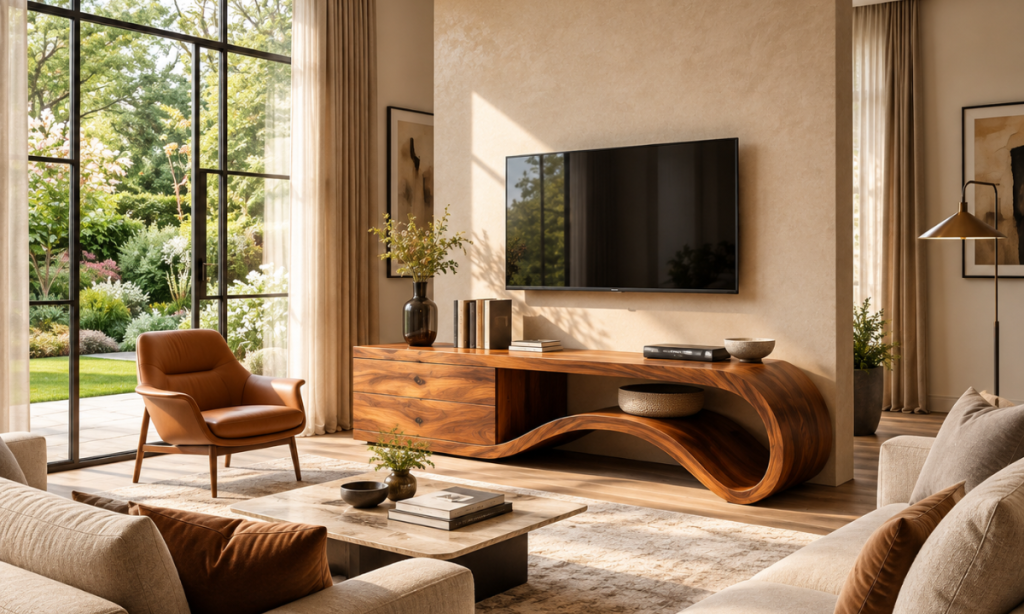
Straight lines dominate many TV walls, but introducing a curved console can soften the overall composition.
Interior design perspective
Curves work particularly well when repeated subtly elsewhere in the room.
For example:
Curved TV console + round coffee table + curved sofa
This creates visual continuity.
The curve doesn’t have to dominate the entire TV wall. Even a rounded cabinet edge or curved shelving detail can introduce softness.
How to Choose the Right TV Unit for Your Home?
The TV unit is more than a place to mount your television. In a modern living room, it often becomes the visual anchor of the space while also providing storage, concealing wires, displaying décor and defining the overall style of the room.
Choosing the right TV unit for your home therefore requires more than selecting a beautiful design from a catalogue. The size of your living room, TV dimensions, wall proportions, storage requirements, viewing distance, electrical points and interior style should all work together.
Whether you prefer a minimalist floating console, a warm wooden TV wall, a luxurious marble backdrop or a full-height entertainment unit, the right design should feel like a natural extension of your home’s interiors.
1. Start With the Size and Layout of Your Living Room
Before choosing a TV unit, understand the wall where it will be installed.
A large entertainment unit can make a compact living room feel crowded, while a very small unit can look visually disconnected in a spacious room.
Consider:
- Available wall width
- Ceiling height
- Sofa placement
- Walking space around the TV unit
- Windows and doors
- Existing furniture
- Natural light
- TV viewing distance
Interior designer’s perspective
A TV unit should be proportional to the wall rather than simply proportional to the television.
For a compact apartment, a floating console with a clean backdrop can create a sense of openness. In a larger living room, a full-height media wall or wider storage unit can provide better visual balance.
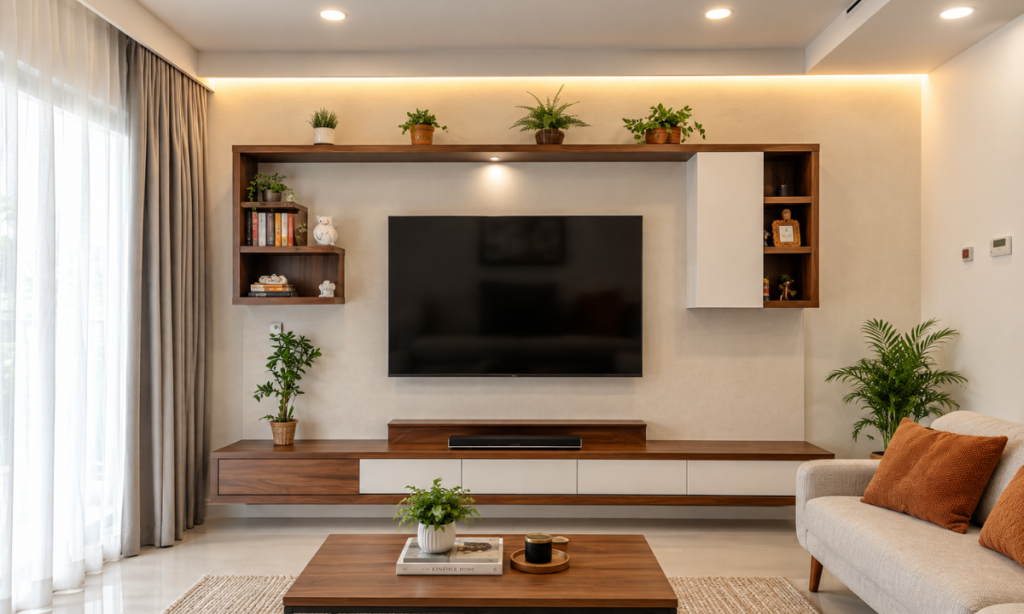
2. Choose the Right TV Unit Size
The TV should remain the focal point without overwhelming the wall.
When planning the unit, consider:
- TV screen size
- TV mounting height
- Console width
- Wall width
- Storage requirements
- Surrounding décor
A useful interior-design approach is to allow the TV wall to have sufficient visual breathing room around the screen rather than filling every available inch with cabinetry.
Interior designer’s perspective
The TV unit should create a visual hierarchy.
The television becomes the primary element, while the console, wall panels, lighting and décor support it rather than competing with it.
For a premium look, designers often extend the backdrop wider than the TV itself, creating a deliberate frame around the screen.
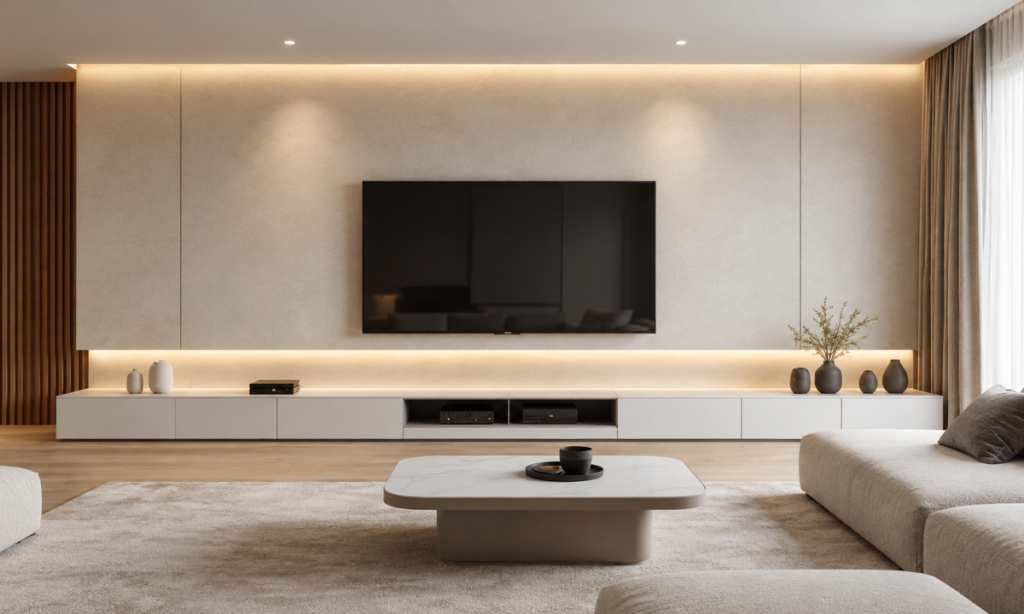
3. Decide Between a Floating and Floor-Mounted TV Unit
One of the biggest design decisions is whether your TV console should sit on the floor or appear to float against the wall.
Floating TV Unit
A floating console is ideal for:
- Modern apartments
- Minimalist interiors
- Smaller living rooms
- Easy floor cleaning
- Visually lighter interiors
The open floor underneath creates an uninterrupted visual line, making the room feel more spacious.
Floor-Mounted TV Unit
A floor-mounted unit works well when you need:
- More storage
- Larger cabinets
- Display shelves
- Heavier visual presence
- A traditional or transitional aesthetic
Interior designer’s perspective
The choice should depend on visual weight and functionality.
If the room already contains substantial furniture, a floating console can help maintain visual lightness. If storage is a priority, a floor-mounted unit may provide greater flexibility.
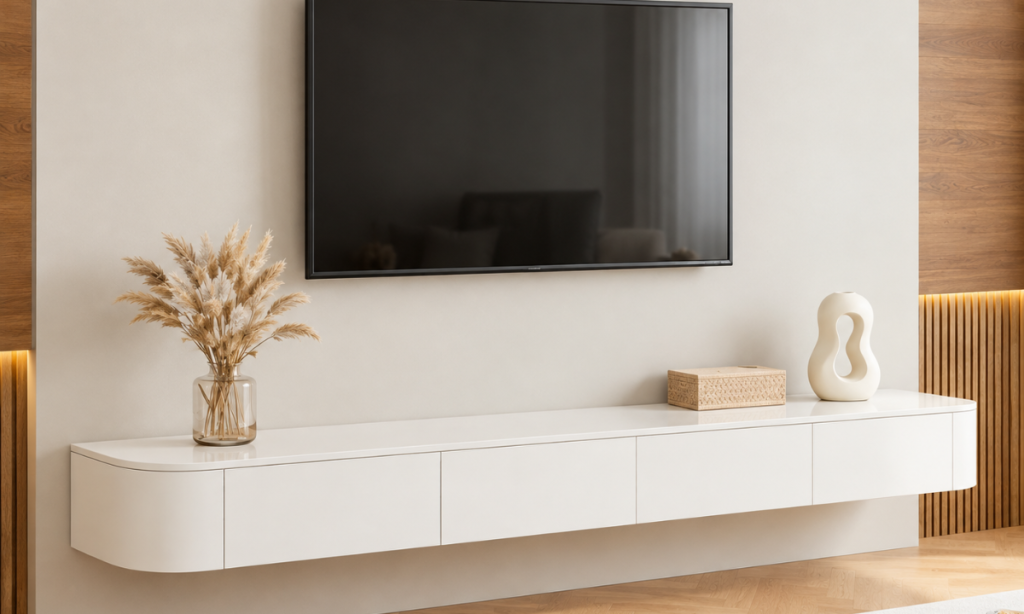
4. Select Materials That Complement Your Interior
The material palette can completely change the character of your TV wall.
Popular combinations include:
- Natural or veneer wood
- Fluted wood panels
- Marble or stone finishes
- Matte laminates
- Microcement-style finishes
- Glass
- Metal accents
- Textured wall finishes
Wood for warmth
Wood brings warmth and works particularly well with neutral interiors.
Marble for luxury
Marble or marble-look surfaces can create a sophisticated focal wall when paired with understated cabinetry.
Fluted panels for texture
Fluted surfaces introduce depth without requiring elaborate decoration.
Textured finishes for an architectural look
Textured walls can turn the TV backdrop into an architectural feature rather than simply a decorative panel.
Interior designer’s perspective
Avoid choosing the TV unit material in isolation.
The finish should connect with flooring, furniture, wall colours, ceiling design and other wood or stone elements in the room.
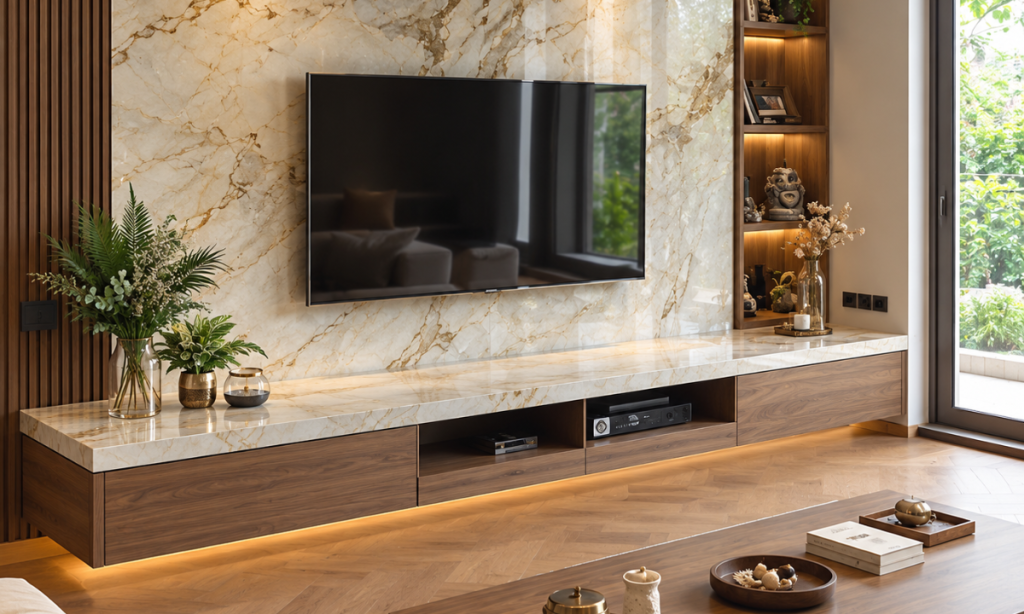
5. Plan Storage According to Your Lifestyle
A beautiful TV unit can quickly become cluttered if storage isn’t planned properly.
Think about what you actually need to store:
- Set-top box
- Gaming consoles
- Speakers
- Remote controls
- Books
- Board games
- Children’s items
- Décor
- Cables and electrical accessories
Instead of adding cabinets everywhere, divide storage into open and concealed zones.
Closed storage
Best for items you want hidden from view.
Open niches
Useful for books, artwork and carefully selected décor.
Drawers
Ideal for smaller everyday items.
Interior designer’s perspective
Good storage is not about maximising the number of cabinets. It is about creating purposeful storage without making the TV wall visually heavy.
A luxury interior often looks expensive because clutter has been intentionally designed out of the space.
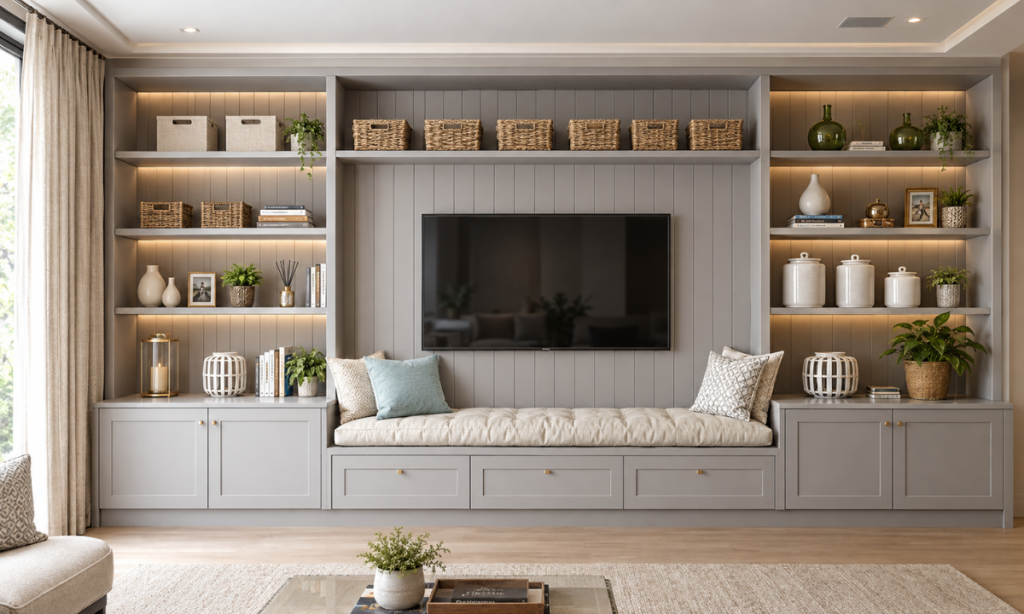
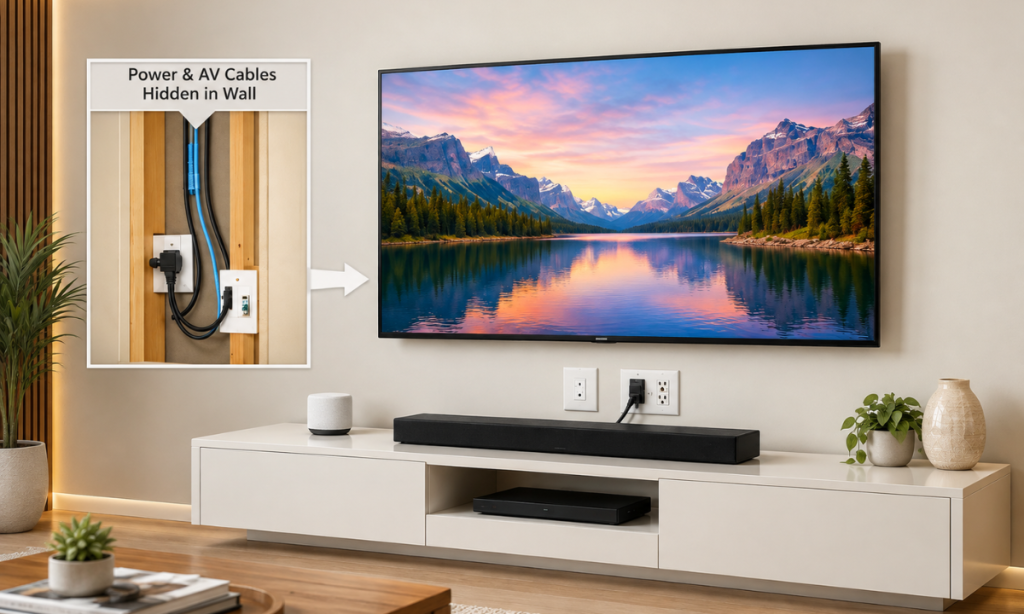
6. Think About Cable Management Before Installation
One of the easiest ways to make an expensive TV unit look unfinished is visible wiring.
Before installation, plan the positions of:
- Power sockets
- Internet connections
- Set-top box
- Gaming systems
- Speakers
- Streaming devices
- Soundbars
Interior designer’s perspective
Cable management should be designed before the wall is finished, particularly when the TV is wall-mounted.
Concealed conduits, integrated sockets and dedicated service cavities can keep the finished TV wall clean.
The goal is simple: technology should be visible when you use it and almost invisible when you don’t.
7. Consider the Viewing Height and Comfort
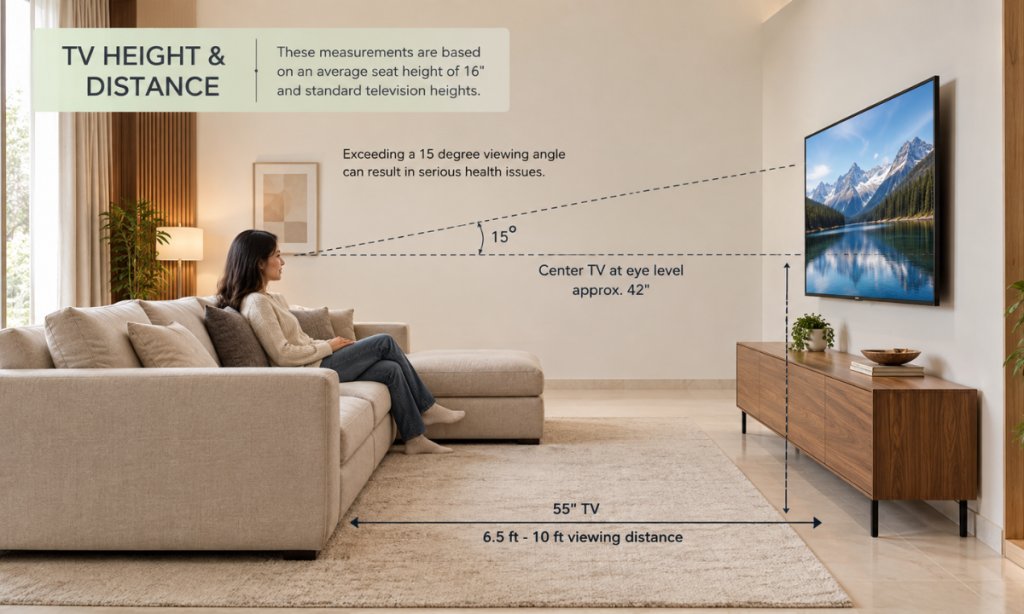
A TV unit should look good—but it should also be comfortable to use.
The ideal viewing position depends on:
- Sofa height
- Seating posture
- TV size
- Room layout
- Wall-mounted or console placement
Avoid mounting the television unnecessarily high simply because the wall is tall.
Interior designer’s perspective
The television should relate to the eye level of the primary seating position.
Interior designers therefore consider the sofa and viewing angle before fixing the final TV height.
The TV wall should be designed around how the room is actually used—not just how it looks in a photograph.
8. Use Lighting to Enhance the TV Wall
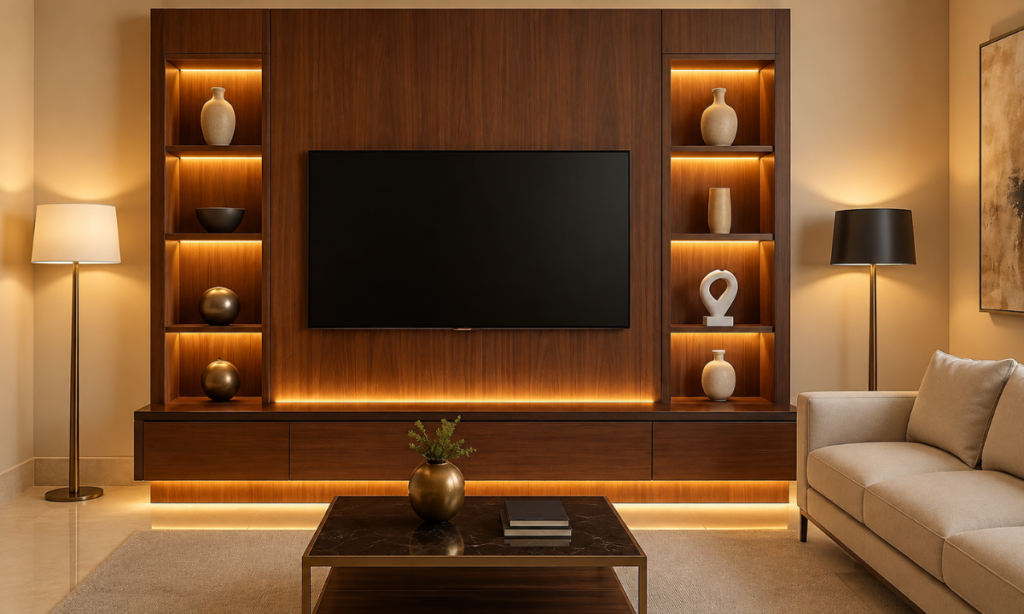
Lighting can transform an ordinary TV unit into an architectural feature.
Consider:
- Backlighting
- LED strips
- Cove lighting
- Wall washers
- Recessed lighting
- Display niche lighting
However, lighting should never create glare on the television screen.
Interior designer’s perspective
The best TV-wall lighting is usually subtle and layered.
Instead of making the TV wall excessively bright, designers can use concealed warm lighting to highlight textures, wood grain, niches or stone surfaces.
This creates depth without distracting from the screen.
9. Match the TV Unit With Your Interior Style
Your TV unit should belong to the same design language as the rest of your home.
For minimalist interiors
Choose:
- Clean lines
- Handleless cabinets
- Neutral colours
- Simple backdrops
- Minimal décor
For contemporary interiors
Consider:
- Wood and stone combinations
- Fluted panels
- Matte finishes
- Integrated lighting
- Geometric detailing
For luxury interiors
Consider:
- Premium veneers
- Marble or stone
- Bespoke cabinetry
- Layered lighting
- Sophisticated metallic accents
For Japandi-inspired homes
Use:
- Natural wood
- Soft neutrals
- Simple forms
- Minimal accessories
- Warm lighting
Interior designer’s perspective
The TV unit should blend into the home’s design language rather than appear as a separate piece of furniture.
This is especially important in open-plan homes where the living room connects visually with the dining area and other spaces.
Avoid These Common TV Unit Design Mistakes
Even an attractive TV unit can feel wrong if the planning is poor.
Making the unit too large
An oversized unit can dominate a compact room.
Ignoring storage requirements
Insufficient storage can result in visible clutter.
Leaving wires exposed
Visible cables immediately reduce the clean appearance of the wall.
Using too many materials
Combining several finishes can make the wall visually chaotic.
Overdecorating the TV wall
The television should remain the focal point.
Ignoring ventilation
Electronic devices need adequate airflow, particularly inside closed cabinets.
Mounting the TV too high
The television should be comfortable to watch from the primary seating position.
Copying a design without considering your room
A TV wall that works beautifully in a large villa may not work in a compact apartment.
How The KariGhars Can Help
A bespoke TV unit should be designed as part of the complete living-room interior rather than treated as an isolated installation.
At The KariGhars, the design can be planned around your room dimensions, furniture layout, storage requirements, materials, lighting and overall interior style to create a TV wall that is both functional and visually refined.
Looking for a bespoke TV unit design for your home? Let our interior designers create a TV wall that fits your space, lifestyle and design aesthetic.
FAQ
1. How do I choose the right TV unit for my home?
Choose a TV unit based on your wall size, TV dimensions, room layout, storage requirements, viewing height, interior style and available electrical points. The unit should complement the proportions of the room without making the space feel crowded.
2. What size TV unit is best for a living room?
The ideal TV unit size depends on the width of your TV wall and the overall room. Generally, the console or backdrop should have enough width around the television to create visual balance. Measure the complete wall before finalising the design rather than choosing a unit based only on TV size.
3. Is a floating TV unit better than a floor-mounted TV unit?
Both can work well. A floating TV unit creates a lighter, more spacious appearance and suits modern or minimalist interiors. A floor-mounted TV unit is better when you need additional storage or want a more substantial furniture element.
4. What material is best for a TV unit?
There is no single best material. Wood and veneer add warmth, marble and stone finishes create a luxurious appearance, while fluted panels and textured finishes add depth. The material should complement your flooring, furniture, wall colours and overall interior design.
5. How can I hide wires in a TV unit?
Plan electrical points and cable routes before installing the TV unit. Concealed conduits, internal cable channels, integrated sockets and dedicated compartments for devices can keep wires hidden and create a cleaner TV wall.
6. How much storage should a TV unit have?
Storage should be based on your lifestyle rather than simply maximising cabinet space. Consider your requirements for set-top boxes, gaming consoles, books, remotes, speakers, décor and everyday items. A combination of concealed cabinets, drawers and open niches usually provides a practical balance.
7. What is the ideal height for a TV unit?
The ideal height depends on the TV size, sofa height and viewing position. The television should be positioned comfortably in relation to the eye level of people seated on the sofa. Avoid mounting the TV unnecessarily high just to fill a tall wall.
8. How do I make a TV unit look luxurious?
Use a restrained combination of premium materials, concealed storage, integrated lighting and clean detailing. Wood veneer, stone or marble surfaces, fluted panels, warm ambient lighting and handleless cabinetry can create a sophisticated appearance without overcrowding the wall.
9. Should the TV unit match the rest of the living room?
Yes. The TV unit should complement the colour palette, furniture, flooring, lighting and architectural details of the room. Matching or coordinating materials across different elements helps create a cohesive and professionally designed interior.
10. Is a full-height TV unit suitable for a small living room?
Not always. A full-height unit can provide excellent storage, but it may visually dominate a compact room. For smaller spaces, a floating console, slim wall panel or partially built-in TV unit can create a lighter appearance.
11. What lighting is best for a TV wall?
Soft, indirect lighting is usually the most effective. Warm LED backlighting, concealed strip lighting, recessed lights and illuminated niches can add depth while avoiding excessive brightness or glare on the screen.
12. Can a TV unit be customised according to my home?
Yes. A customised TV unit can be designed according to your wall dimensions, TV size, storage needs, electrical layout, furniture placement and interior style. Bespoke designs are particularly useful when the room has unusual dimensions or specific storage requirements.
13. What are the common mistakes to avoid when designing a TV unit?
Common mistakes include choosing an oversized unit, ignoring cable management, mounting the TV too high, using too many materials, overcrowding the wall with décor and not planning storage or ventilation for electronic devices.
14. Should I choose a TV unit based on current interior trends?
Trends can provide inspiration, but functionality and proportion should come first. A well-designed TV unit should complement your home’s architecture and lifestyle so that it remains practical and visually relevant for years.
15. How much does a custom TV unit cost in India?
The cost varies significantly depending on size, materials, finishes, storage, hardware, lighting and customisation. A basic TV console will generally cost less than a full-height bespoke media wall using premium veneer, stone, specialised hardware and integrated lighting. For an accurate estimate, the design and site dimensions should be evaluated first.
16. What is the best TV unit design for a modern home?
For modern homes, popular options include floating TV consoles, fluted wood TV walls, minimalist media walls, marble-and-wood combinations, concealed storage units and seamless built-in cabinetry. The best design is the one that fits the room’s proportions and your functional requirements.
The KariGhars: A Journey of Design Excellence and Recognition
Founded in 2009 by Aashita Chadha and Abhishek Chadha, The KariGhars has grown into a leading name in luxury interior design, known for thoughtful design, skilled craftsmanship and homes that reflect the people who live in them. The firm’s work has earned it the Best Luxury Villa Interior Design award at the Luxury Lifestyle Awards 2022 and the Brand Achievers Award for Best Interior Designing Firm in Bengaluru. Its design philosophy has also been featured in Vogue India and The New Indian Express, cementing its reputation as one of Bangalore’s foremost luxury design studios.