

Blog Summary in Bullet Points
- Flow comes before fixtures. Zone wet and dry areas before choosing a single finish.
- Keep the palette tight. Two stones, one timber, one metal, and the room stays composed.
- Luxury vanities reward quiet craft. Floating fluted joinery and leather-lined drawers over heavy ornament.
- Tile with discipline. Large formats, matched grout, and one accent surface instead of busy patterns.
- Design the shower as its own room. Rain shower, teak bench, niche, linear drain, and frameless glass.
- Freestanding bathtubs anchor the room. Position them near light or a feature wall.
- Layer the lighting. Ambient, task, accent, and feature lighting on dimmers across every zone.
- Hide the storage. Tall cabinets, mirrored units, shower niches, and toe-kick drawers keep surfaces clear.
- Borrow natural light. Windows, frosted panels, or clerestories, with a touch of greenery where possible.
- Add sensory layers. Candles, music, soft rugs, and thick linen towels elevate the daily ritual.
- Involve a design studio for full renovations. Coordination across trades protects the final result.
A truly considered bathroom is where the day begins and ends on its own terms. It is the quietest room in the house and often the one that reveals the most about how a home is lived in. Thoughtful luxury bathroom ideas are not about marble everywhere or chrome taps that catch the light. They are about restraint, warmth, and the kind of detail that reveals itself slowly. This guide walks through the elements that turn a bathroom into a private retreat, from stone and joinery to lighting and the small finishes that quietly carry the room.
Begin with Flow, Not Fixtures
A spa-like bathroom begins long before the first tile is chosen. It begins with how the room is zoned.
Separate the wet and dry areas so the space breathes. Place the shower and bath in one quiet zone, the vanity in another, and the water closet behind a discreet partition. Build in a generous threshold between the bedroom and the bathroom so the transition feels composed, not abrupt.
The best home interior designers in Bangalore start every bathroom brief with floor plans, not finishes. Flow decides whether a room feels calm or crowded, and finishes come later.
Material Palette: Two Stones, One Timber
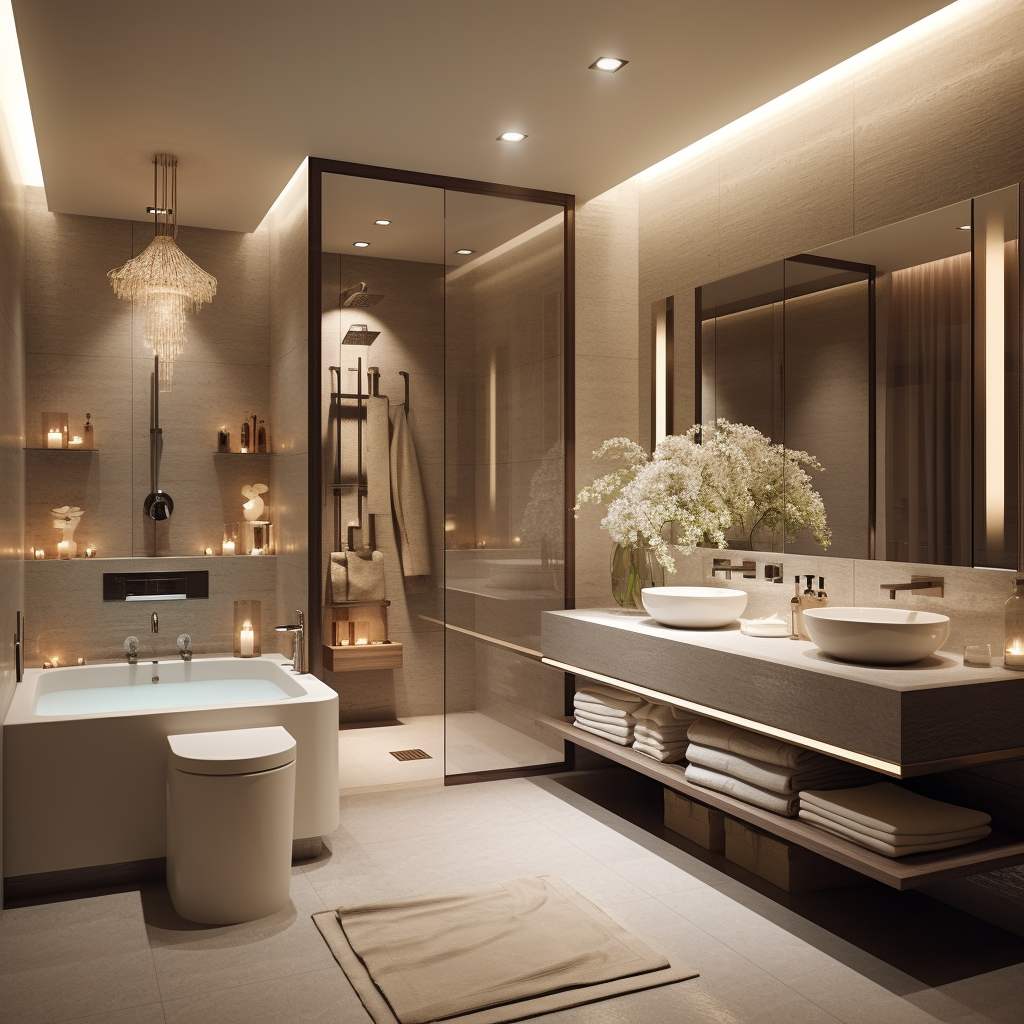
The strongest bathrooms work with a tight material palette. Three to four surfaces, chosen with intent, outlive every seasonal trend.
A palette that ages beautifully:
- A pale honed stone such as travertine, limestone, or Breccia for walls and floors
- A deeper statement stone like Patagonia quartzite or Calacatta Viola for the vanity or shower niche
- A quiet timber such as teak, oak, or walnut for joinery and ceiling slats
- A single metal finish, usually brushed brass, bronze, or gunmetal
Resist pairing more than two stones in one bathroom. Even expensive materials begin to compete when the palette grows.
Luxury Bathroom Vanity Designs: Craft in the Everyday
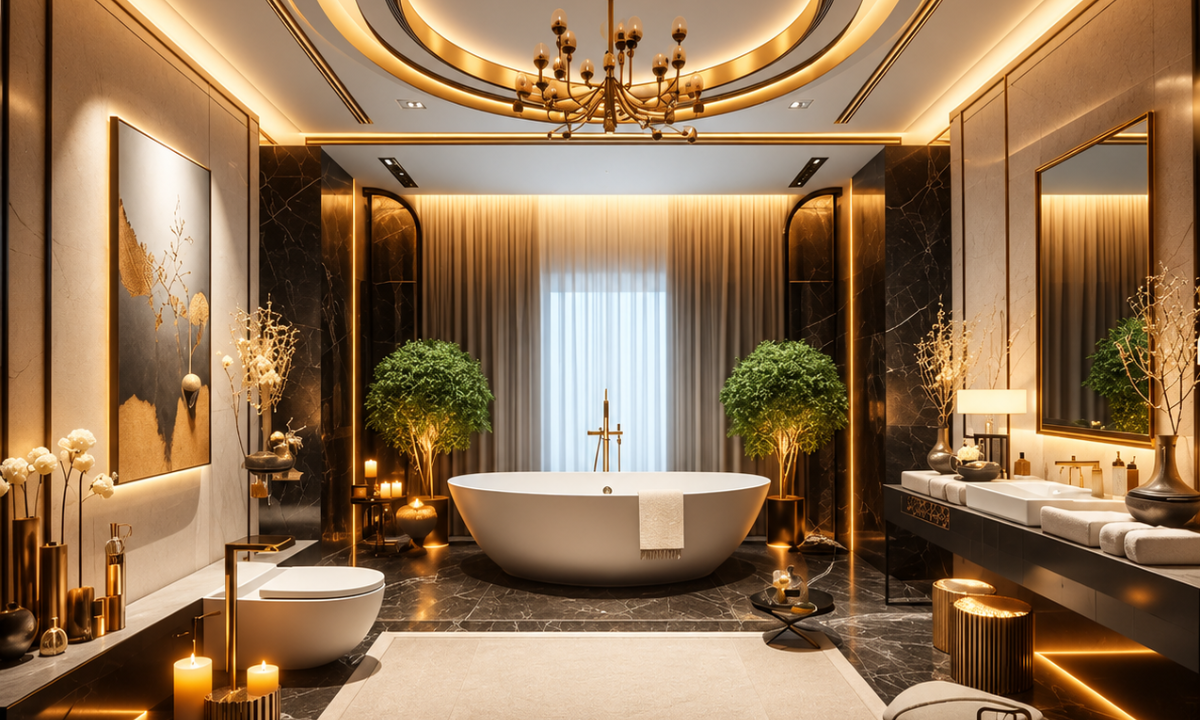
The vanity is used every single day, so it has to be beautiful and practical in equal measure. Considered luxury bathroom vanity designs reward careful joinery over heavy ornament.
Approaches worth considering:
- A floating vanity in fluted oak with a honed stone top and an undermount basin
- A full-length stone slab vanity with a single wall-mounted spout
- Twin basins set into one continuous counter for a shared bathroom
- A furniture-style vanity on turned legs for a classical primary suite
- A back-painted glass top in a soft stone colour for compact bathrooms
Add soft-close drawers rather than cupboards. Drawers hold more, open faster, and keep daily essentials out of sight. Line the top drawer in dark leather or velvet for the small quiet luxury that greets you every morning.
Luxury Bathroom Tile Designs: Surface as Story
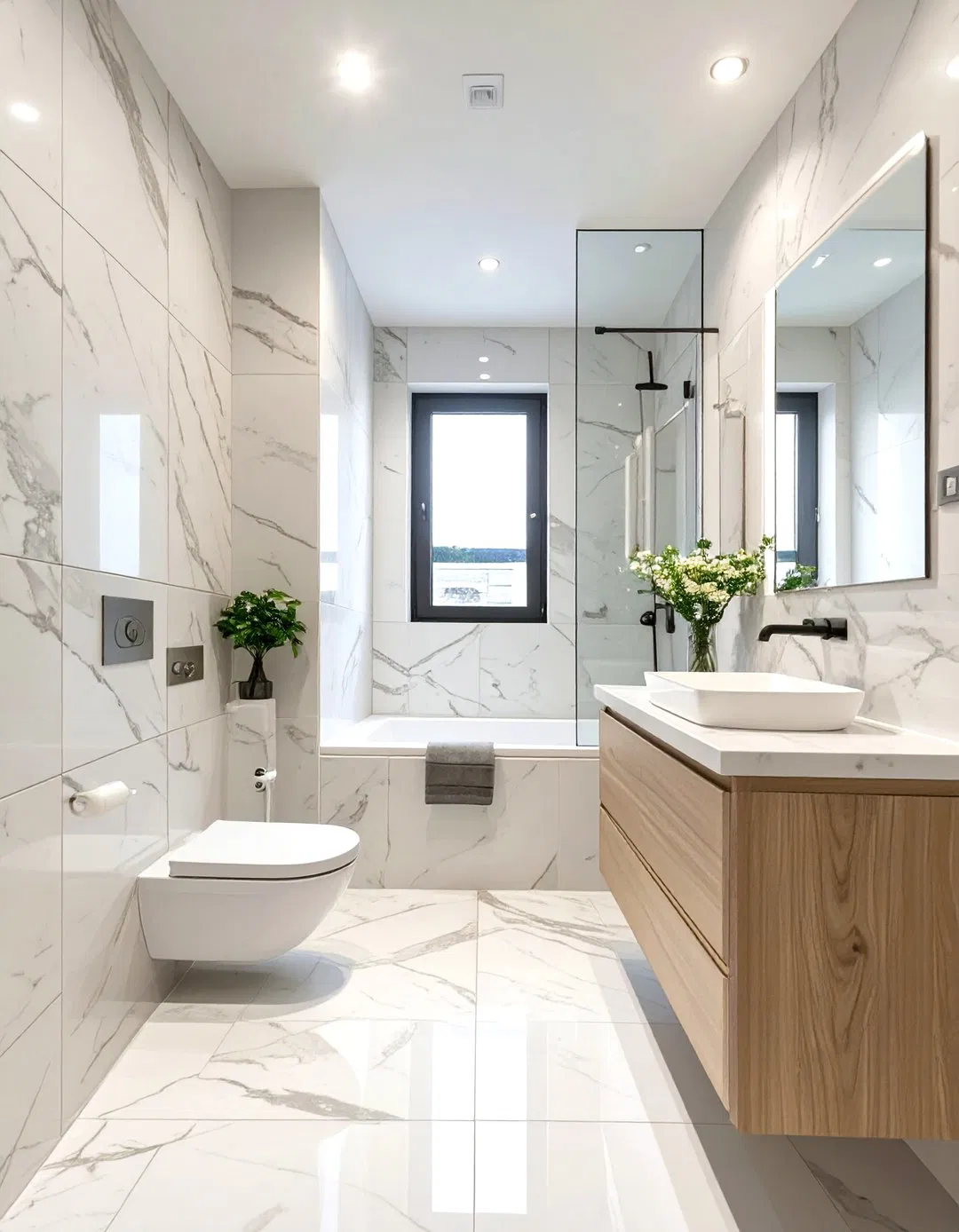
Tile is where many bathrooms lose their composure. The temptation to feature every surface differently creates visual noise instead of calm.
Thoughtful luxury bathroom tile designs follow a few principles:
- Choose large-format slabs or tiles to minimise grout lines
- Use the same stone on floor and shower walls to blur transitions
- Reserve pattern for a single wall, usually behind the vanity or inside the shower niche
- Match grout colour to the tile so the surface reads as one continuous plane
- Introduce texture through fluting, bush-hammered finish, or micro-mosaic on one accent surface
Avoid high-gloss ceramic imitations of marble. The reflection is sharper and the depth is missing. Honest materials, even in smaller quantities, read as luxury. Imitations never do.
The Shower as a Sanctuary
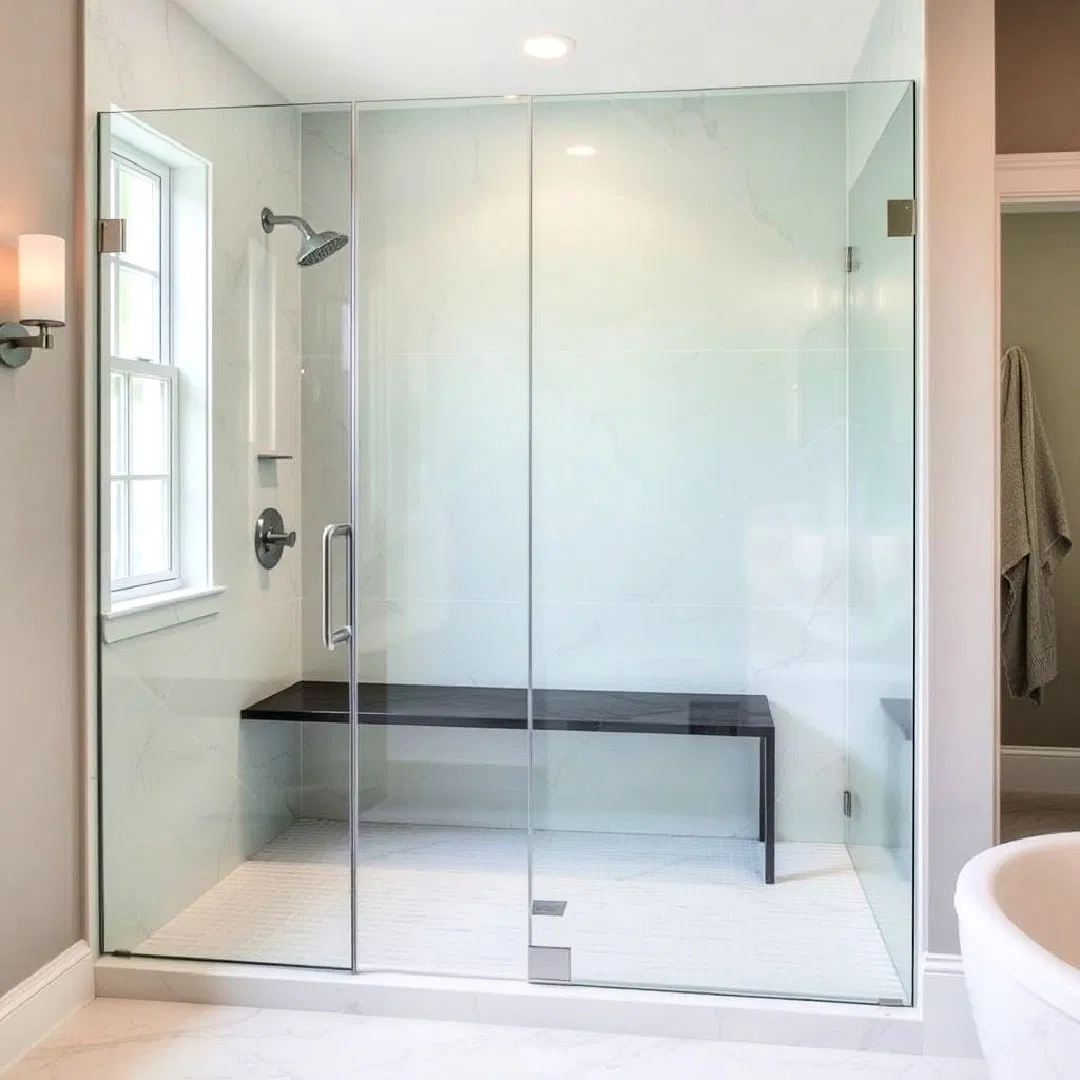
A truly spa-like bathroom treats the shower as a room of its own. Give it enough depth that the water does not escape the enclosure and enough width to move freely.
Elements that elevate the experience:
- A rain shower head set into the ceiling with a hand-held wand for flexibility
- A recessed niche lined in a contrasting stone to hold toiletries
- A linear channel drain that keeps the floor plane uninterrupted
- A teak slat bench along one wall for seated rituals
- Steam function for occasional use, with proper ventilation planned in
Frameless glass makes the shower feel like part of the bathroom rather than a separate pod. Keep the hardware minimal and the glass low-iron so the view through it stays true.
The Bathtub as a Still Object
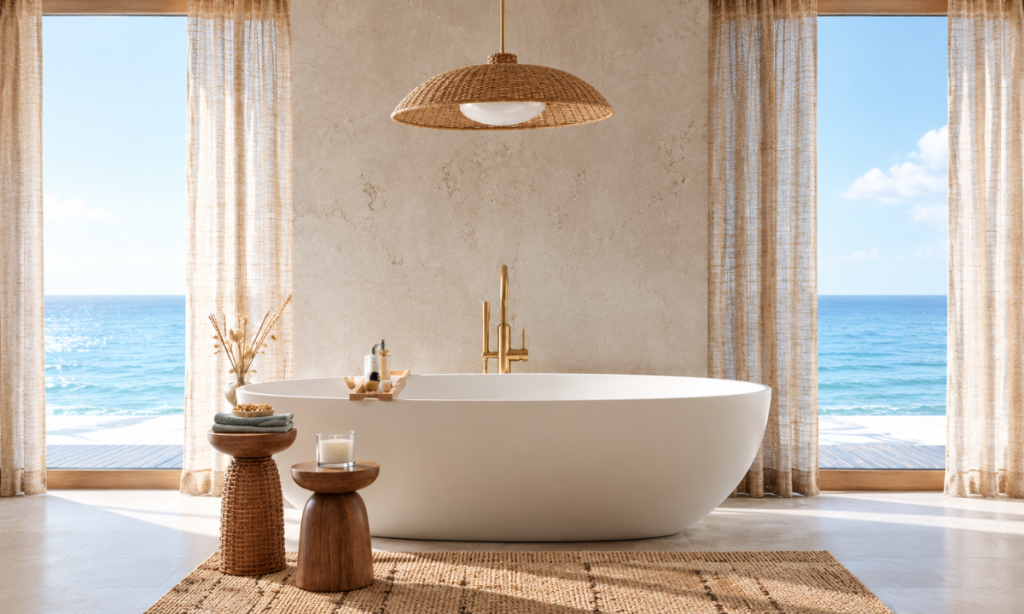
If space allows, a freestanding bathtub becomes the quiet centrepiece of the room. Position it near a window or against a feature wall where it can be seen the moment you walk in.
Consider:
- A sculptural stone or composite tub in matte finish
- A deep soaking tub rather than a shallow one, for actual rest
- A floor-mounted spout in brushed brass or bronze
- A low side table in timber for a book, a candle, or a glass of wine
- A pendant or wall sconce placed just off-centre to flatter the tub rather than light it
A bathtub is used less often than a shower, but when the room is right, it changes how the entire house feels.
Lighting Fixtures: The Layer Most Rooms Miss
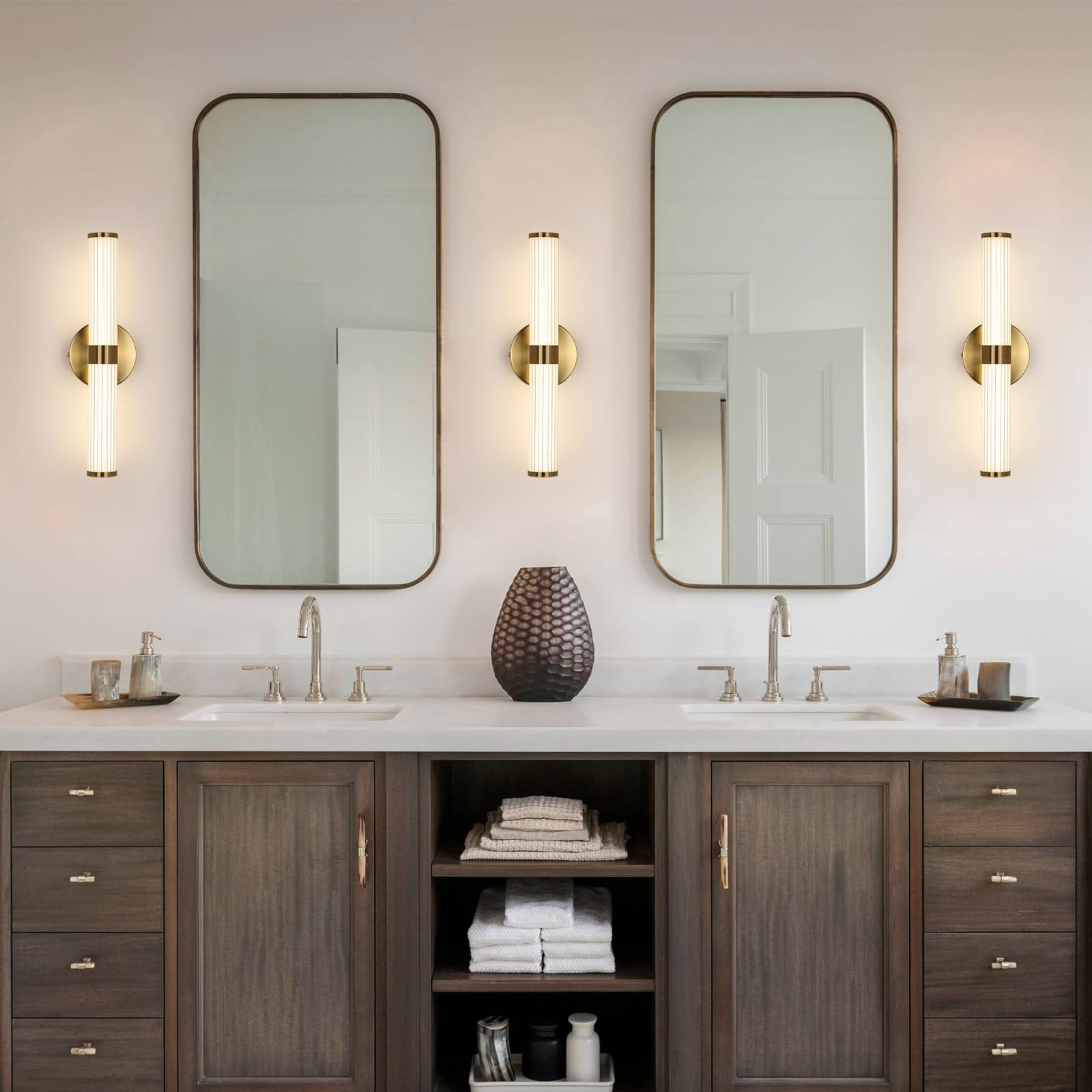
Great lighting is the quiet signature of a well-designed bathroom. Harsh overhead downlights flatten the room. Layered lighting shapes it.
Build the scheme in four layers:
- Ambient light from recessed ceiling fixtures with warm colour temperature around 2700K
- Task light at the vanity, ideally through vertical sconces placed either side of the mirror at face height
- Accent light inside niches, under the vanity, and behind mirrors to soften edges
- Feature light from a single sculptural pendant above the bath or near the entry
Install dimmers across every zone. Morning light should be bright enough to shave or apply make-up by. Evening light should feel like candlelight. Lighting fixtures that cannot be dialled down work against the spa feel the room is meant to create.
Storage Units That Stay Hidden
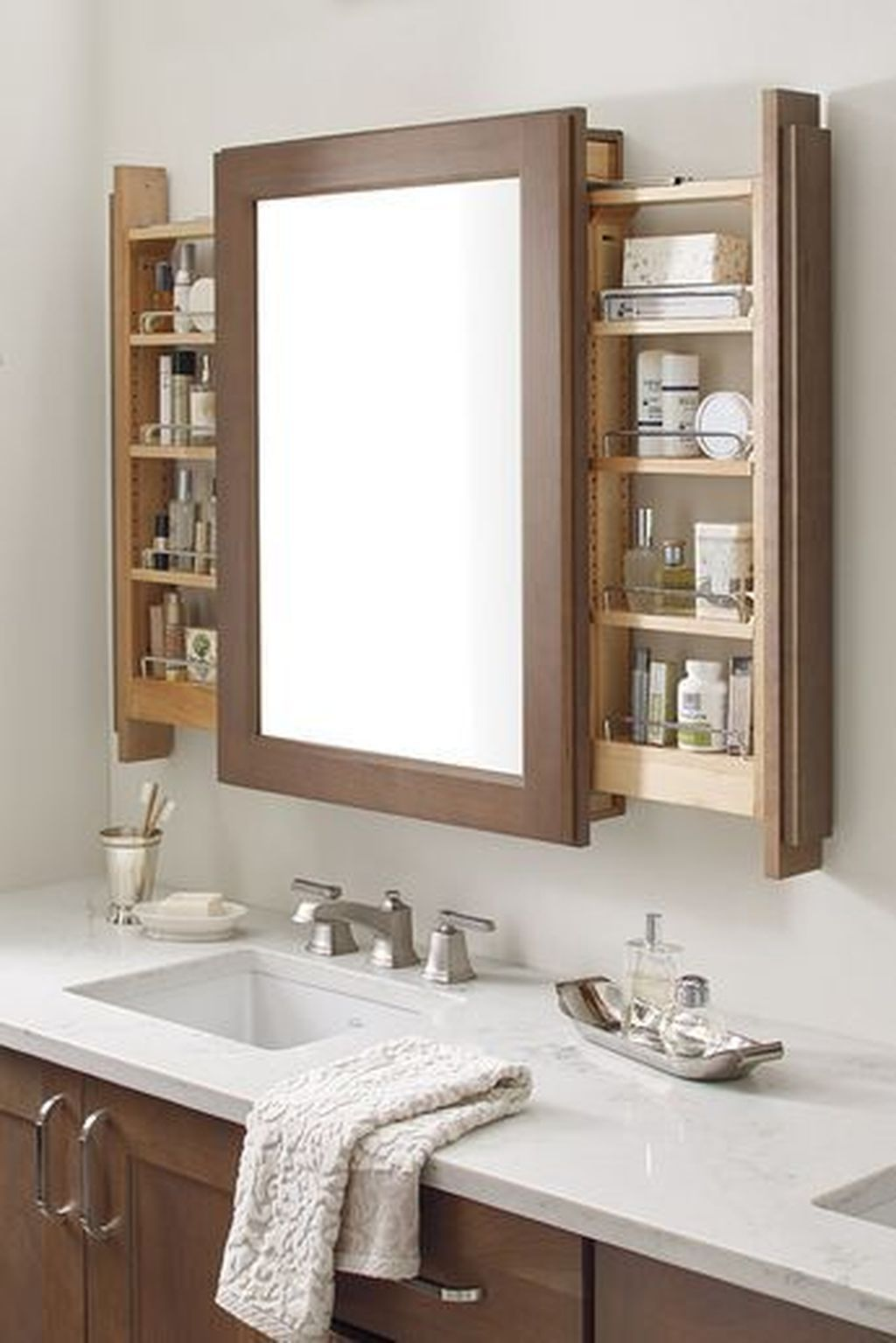
Clutter kills every bathroom. Shampoo bottles on display, toothbrushes on the counter, and tangled charger cables flatten the atmosphere faster than any wrong finish.
Design the storage before you choose the finishes:
- Tall slim cabinets flanking the vanity for towels and daily essentials
- A mirrored cabinet above the vanity with integrated lighting and sockets inside for electric toothbrushes and razors
- Niches inside the shower for soap, shampoo, and conditioner
- A pull-out hamper built into the vanity for laundry
- Hidden toe-kick drawers under the vanity for scales, hair tools, and spare towels
Well-planned storage units let the bathroom stay empty on the surface. That emptiness is where the calm lives.
Natural Light and Private Views
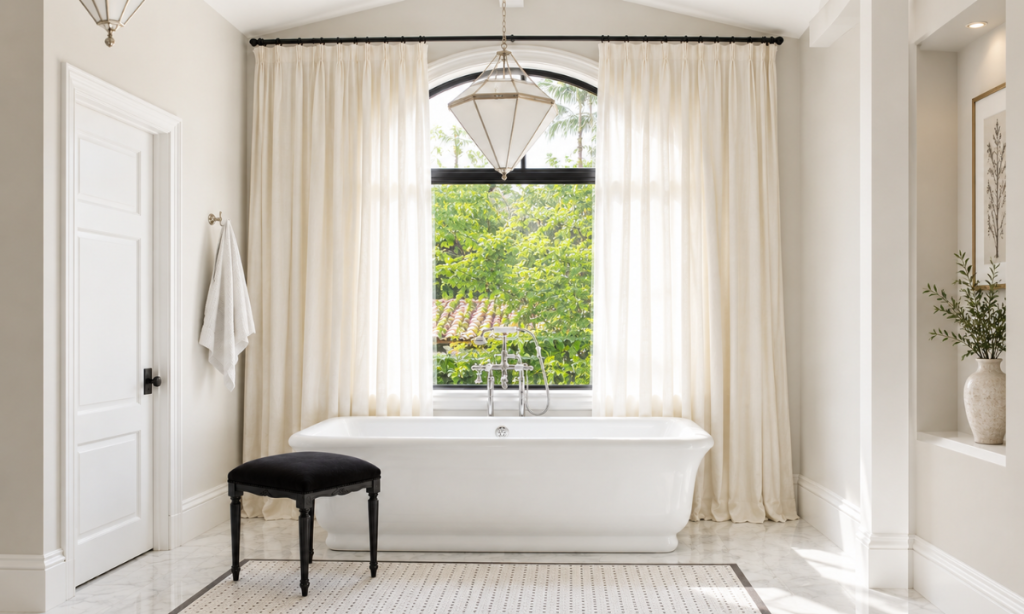
A bathroom that enjoys natural light feels larger and healthier than any artificially lit one. Where privacy allows, bring in a window near the bath or vanity. Where it does not, use frosted glass panels or clerestory openings to borrow light from an adjacent space.
Even a small window of greenery, a single frangipani branch, a cluster of orchids on the sill, or a hanging monstera near the shower, changes how the room is experienced.
Scent, Sound, and Texture
The details that elevate a bathroom from beautiful to memorable are rarely visual. They are sensory.
Build in:
- A soft underfoot rug in natural wool or linen, replaced every few months
- Hand-crafted ceramic trays for perfume and small objects
- A single scented candle on the vanity in a quiet fragrance such as sandalwood, oud, or vetiver
- Bluetooth speakers wired into the ceiling for low ambient music
- Thick cotton or linen towels, always replaced before they fray
These are the touches guests remember when they return home. They are also what separate a hotel-grade bathroom from a well-designed one.
When to Involve a Design Studio
A full bathroom renovation involves waterproofing, slab planning, concealed plumbing, exact tile layouts, and finish coordination that few homeowners enjoy managing alone.
Working with luxury interior designers in Bangalore who have an in-house design team removes the usual back-and-forth with contractors, tile vendors, and sanitaryware suppliers. The result is a bathroom where the stone, joinery, lighting, and plumbing all arrive on site in the right sequence and come together without compromise.
Conclusion
A spa-like bathroom is less about scale and more about restraint. A tight material palette, a vanity worth touching every morning, a shower that invites you to stay, lighting that shifts with the hour, and storage that keeps the surface quiet. Choose a few things well, let them breathe, and the room will take care of the rest.
FAQs
What is the ideal size for a spa-like primary bathroom?
Around 100 to 150 square feet is comfortable for a full spa layout with a shower, bathtub, double vanity, and water closet. Smaller rooms can still feel luxurious with careful editing.
Which stone works best for Indian bathrooms?
Honed travertine, limestone, Jaisalmer, and quartzite handle the humidity well. Avoid polished Statuario or Calacatta in heavily used family bathrooms since the finish etches over time.
How much does a luxury bathroom cost to build in Bangalore?
A fully customised bathroom with stone work, bespoke vanity, premium sanitaryware, and designer lighting usually ranges between Rs 8 lakh and Rs 25 lakh depending on size and finish level.
Can a small bathroom still feel luxurious?
Yes. Large-format tiles, a floating vanity, frameless glass, warm lighting, and a single sculptural element go further than packing in features. Restraint reads as luxury at any size.
How often should a luxury bathroom be refreshed?
The architecture and finishes should last fifteen to twenty years. Soft layers such as towels, candles, rugs, and small accessories can be refreshed every two to three years to keep the room feeling current.
The KariGhars: A Journey of Design Excellence and Recognition
Founded in 2009 by Aashita Chadha and Abhishek Chadha, The KariGhars has grown into a leading name in luxury interior design, known for thoughtful design, skilled craftsmanship and homes that reflect the people who live in them. The firm’s work has earned it the Best Luxury Villa Interior Design award at the Luxury Lifestyle Awards 2022 and the Brand Achievers Award for Best Interior Designing Firm in Bengaluru. Its design philosophy has also been featured in Vogue India and The New Indian Express, cementing its reputation as one of Bangalore’s foremost luxury design studios.