

Art integration in luxury homes involves choosing meaningful artwork, planning suitable wall spaces, and using focused lighting to highlight each piece. Thoughtful placement, balanced proportions, and well-designed display areas help artwork complement the interiors. The result is a refined, personal space where art connects with architecture, furniture, and lighting.
Art adds character to a luxury home. A carefully selected painting, sculpture, or collection of photographs can express personal taste and create a strong visual focus. However, successful art integration requires more than choosing beautiful pieces. Wall finishes, lighting positions, furniture layouts, and display heights must work together.
For homeowners planning bespoke interiors, The KariGhars offers a useful starting point for exploring luxury interior design that balances aesthetics, craftsmanship, and everyday comfort.
From a statement painting in the living room to a sculptural installation in the foyer, every piece should have a clear place within the overall design. This guide explains how to plan art displays in luxury homes, choose suitable walls, integrate lighting, and create elegant display spaces without making rooms feel crowded.
1. Plan Art Displays Around the Interior Design
Art should be considered during the interior design process rather than added after every wall and furniture piece has been finalised. Early planning helps designers coordinate wall dimensions, electrical points, lighting fixtures, and display furniture.
Start by identifying the artworks you already own and the pieces you want to acquire. Consider their dimensions, colours, frames, materials, and visual weight. These details help determine where each piece will work best.
For example, a large abstract painting may suit a spacious living room, while a collection of smaller framed artworks may work well along a hallway. A sculptural object might be better displayed in a dedicated niche or on a console.
Consider these planning factors:
- Room proportions: Choose artwork that suits the height and width of the wall.
- Interior style: Match the artwork’s character with the home’s overall design without making everything look identical.
- Furniture placement: Ensure sofas, consoles, and other furniture do not obstruct the artwork.
- Visual balance: Give important pieces enough surrounding space to stand out.
- Future flexibility: Plan adjustable lighting and adaptable hanging systems if you expect to change your collection.
A coordinated plan makes art feel like a natural part of the home rather than a separate decorative addition.
2. Choose the Right Walls for Art Displays
Not every wall needs artwork. The best art display in luxury homes uses selected surfaces to create visual interest while preserving a sense of space.
Living room feature walls
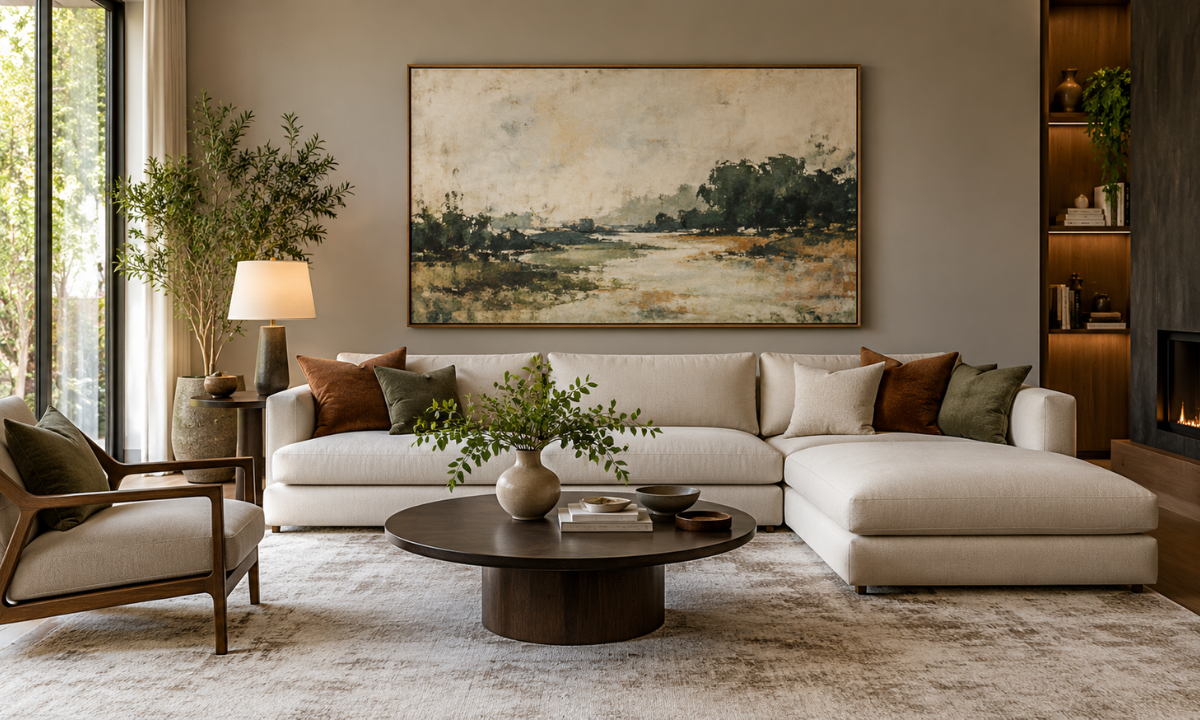
The living room is often the ideal place for a statement artwork. A large painting above the sofa or an expressive piece on a prominent wall can anchor the room’s design.
Choose a wall that remains visible from the main seating area. Keep the artwork proportional to the furniture, and avoid placing it too close to ceiling details or decorative mouldings.
For more ideas, explore The KariGhars’ guide to designing a statement living room wall.
Foyers and entrance walls
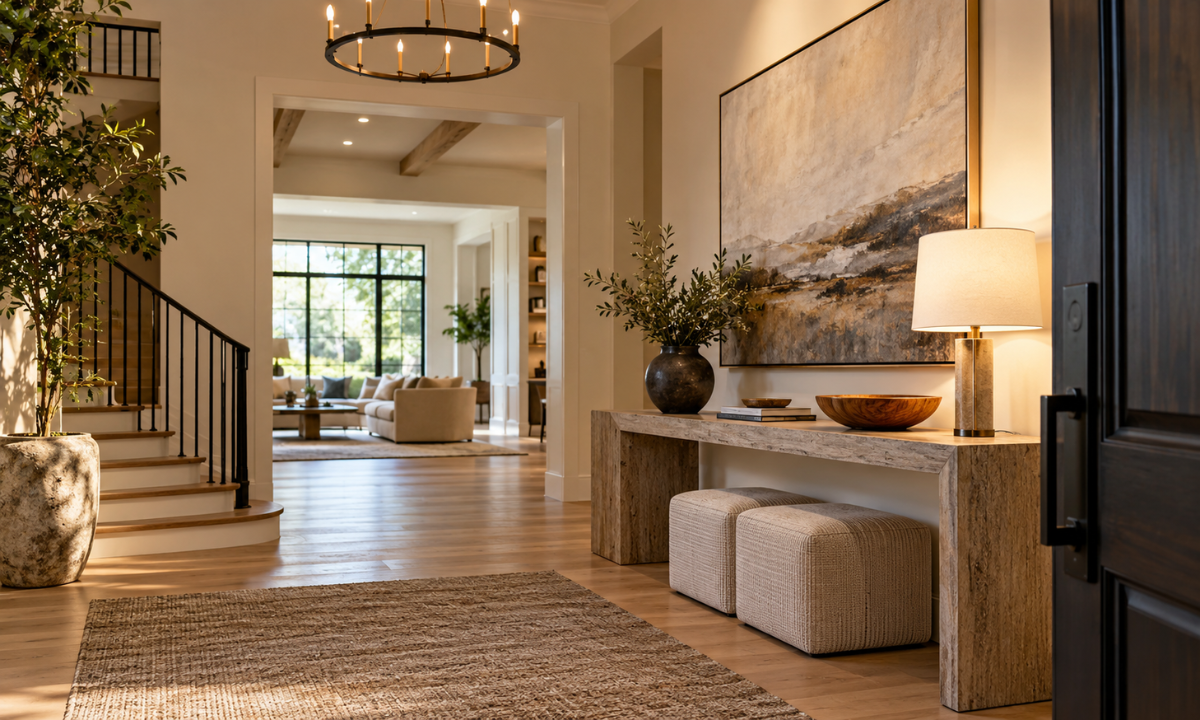
The foyer creates the first impression of a home. A single artwork, a framed collection, or a sculptural wall feature can establish the interior’s character from the entrance.
In narrow foyers, one well-placed piece often works better than a crowded gallery wall. In larger entrance spaces, artwork can be paired with a console table and subtle accent lighting.
Dining rooms and corridors
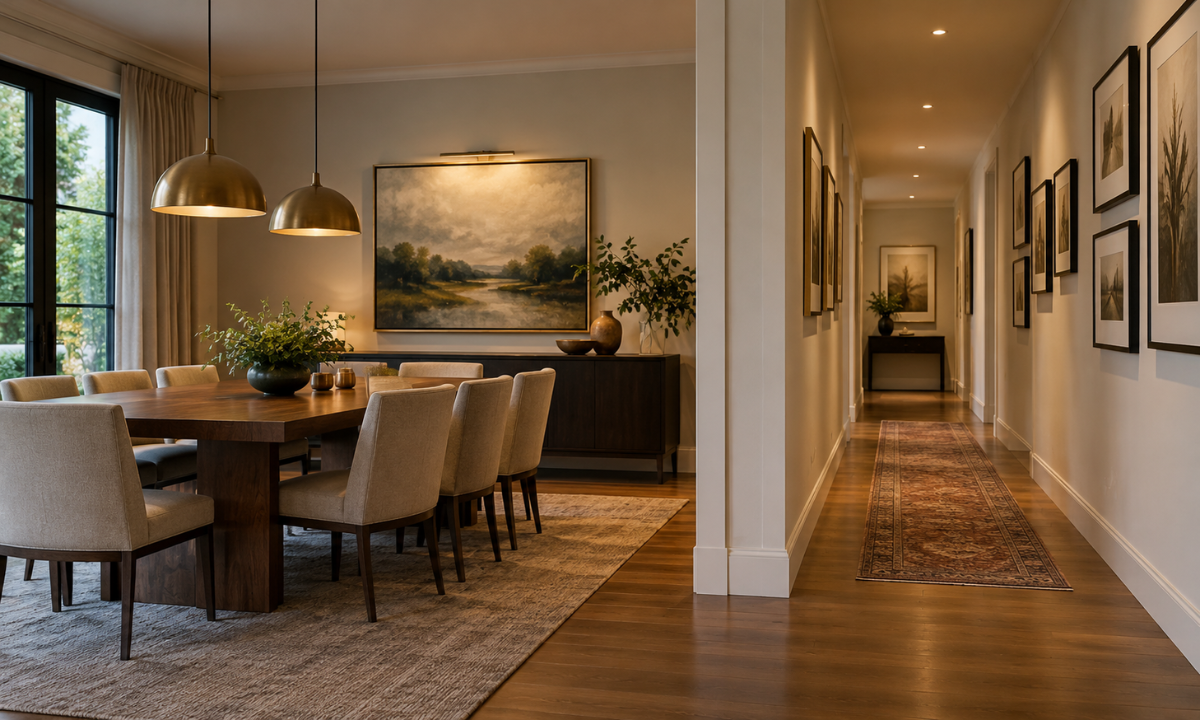
Dining rooms are suitable for paintings, photography, and coordinated art collections. Place the artwork where it can be appreciated while seated, and ensure pendant lights do not obstruct the view.
Corridors can accommodate a series of smaller artworks or a carefully arranged gallery wall. Keep the spacing consistent and maintain enough clearance for comfortable movement.
The goal is to make each area feel considered without turning every wall into a focal point.
3. Select Artwork That Complements the Interior Style
Artwork should reflect the homeowner’s interests while complementing the room’s colours, textures, and materials. It does not need to match every element in the space.
Contemporary abstract art
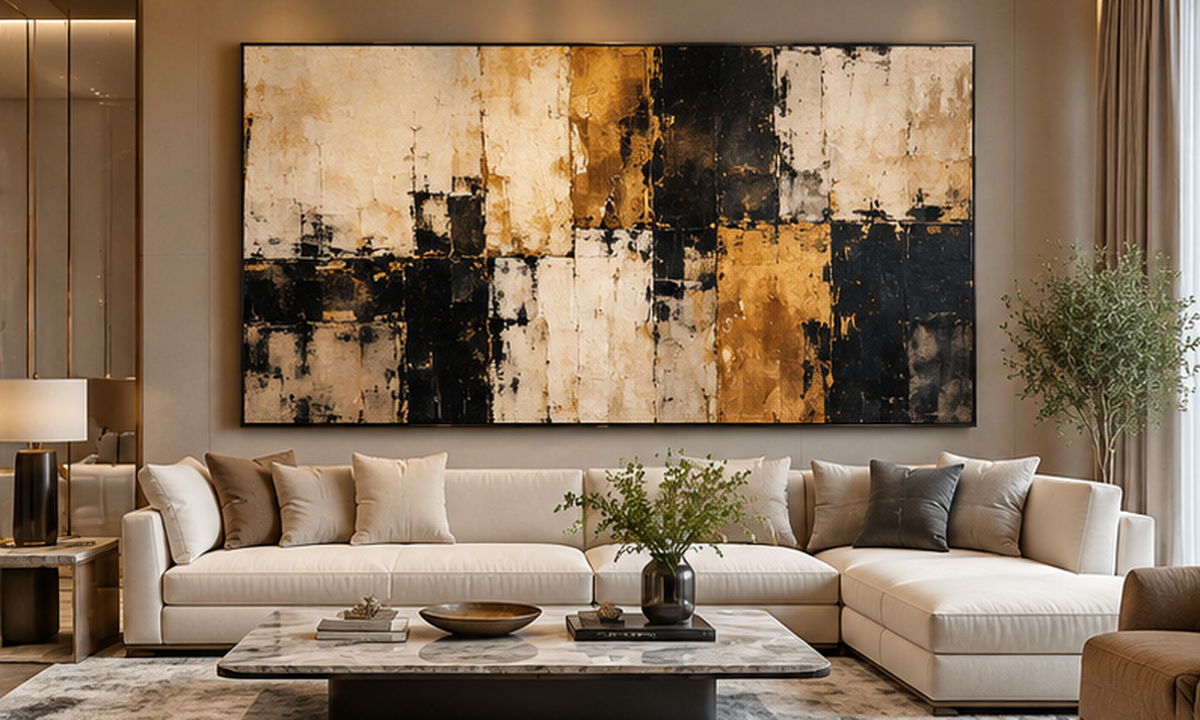
Abstract paintings suit modern luxury interiors with clean lines, neutral finishes, and bespoke furniture. Choose colours that connect with the room’s palette while adding contrast or visual depth.
Traditional and cultural art
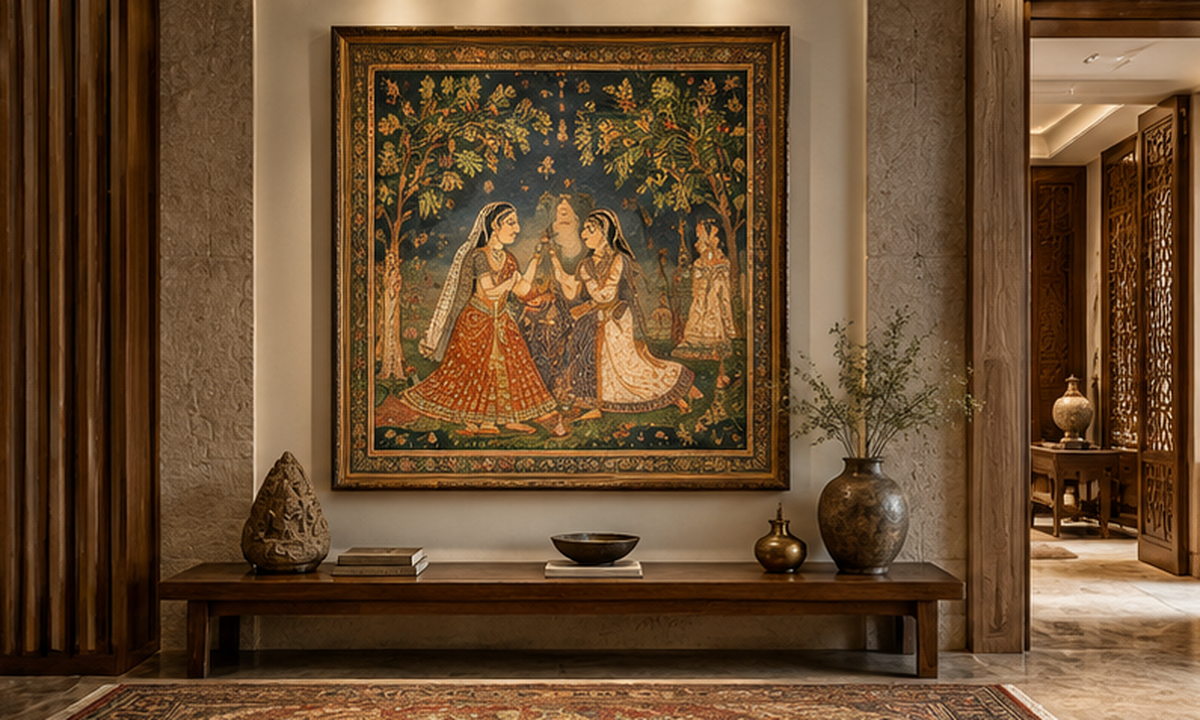
Indian paintings, handcrafted wall pieces, and traditional artwork can add cultural depth to contemporary homes. Natural wood, stone, and understated finishes help create a balanced setting.
Sculptures and collectible objects
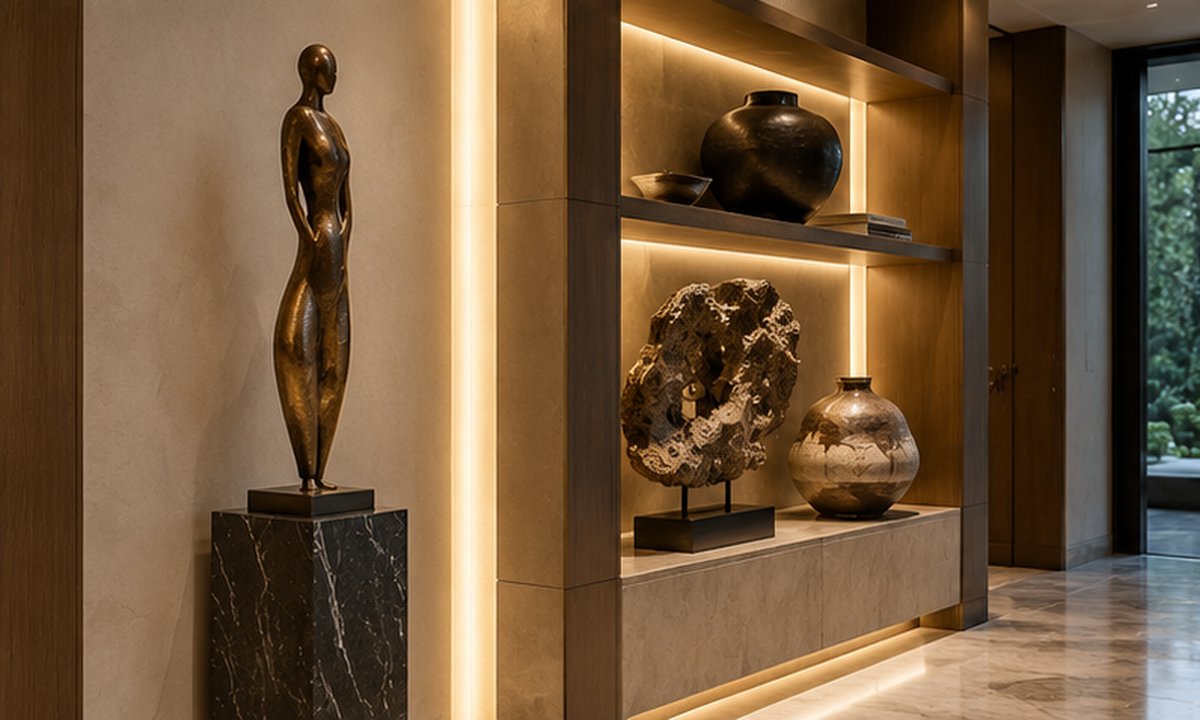
Sculptures, ceramics, and collectible pieces work well on consoles, pedestals, and built-in shelves. Consider the object’s height, material, and viewing angle when selecting its display position.
Photography and gallery collections
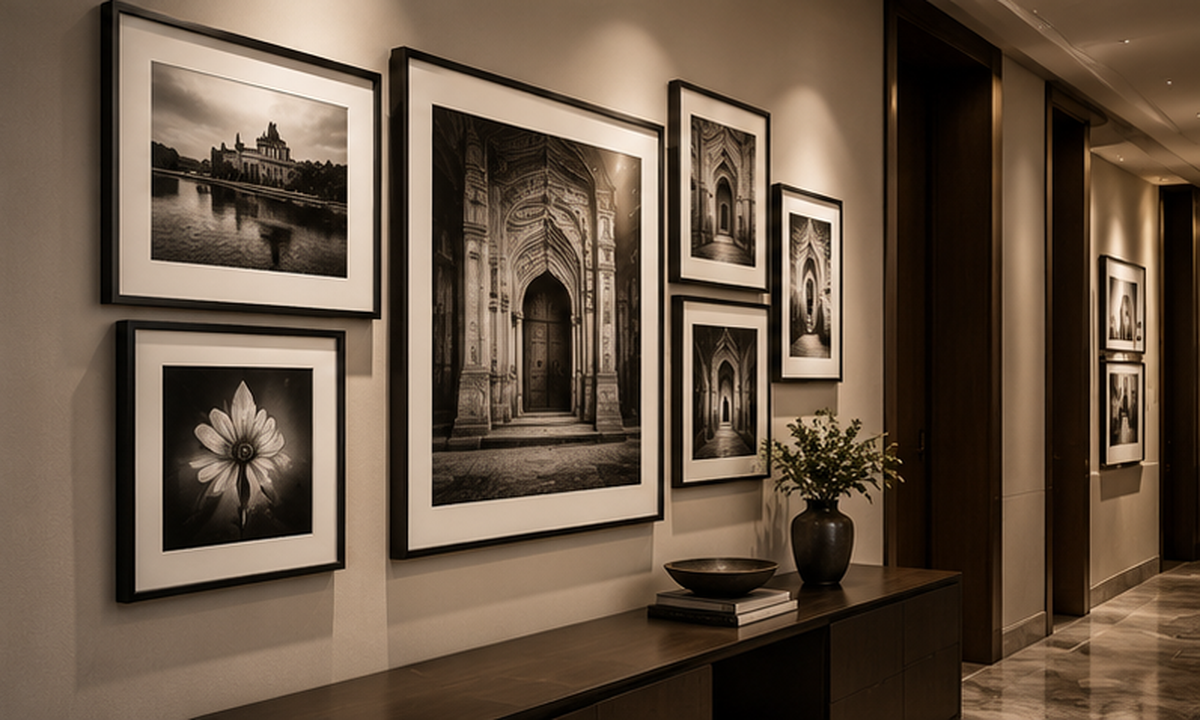
Black-and-white photography and framed prints suit hallways, studies, and private lounges. Consistent framing can create unity, while varied image sizes add interest.
For a cohesive result, consider the home’s broader design language. Read our article on luxury home interior design offers further ideas for balancing materials, colours, furniture, and decorative elements.
4. Plan Lighting to Highlight Artwork
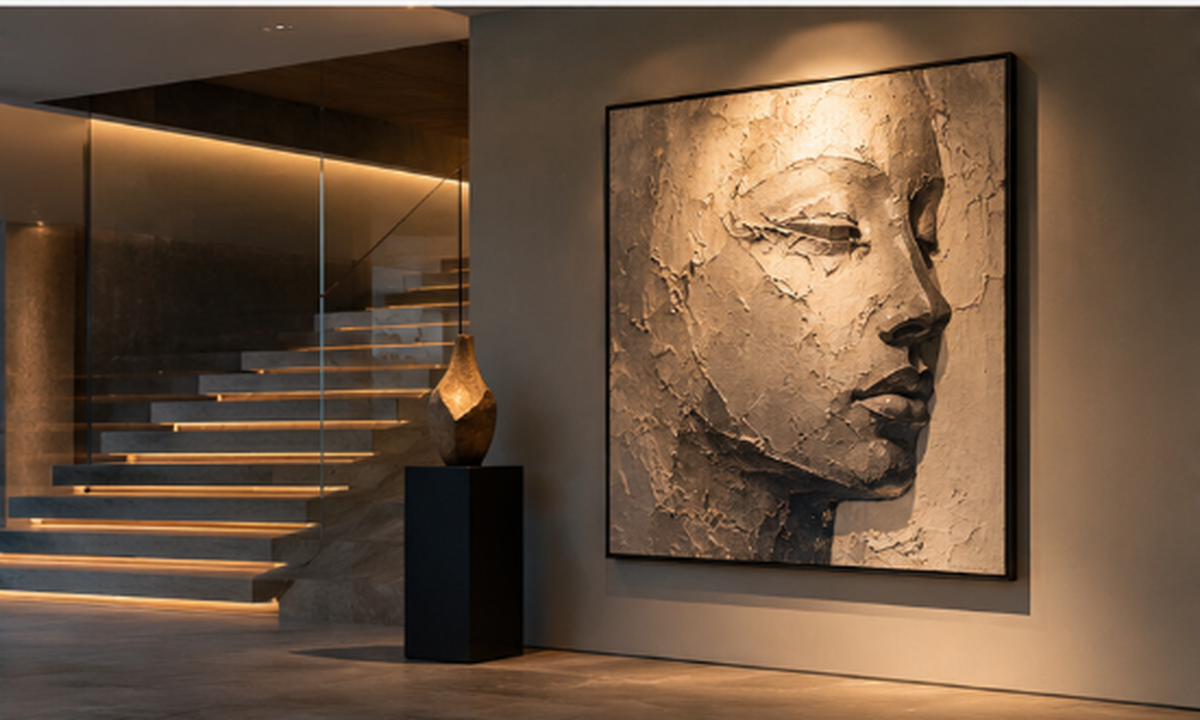
Lighting is essential to effective art display in luxury homes. The right lighting brings out colours, textures, and details while helping the artwork stand apart from the surrounding wall.
Picture lights
Picture lights are mounted above or integrated into the frame of an artwork. They create a focused pool of light and can suit traditional paintings, framed photographs, and formal display walls.
Choose a fixture that provides even illumination without producing distracting reflections.
Adjustable spotlights
Ceiling-mounted spotlights are useful when you want flexibility. Adjustable fixtures can direct light towards individual artworks, sculptures, or selected areas of a gallery wall.
During planning, check the beam angle and the artwork’s position to avoid harsh shadows and uneven brightness.
Track lighting
Track lighting works well for larger collections and spaces where artwork may change over time. Adjustable heads allow you to redirect the light without redesigning the entire ceiling.
This option can suit contemporary living rooms, long corridors, and dedicated art display areas.
Integrated niche lighting
Recessed niches with concealed LED lighting can highlight sculptures, ceramics, and collectible objects. The light source should be positioned to reveal the object’s shape without creating glare.
For additional guidance, read The KariGhars’ articles on modern home lighting design and ambient lighting in luxury interiors.
Important lighting considerations
- Use adjustable fixtures where artwork or display arrangements may change.
- Select high-colour-rendering light sources so artwork colours appear more accurate.
- Use dimmers where appropriate to adjust brightness for different occasions.
- Avoid direct sunlight and excessive heat, which can damage sensitive paintings, photographs, and other materials over time.
- Check the manufacturer’s recommendations for the artwork’s medium, especially for watercolours, textiles, and older pieces.
Artwork lighting should work with the room’s ambient and task lighting. It should highlight selected features without making the rest of the space feel dark or uncomfortable.
5. Create Built-In Display Spaces for Sculptures and Collectibles
Paintings are only one way to integrate art into a luxury home. Display niches, open shelves, and custom cabinetry can provide dedicated spaces for objects that have personal or artistic value.
Recessed wall niches
Wall niches create a defined space for sculptures, pottery, and collectible objects. They can be integrated into feature walls, corridors, and entrance areas.
The niche dimensions should suit the displayed object. Leave sufficient space around it so the display feels intentional rather than cramped.
Open shelving
Open shelves work well for smaller art objects, framed photographs, books, and ceramics. Combine different heights and forms, but avoid filling every shelf.
A useful approach is to group objects in small arrangements and leave some shelves partially empty. This creates visual breathing room and makes individual pieces easier to appreciate.
Custom cabinetry and display units
Bespoke cabinetry can combine closed storage with open display sections. This approach is useful for homeowners who want to showcase selected pieces while keeping everyday belongings organised.
Consider shelf depth, weight capacity, concealed wiring, and lighting access during design. For more inspiration, explore custom furniture and home interior solutions from The KariGhars.
Display plinths
Freestanding plinths can give sculptures a dedicated position in larger living rooms, foyers, or open-plan spaces. Their height and finish should complement the sculpture and the surrounding architecture.
Ensure that the plinth does not obstruct circulation or create a hazard in busy areas.
6. Coordinate Art with Wall Finishes and Materials
Wall finishes influence how artwork looks and how easily it can be installed. A well-selected backdrop supports the piece without competing with it.
| Wall finish | How it works with art | Best suited for |
|---|---|---|
| Matte paint | Creates a simple, low-reflection background | Paintings and framed photography |
| Natural stone | Adds texture and visual depth | Sculptures and selected statement pieces |
| Wood panelling | Introduces warmth and structure | Contemporary art and framed collections |
| Textured plaster | Creates subtle shadows and tactile interest | Minimalist and abstract artwork |
| Wallpaper | Adds pattern and colour | Carefully selected pieces with sufficient contrast |
Before installing artwork, consider the wall’s strength, finish, and fixing requirements. Heavy pieces may need suitable anchors or structural support, while delicate finishes may require special installation methods.
Artwork mounted on textured or reflective surfaces may also need additional lighting adjustments to avoid glare and unwanted shadows.
For more ideas, see The KariGhars’ guide to luxury interior materials and finishes.
7. Maintain Balance Between Art, Furniture, and Open Space
A common mistake in luxury interiors is displaying too many decorative pieces in one area. Even valuable artwork can lose its impact when surrounded by competing colours, patterns, and accessories.
Use the following principles to maintain balance:
- Create a focal point: Let one significant artwork lead the composition instead of competing with several statement pieces.
- Respect negative space: Keep enough empty wall space around important pieces.
- Coordinate with furniture: Ensure artwork relates to nearby sofas, consoles, dining tables, and other large elements.
- Vary display heights thoughtfully: Place artwork at a comfortable viewing level, adjusting for furniture and the room’s proportions.
- Limit competing finishes: If the wall already has bold stone veining or intricate panelling, consider simpler artwork.
- Maintain clear circulation: Keep sculptures, display stands, and furniture away from main walking routes.
For gallery walls, plan the arrangement on paper before drilling into the wall. Consistent spacing can create a structured look, while a more relaxed arrangement can suit eclectic interiors.
The right balance depends on the room’s size, the number of pieces, and the overall design. A single oversized painting may be enough for one room, while a larger corridor might accommodate a thoughtfully curated collection.
8. Protect Artwork Through Practical Design Choices
Art integration should consider preservation as well as appearance. Temperature changes, humidity, dust, direct sunlight, and unsuitable installation methods can affect artwork over time.
Keep these practical points in mind:
- Position delicate artwork away from direct sunlight and sources of heat.
- Avoid placing valuable paintings where moisture, steam, or frequent splashes may reach them.
- Use suitable hanging hardware for the artwork’s weight and wall construction.
- Provide secure fixing for heavy sculptures and objects displayed in accessible areas.
- Clean frames and display surfaces according to their material requirements.
- Consider protective glazing for suitable framed works, using options recommended for the artwork.
- Allow access to concealed lights and wiring so maintenance does not require damaging finished surfaces.
For valuable or sensitive collections, consult an art conservator about appropriate light exposure, environmental conditions, and protective measures.
These decisions are especially important when planning bespoke display walls or integrating lighting into custom cabinetry.
9. Plan Art Integration During the Interior Design Process
Coordinating artwork with the rest of the interiors helps avoid unnecessary changes after installation. A practical process includes the following stages.
Step 1: Understand the collection
List existing artworks, sculptures, and collectibles. Record their dimensions, materials, weight, and any special display requirements.
Step 2: Map the display locations
Identify suitable walls, niches, shelves, and focal points based on room proportions, furniture layouts, and viewing angles.
Step 3: Coordinate lighting and electrical points
Finalise picture lights, spotlights, concealed LED strips, switches, and dimmers before completing the relevant ceiling and wall finishes.
Step 4: Prepare the walls and display units
Coordinate wall finishes, reinforcement, hanging systems, niches, and custom cabinetry with the installation requirements.
Step 5: Install and review
Position the artwork, adjust the lighting, check sightlines, and make final changes to the arrangement before completing the room styling.
Working with an experienced interior design team can help coordinate these details across living rooms, foyers, dining areas, and other spaces. The KariGhars provides end-to-end home interior design services that can help homeowners plan materials, custom features, lighting, and execution as part of a cohesive design.
Conclusion
Art integration in luxury homes is about creating a thoughtful relationship between artwork, architecture, lighting, and everyday living. Well-chosen pieces can bring personality to feature walls, foyers, corridors, and dedicated display areas without overwhelming the interiors.
The key is to plan early, select suitable backgrounds, provide appropriate lighting, and maintain a balance between statement pieces and open space. Built-in niches, custom shelving, and carefully positioned artwork can further improve the visual flow of a home.
With careful planning, art becomes more than decoration. It becomes an integral part of the home’s identity, reflecting the homeowner’s interests while supporting a refined and cohesive interior design.
Frequently Asked Questions
1. How do you display art in a luxury home?
Display art by selecting suitable walls, considering room proportions, coordinating lighting, and leaving enough space around each piece. Artwork should complement the furniture, wall finishes, and overall interior design.
2. Which walls are best for displaying artwork?
Living room feature walls, foyer walls, dining room walls, and wide corridors are common choices. The best location depends on the artwork’s size, viewing angle, natural light, and the room’s layout.
3. What lighting is best for art displays?
Adjustable spotlights, picture lights, track lighting, and integrated LED lighting can all work well. The right option depends on the artwork, display location, glare risk, and required level of control.
4. How can I create an art gallery wall at home?
Choose a collection with a shared theme, colour palette, or framing style. Plan the arrangement before installation, maintain considered spacing, and ensure the lighting provides even illumination.
5. Can sculptures be integrated into modern luxury interiors?
Yes. Sculptures can be displayed on plinths, consoles, recessed niches, or custom shelves. Choose a position that highlights the piece while maintaining safe clearances and comfortable movement.
6. Should artwork be selected before or after interior design?
Ideally, major artworks should be considered during the initial design stage. Early planning allows the designer to coordinate wall dimensions, electrical points, lighting, finishes, and suitable installation methods.